
Three-lined Salamander
Eurycea guttolineata
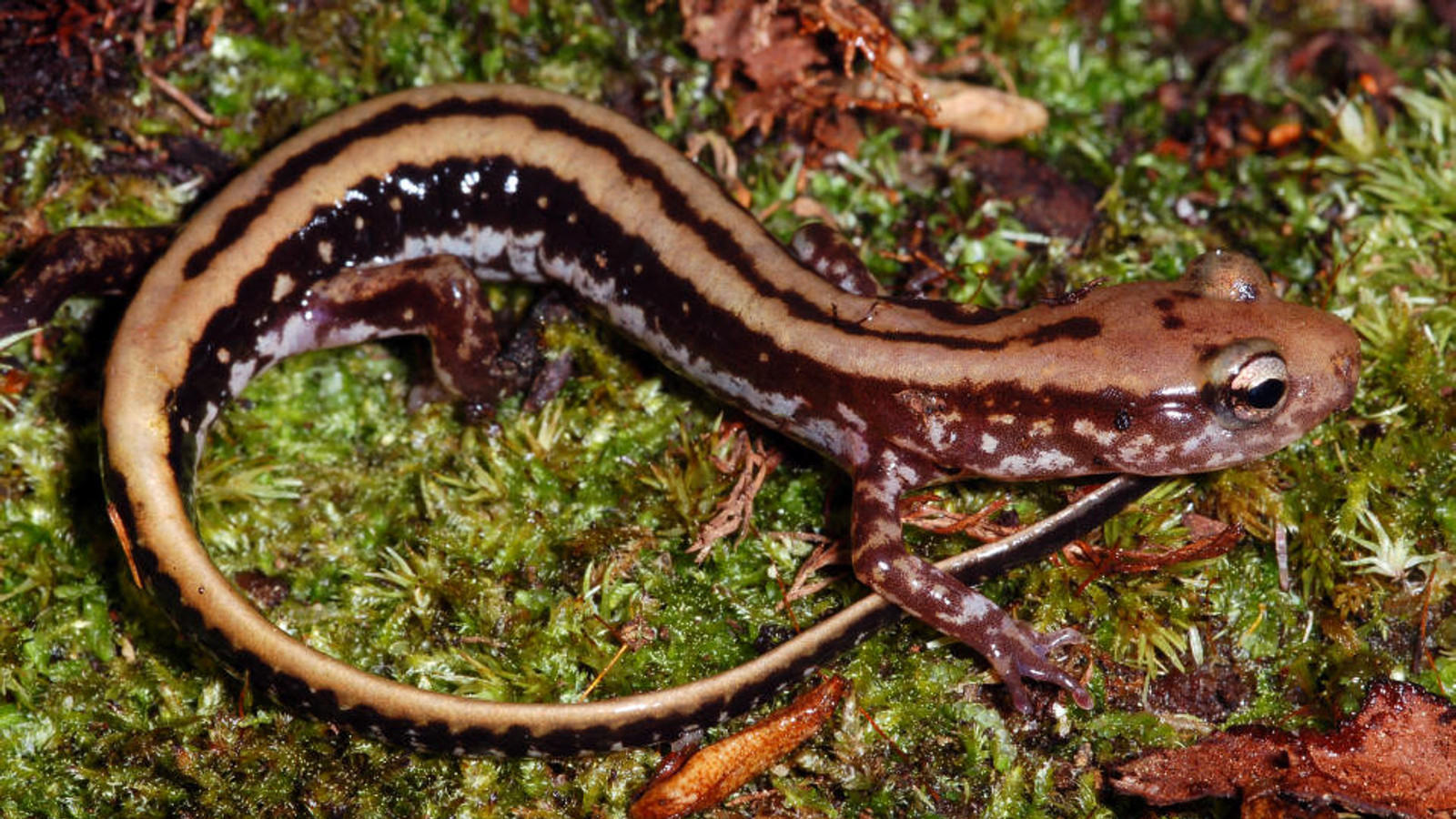
A slender, boldly striped stream salamander found mainly in the western and northern Florida Panhandle.
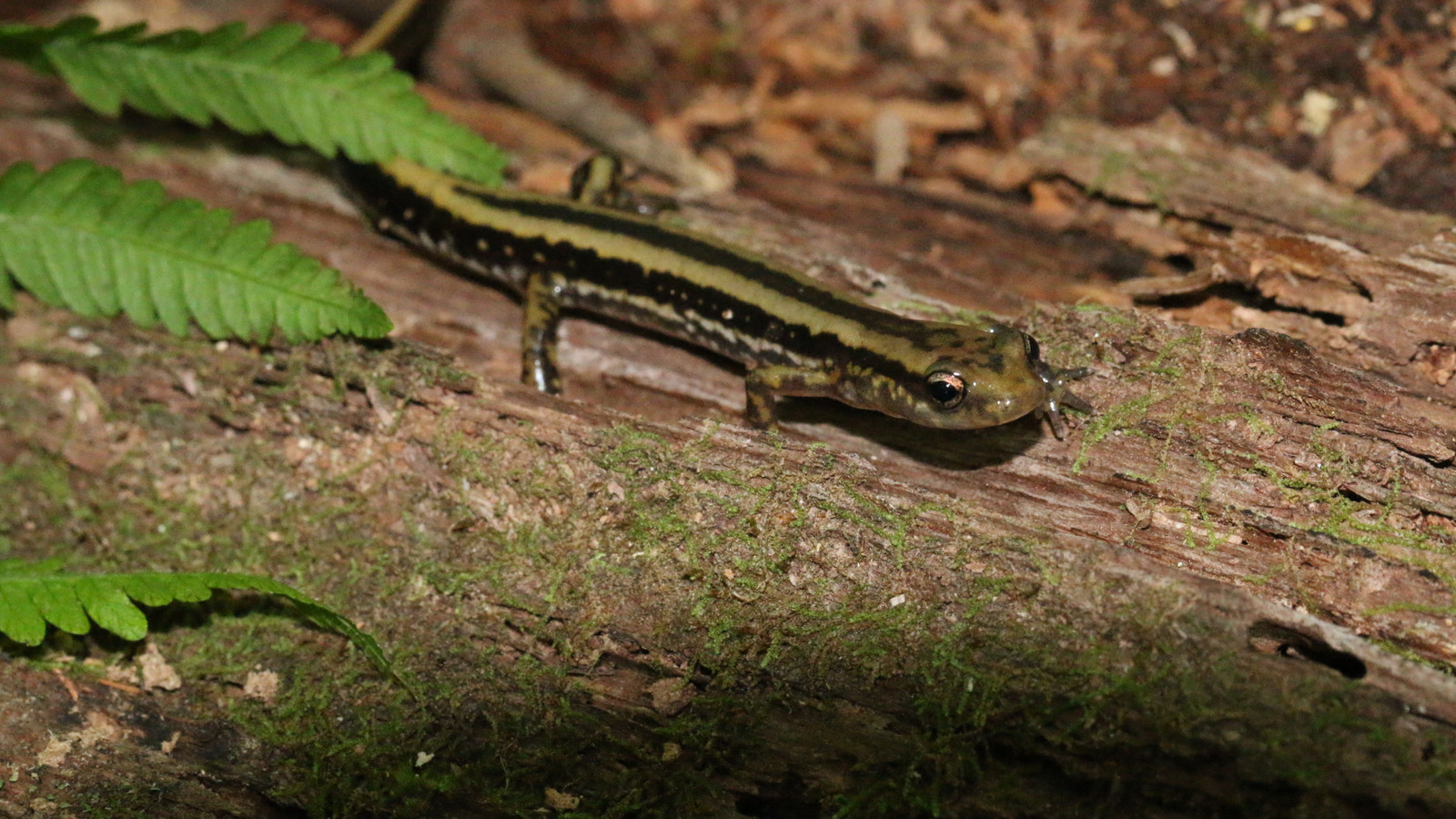
The three-lined salamander is a slender streamside species with a very long tail and three dark stripes running along a tan or yellowish body. In Florida it is restricted chiefly to the Panhandle rather than the peninsula.
It depends on moist bottomland forests, seepages, small streams, and cypress-swamp edges where cover remains damp.
Habitat:
Forests and Woodlands, Freshwater Wetlands, Rivers and Springs
Area / Range:
Florida Panhandle, North Florida
Diet:
Adults forage for small insects, spiders, worms, and other invertebrates in damp litter and along stream margins. Aquatic larvae eat tiny aquatic invertebrates.
Behavior:
Most surface activity occurs at night. Individuals hide under rocks, logs, bark, and other cover near water. Breeding occurs in fall and winter, and females attach eggs beneath submerged or saturated cover.
Night
Active Times:
Best time to see:
Cool, wet nights near Panhandle streams and swamp edges
Florida Native Status:
Native
Conservation Status:
Common regionally and not federally listed; localized in Florida
Safety Level:
Harmless
Safety Information:
This salamander is harmless. Avoid handling it because amphibian skin is easily damaged and absorbs contaminants from hands.
Benefits to Property:
It helps control small invertebrates and indicates healthy streamside forest and wetland conditions.
Property Concerns:
It causes no property damage. Stream alteration, sediment, polluted runoff, and removal of shaded woody cover can reduce local populations.
Fun Fact:
Its exceptionally long tail makes up about two-thirds of its length. The bold three-stripe pattern continues onto the tail and contrasts with a marbled belly.
Wildlife Laws:
Observe in place and do not collect or relocate wild salamanders without required permission. Return any carefully lifted cover object exactly as found.
Identification:
Three bold black stripes extend from the head along the back and sides, and the underside shows black-and-white marbling. Adults measure 4 to 6.25 inches, with the tail accounting for roughly two-thirds of total length.