
Timber Rattlesnake
Crotalus horridus
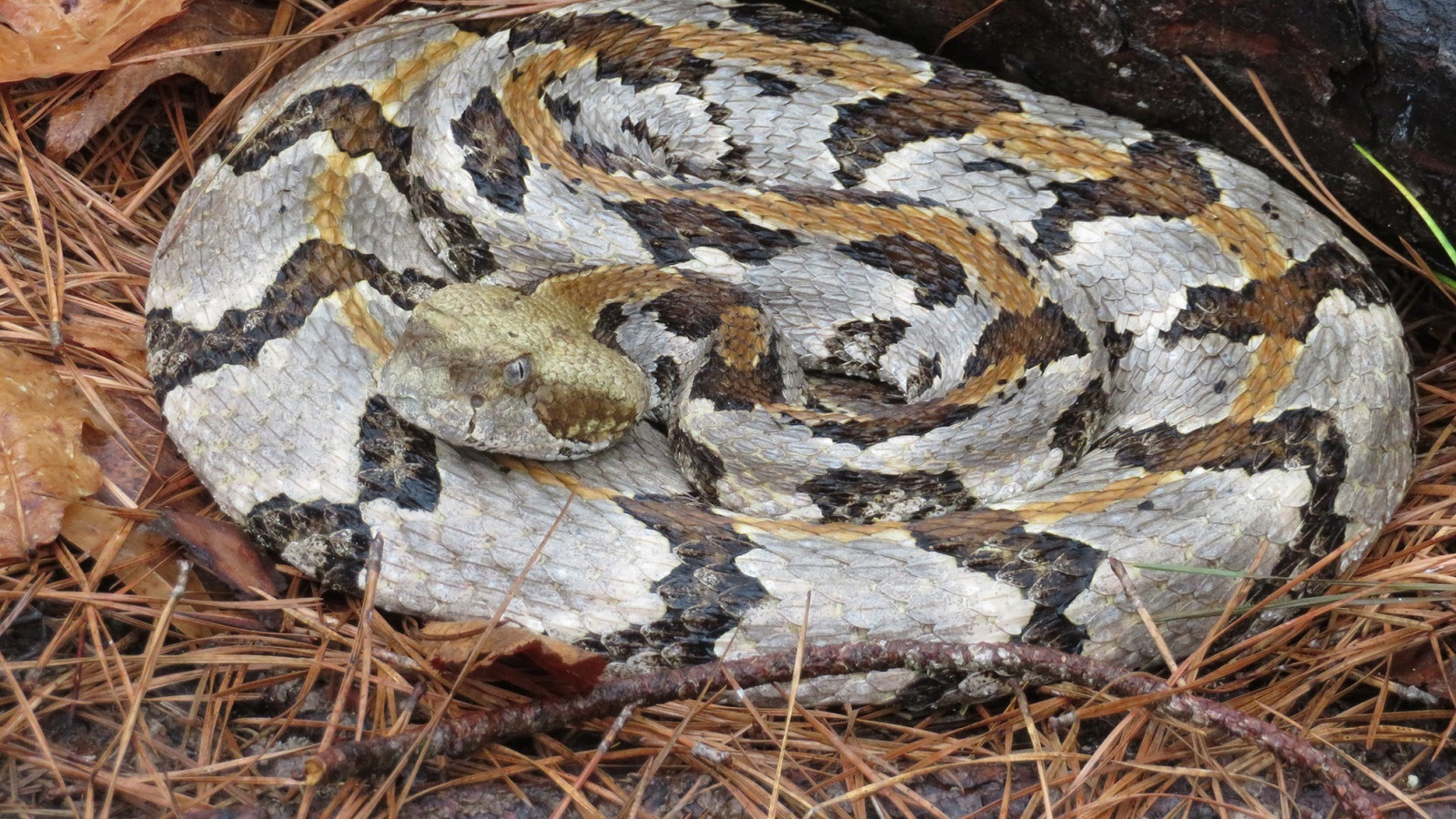
A venomous rattlesnake with a limited range in northern Florida.
The Timber Rattlesnake, also called the Canebrake Rattlesnake, occurs in a limited part of northern Florida. It uses bottomlands, hardwood hammocks, pine flatwoods, and nearby fields.
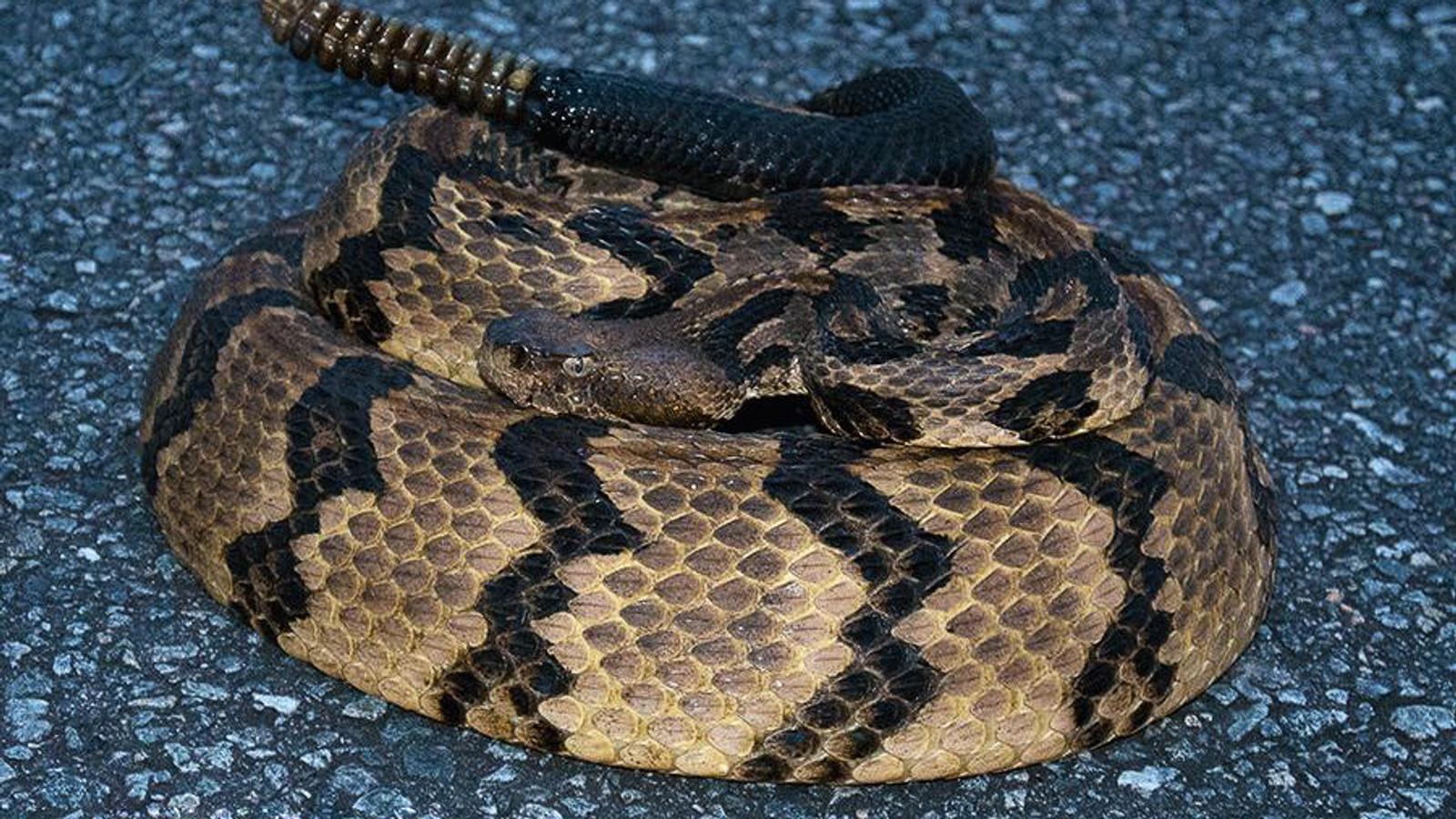
Its dark chevron bands and often black tail distinguish it from the diamond-patterned Eastern Diamondback Rattlesnake. Give every unidentified snake ample space.
Habitat:
Forests and Woodlands, Pine Flatwoods and Sandhills, Freshwater Wetlands, Grasslands and Agricultural Areas
Area / Range:
North Florida, Florida Panhandle
Diet:
Feeds mainly on small mammals, including rodents, and occasionally other small vertebrates.
Behavior:
Often remains still and relies on camouflage. It may retreat when given room, but can bite defensively if stepped on, cornered, or handled.
Day, Dawn and Dusk
Active Times:
Best time to see:
Warm weather in suitable northern Florida habitats; observe only from a safe distance
Florida Native Status:
Native
Conservation Status:
Localized in Florida; habitat loss and intentional killing threaten populations
Safety Level:
Venomous. Keep a safe distance
Safety Information:
Never approach, handle, or attempt to kill this venomous snake. Keep children and pets back. If bitten, seek emergency medical care immediately.
Benefits to Property:
Predates rodents and contributes to native woodland food webs.
Property Concerns:
Its venomous bite is a serious hazard. Maintain distance and contact qualified local wildlife help if one is in an area where people or pets cannot avoid it.
Fun Fact:
The Timber Rattlesnake may remain silent even when close to danger. The rattle is not a reliable warning system.
Wildlife Laws:
Florida regulates possession of venomous reptiles. Do not capture, transport, or keep one without appropriate authorization; consult FWC guidance for current rules.
Identification:
A large, heavy-bodied snake with black chevron-shaped crossbands on a tan or pinkish gray body. Many have a reddish-brown stripe along the back and a mostly black tail ending in a rattle.
Do not rely on a rattle sound for identification or safety; a rattlesnake may remain silent.