
Viceroy Butterfly
Limenitis archippus
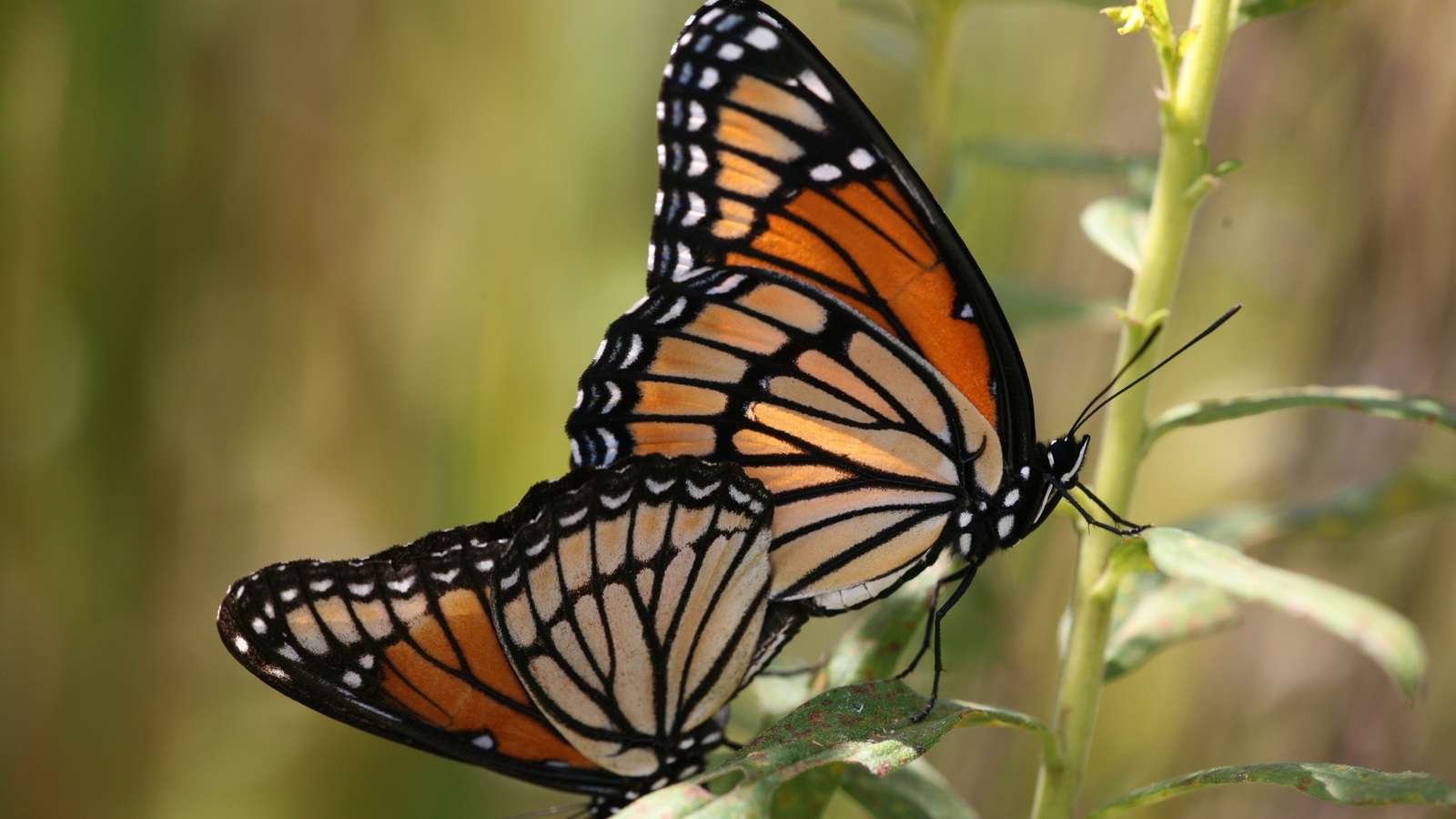
An orange-and-black wetland butterfly that resembles a monarch but carries a black line across each hindwing.
Viceroy Butterflies occur near willows, poplars, cottonwoods, and other host trees around Florida wetlands and wooded edges. Adults visit flowers, sap, decaying fruit, and moist ground.
Native host plants and nectar sources help support the full life cycle. Avoid spraying caterpillar host foliage.
Habitat:
Freshwater Wetlands, Forests and Woodlands, Urban and Residential Areas
Area / Range:
Statewide
Diet:
Caterpillars feed on willow, poplar, and cottonwood leaves. Adults use flower nectar, sap, overripe fruit, and mineral-rich moisture.
Behavior:
Flies with quick flaps and short glides, patrols sunny wetland edges, and rests with wings open to warm in the sun.
Daytime
Active Times:
Best time to see:
Warm sunny days near willow-lined ponds, streams, and wet woodland edges.
Florida Native Status:
Native
Conservation Status:
Not federally or state listed; local numbers depend on host plants and wetland-edge habitat.
Safety Level:
Low
Safety Information:
Harmless. Observe without touching wings and avoid pesticide applications on host and nectar plants.
Benefits to Property:
Pollinates flowers and supports birds, spiders, and other native predators as part of the food web.
Property Concerns:
No meaningful property concern. Caterpillars use a limited amount of host foliage and rarely damage established trees.
Fun Fact:
- The hindwing black line separates it from monarchs.
- Caterpillars resemble bird droppings for camouflage.
- Adults use both nectar and tree sap.
Wildlife Laws:
Common viceroys are not specially listed, but collection may be restricted on parks, preserves, and other protected lands.
Identification:
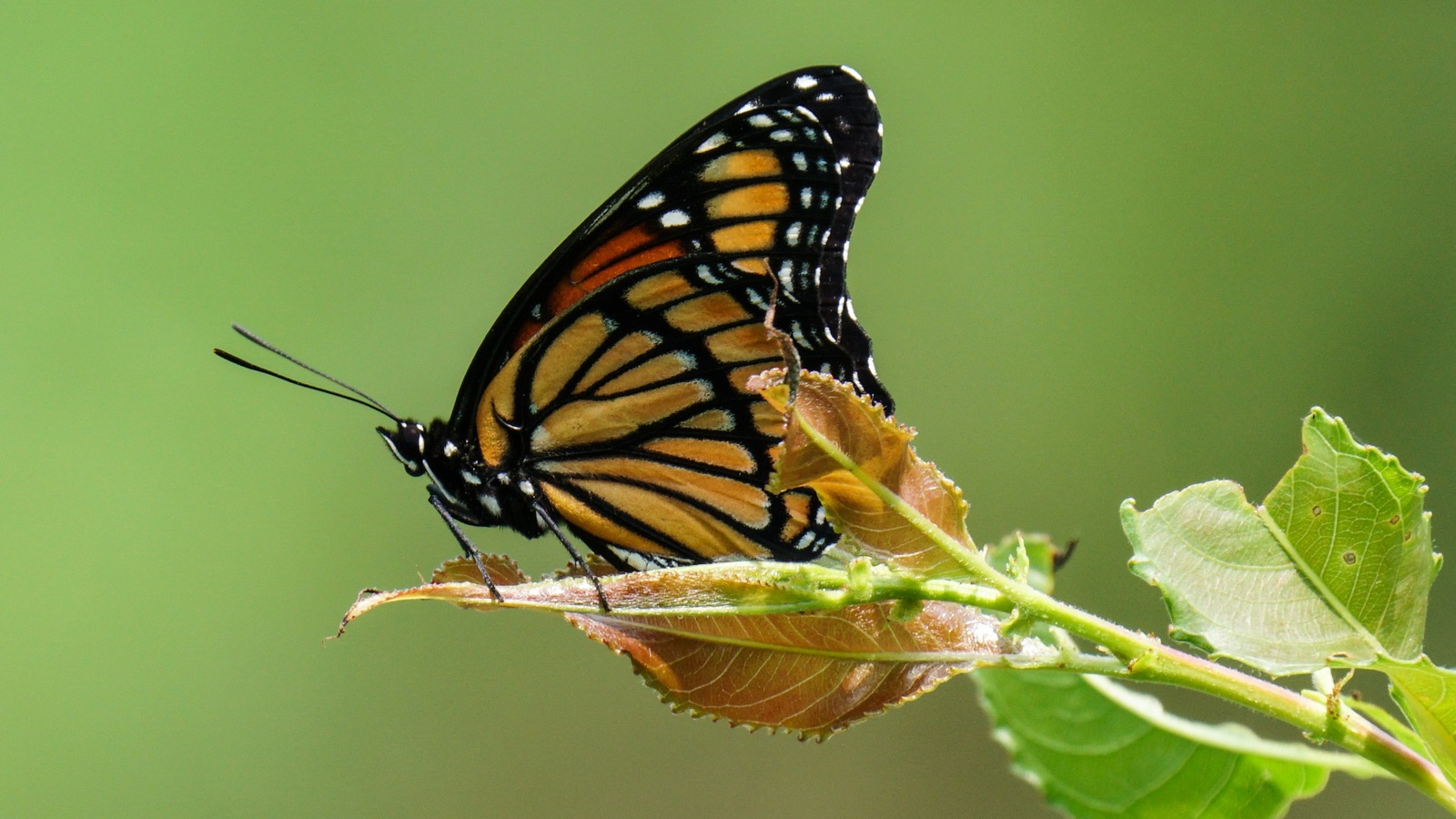
Orange wings with black veins and borders, white spots along the margins, and a curved black line crossing each hindwing. Usually smaller than a monarch.