
White-Winged Dove
Zenaida asiatica
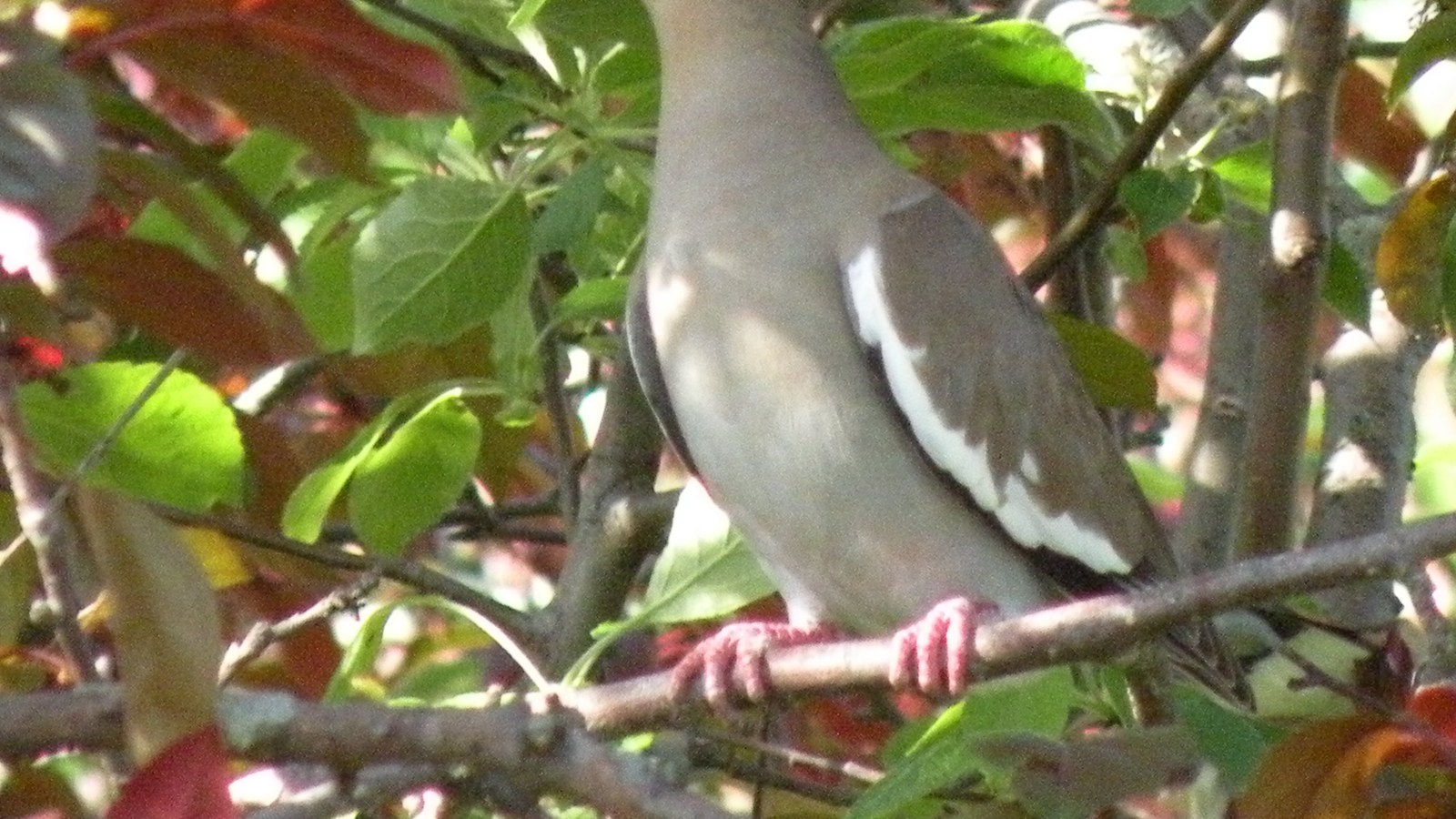
The white-winged dove is a large, pale dove now found across much of Florida, where its bold white wing patches stand out in flight.
White-winged doves have expanded their Florida range and now occur in neighborhoods, farms, parks, and woodland edges. They feed on the ground and in fruiting trees, then gather on exposed branches and utility lines.
Their deep, rhythmic song carries through residential areas during breeding season. Native fruiting plants and seed-bearing vegetation support them without concentrating birds as heavily as large feeding stations.
Habitat:
Urban and Residential Areas, Forests and Woodlands, Grasslands and Agricultural Areas
Area / Range:
Statewide
Diet:
They eat seeds, grains, berries, and fruits. They also visit bird feeders and may consume nectar or fruit from cactus and native shrubs.
Behavior:
White-winged doves forage in groups, fly strongly between feeding and roosting sites, and build loose twig nests in trees and shrubs.
Day
Active Times:
Best time to see:
Morning and late afternoon in neighborhoods, parks, farms, and woodland edges.
Florida Native Status:
Native
Conservation Status:
Least Concern globally. The species has expanded in Florida and adapts well to developed areas.
Safety Level:
Harmless
Safety Information:
Use modest amounts of seed, clean feeding areas, and avoid handling sick or dead birds with bare hands. Reduce food if rodents or oversized flocks gather.
Benefits to Property:
They disperse some seeds and add visible bird activity to residential landscapes with native fruiting plants.
Property Concerns:
Large groups can leave droppings beneath roosts and feeders. Spilled seed also attracts rodents and creates volunteer weeds.
Fun Fact:
A flying white-winged dove shows a bright white crescent across each wing, making it easy to separate from mourning doves at a distance.
Wildlife Laws:
White-winged doves are federally protected migratory game birds. Hunting is allowed only under current federal and Florida seasons, licenses, methods, and bag limits. Active nests remain protected.
Identification:
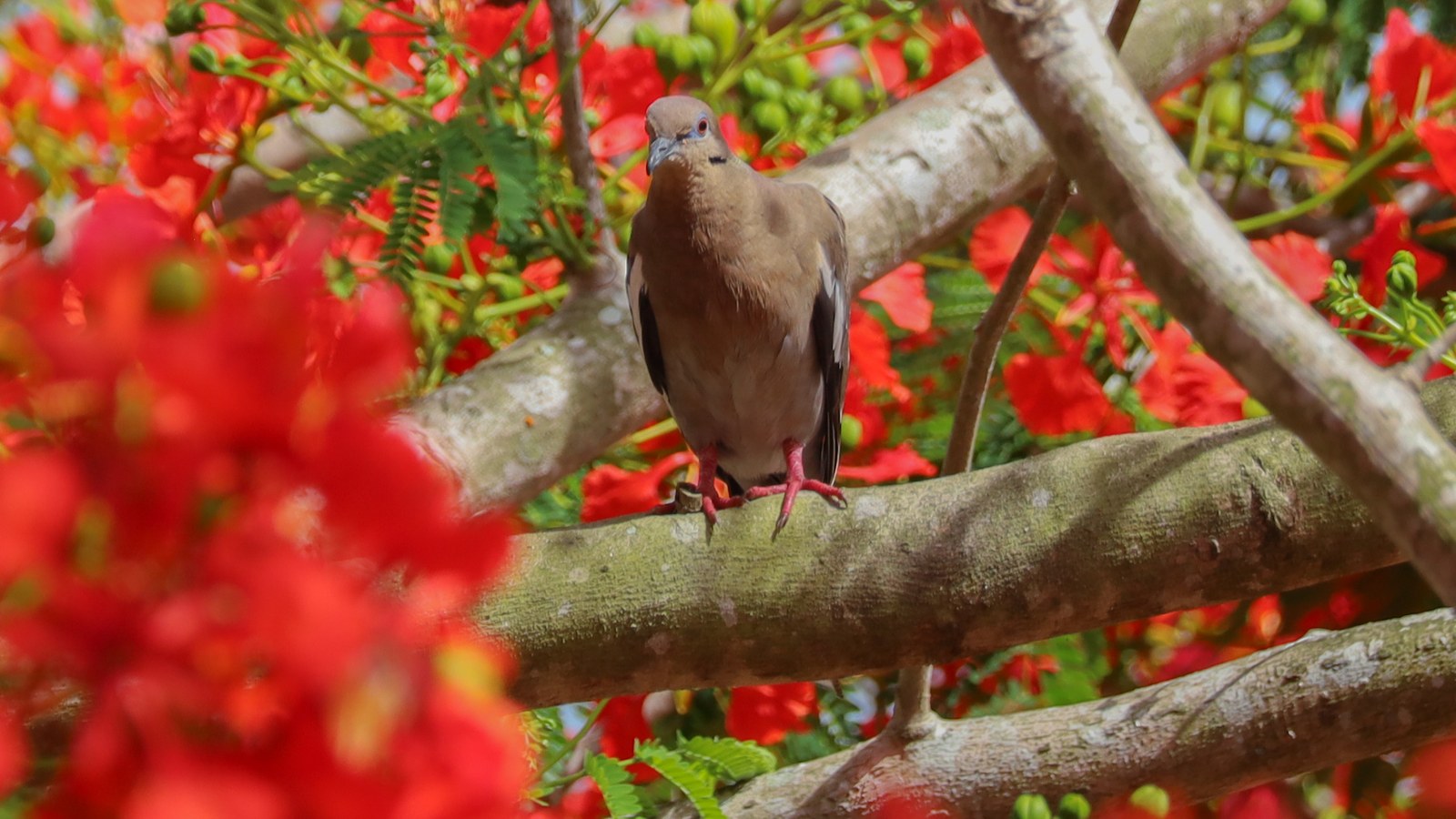
Look for a gray-brown dove with a broad white stripe along each folded wing, a blue eye ring, red eyes in adults, and black marks on the cheeks. The white wings flash clearly during flight.
Credits:
Facts: Cornell Lab of Ornithology. Images: primary and secondary, Wikimedia Commons.