
Willet
Tringa semipalmata
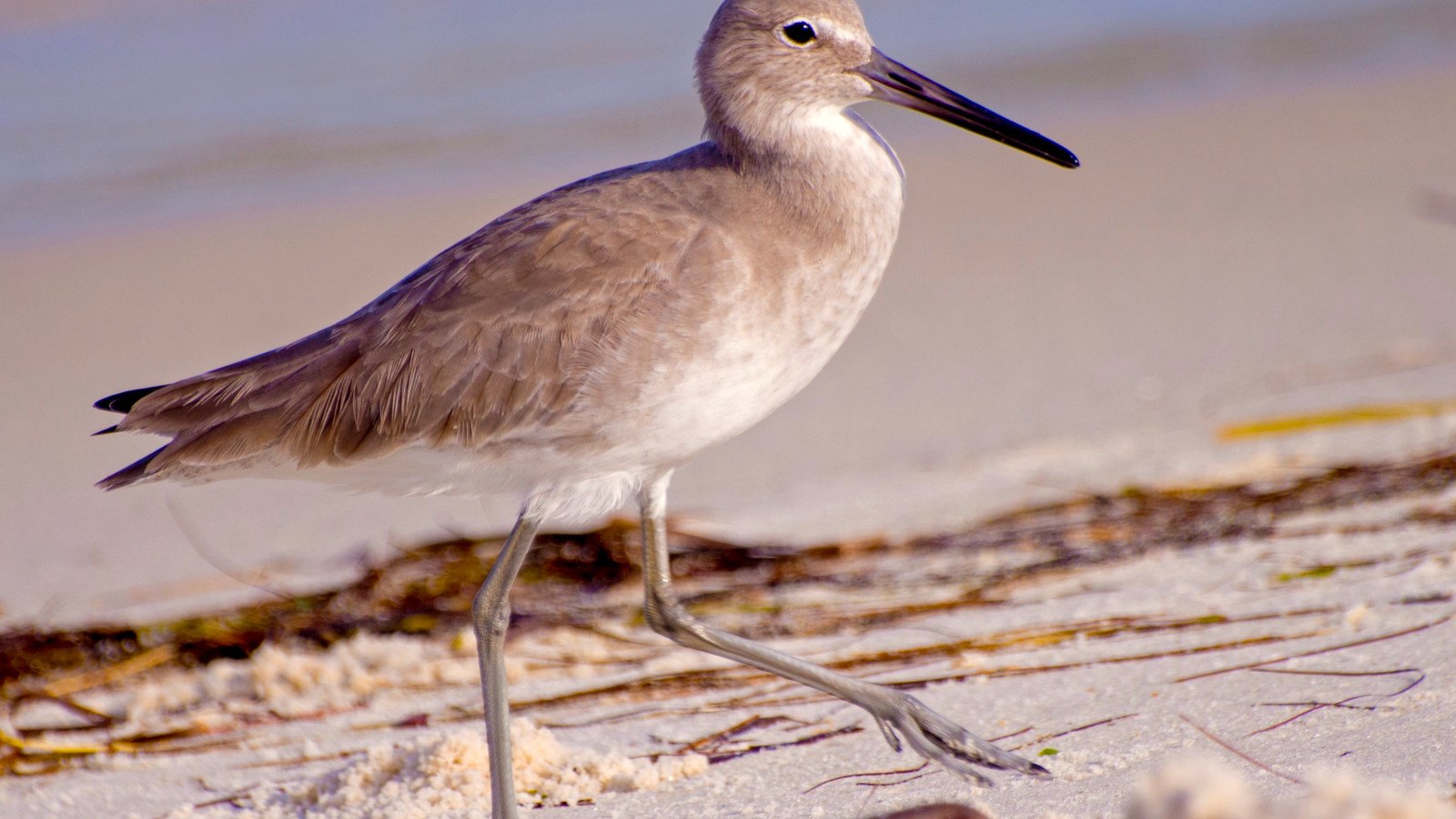
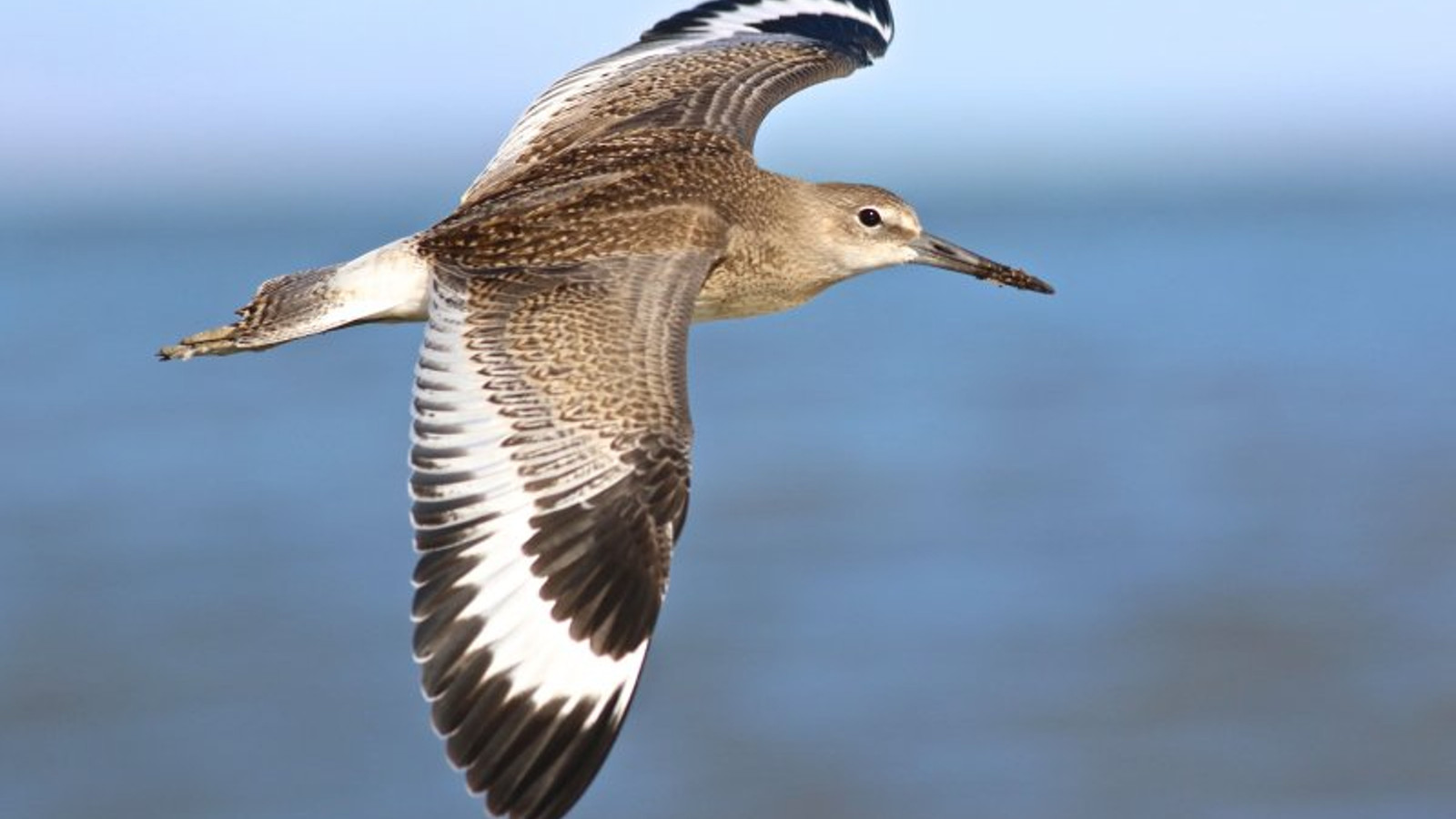
A sturdy Florida shorebird with a loud call and bold black-and-white wing pattern revealed in flight.
The Willet is familiar along Florida beaches, tidal flats, salt marshes, and estuaries. At rest it looks plain gray-brown, yet flight exposes broad white wing bands bordered in black.
Eastern Willets breed in coastal marshes, while migrants and wintering birds also use Florida shorelines. Quiet feeding flats and vegetated marsh edges provide essential places to forage and rest.
Habitat:
Estuaries and Bays, Mangroves and Salt Marshes, Beaches and Dunes
Area / Range:
Atlantic Coast, Gulf Coast
Diet:
Eats fiddler crabs, mollusks, marine worms, aquatic insects, small fish, and other invertebrates picked from mud, sand, and shallow water.
Behavior:
Walks steadily while probing and pecking along the waterline. Adults defend nesting territories loudly and may perch on posts or shrubs near marshes.
Daytime, Dawn and Dusk
Active Times:
Best time to see:
Year-round along quiet coasts, with stronger numbers during migration and winter.
Florida Native Status:
Native
Conservation Status:
IUCN Least Concern; coastal habitat loss and disturbance remain concerns.
Safety Level:
Low
Safety Information:
Observe from a distance, especially near calling adults or hidden chicks. Keep dogs leashed around beach and marsh nesting areas.
Benefits to Property:
Consumes crabs, insects, and other shoreline invertebrates while adding wildlife value to healthy coastal properties.
Property Concerns:
Rarely causes property damage. Shoreline hardening, mowing, and repeated disturbance reduce usable habitat.
Fun Fact:
- The bright wing pattern is more dramatic than its resting plumage.
- Its common name echoes its call.
- Adults vigorously defend nesting territory.
Wildlife Laws:
Protected under the federal Migratory Bird Treaty Act. Do not capture, harm, possess, or disturb active nests, eggs, or young.
Identification:
Look for long gray legs, a thick straight bill, a gray-brown body, and a prominent black-and-white wing pattern in flight. Its ringing pill-will-willet call often reveals it first.