
Wood Thrush
Hylocichla mustelina
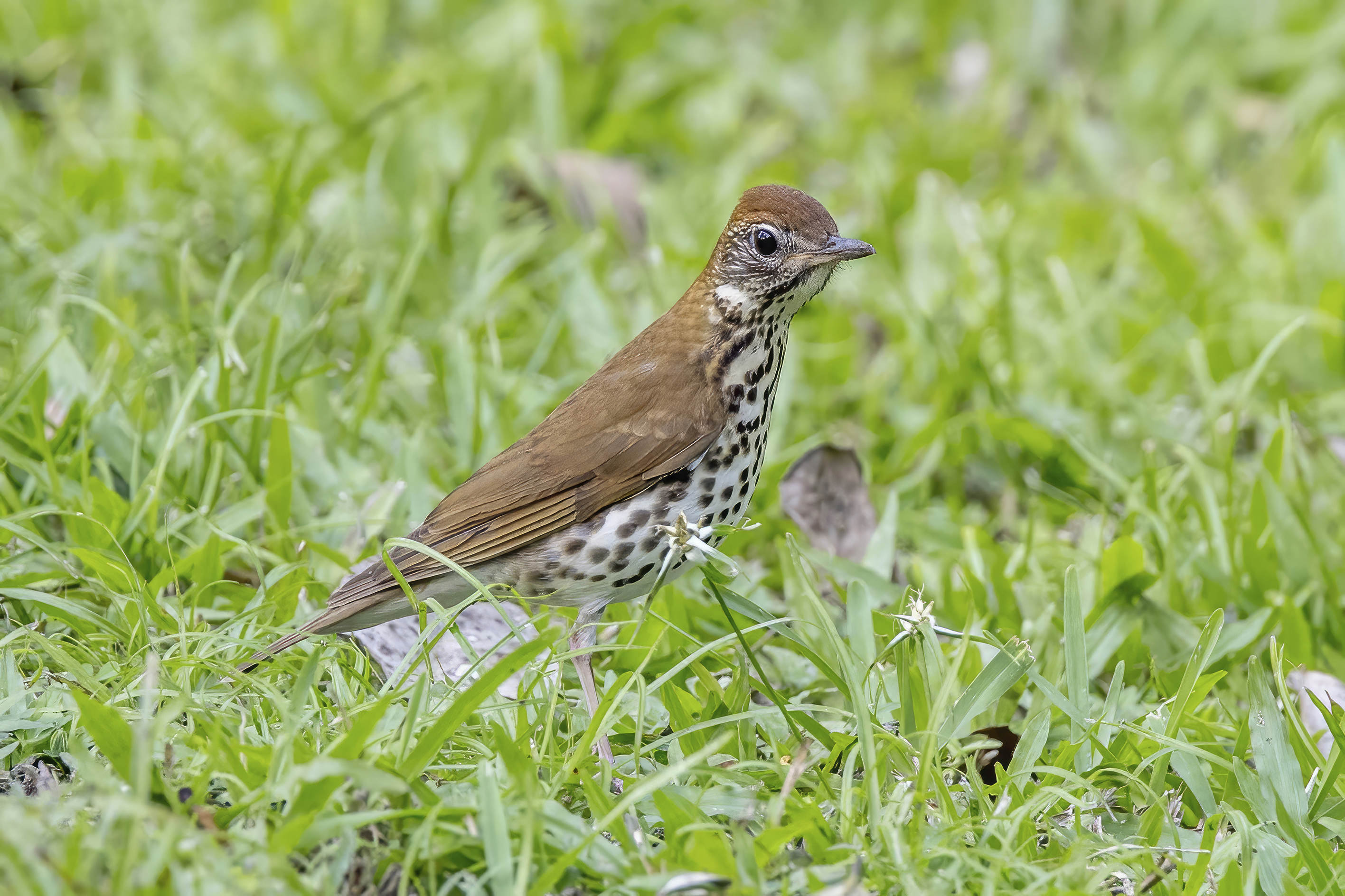
A warm brown forest thrush with large dark spots on a white breast, often seen searching leaf litter.
Wood Thrushes breed primarily in eastern North American forests and pass through Florida during migration. They favor shaded woodland, wooded hammocks, and forest understory.
Their rich song is best known on breeding grounds. In Florida, look for quiet birds turning leaves for food during spring and fall passage.
Habitat:
Forests and Woodlands
Area / Range:
Statewide
Diet:
Insects, spiders, earthworms, and other small invertebrates are gathered from the forest floor. Birds also eat fruit, especially outside the breeding season.
Behavior:
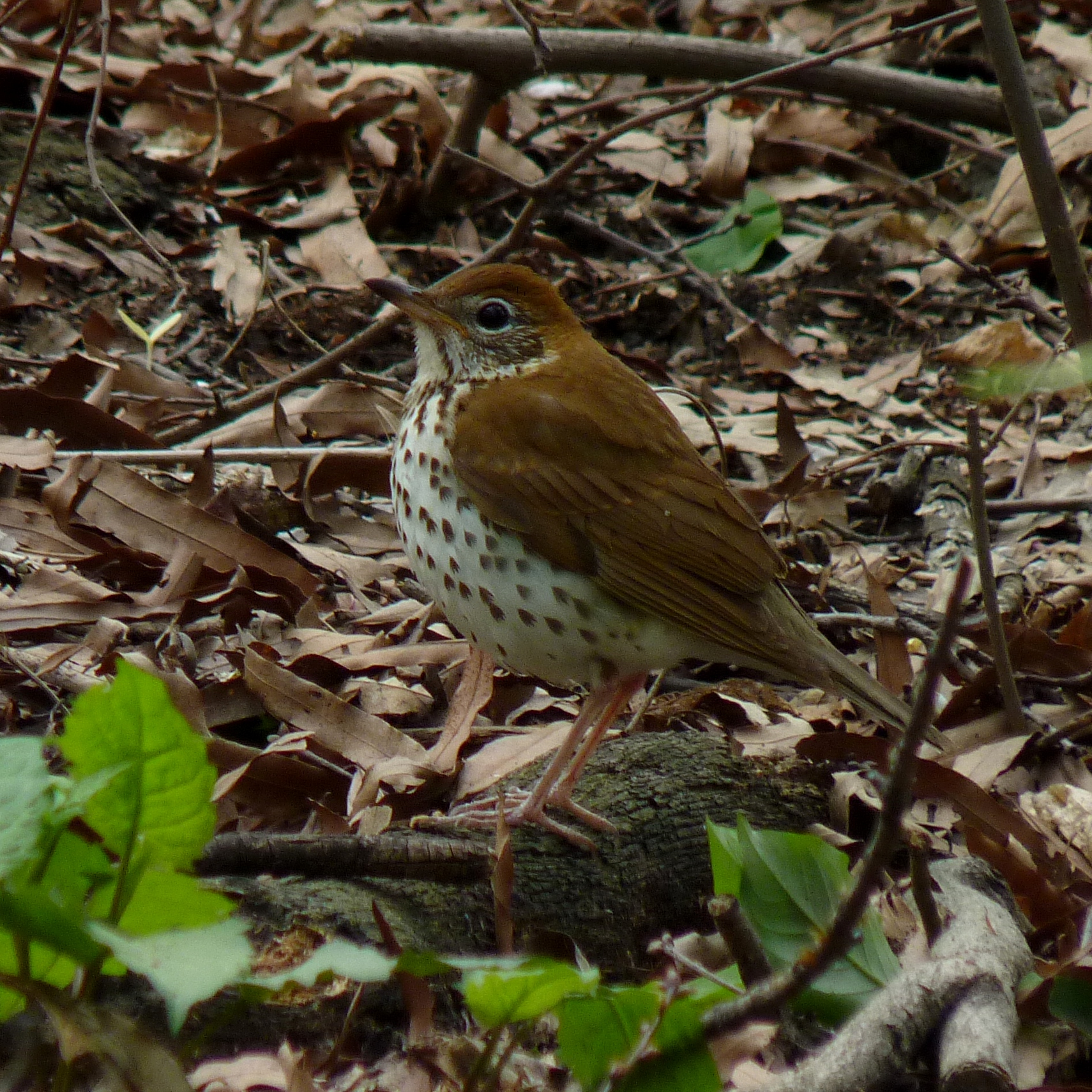
Wood Thrushes walk and hop through shaded leaf litter, pausing upright to inspect the ground. They often remain under cover.
Day
Active Times:
Best time to see:
Spring and fall migration in wooded hammocks and shaded parks
Florida Native Status:
Native Migratory Bird
Conservation Status:
A declining forest songbird affected by forest fragmentation and habitat loss across its range.
Safety Level:
Harmless. Respect Nests
Safety Information:
Harmless to people and pets. Keep pets away from resting migrants and avoid disturbing birds.
Benefits to Property:
They consume forest-floor invertebrates and disperse some seeds. Native woodland plants and undisturbed leaf litter help migrating birds refuel.
Property Concerns:
They do not harm property. Window collisions, cats, and loss of shaded understory pose greater risks to these birds.
Fun Fact:
A Wood Thrush has a specialized voice box that lets it produce overlapping tones in its flute-like song.
Wildlife Laws:
Protected by the federal Migratory Bird Treaty Act. Do not capture, harm, or possess birds or disturb active nests without authorization.
Identification:
The upperparts are warm cinnamon brown, with a white face and underparts marked by large, round dark spots.
A broad white eye ring, upright posture, and short tail help distinguish it from smaller spotted thrushes.