
Yellow-Billed Cuckoo
Coccyzus americanus
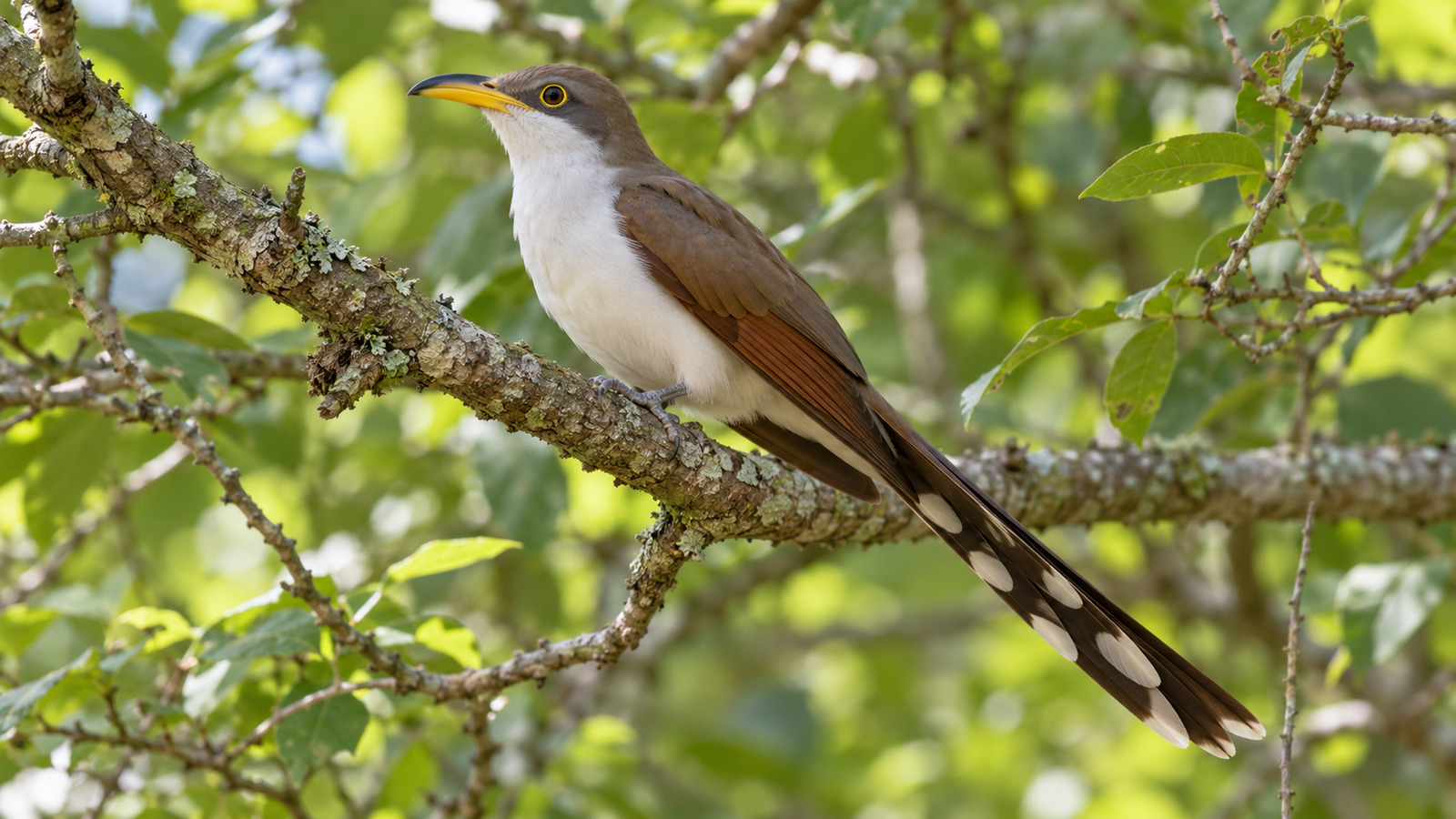
The Yellow-Billed Cuckoo is a secretive, long-tailed woodland bird heard across Florida during the warmer months, often near outbreaks of caterpillars or cicadas.
Yellow-Billed Cuckoos are slender native birds of wooded habitats with openings, edges, and dense leafy canopies. They breed and migrate through Florida, where their slow, knocking calls are often noticed before the well-camouflaged birds are seen.
These cuckoos move deliberately through foliage while searching for large insects. They are especially associated with periods of abundant caterpillars, cicadas, and other arthropods, which can influence where and when they appear.
Habitat:
Forests and Woodlands, Freshwater Wetlands, Urban and Residential Areas
Area / Range:
Statewide
Diet:
Yellow-Billed Cuckoos feed mainly on large insects, including hairy caterpillars, cicadas, katydids, grasshoppers, and beetles. They also take spiders, small frogs, lizards, eggs, and occasional fruit. Caterpillar outbreaks can draw several birds to the same wooded area.
Behavior:
These birds forage slowly in leafy canopies and may remain motionless for long periods. Their distinctive guttural knocking call may be heard during the day or at night. Both parents help build the loose twig nest, incubate the eggs, and feed the rapidly developing young.
Day, Night
Active Times:
Best time to see:
Warm-season mornings after rain or near woodland caterpillar and cicada activity
Florida Native Status:
Native seasonal breeder
Conservation Status:
Still widespread in eastern North America but undergoing a steep long-term population decline
Safety Level:
Harmless. Respect Nests
Safety Information:
Yellow-Billed Cuckoos are harmless. Observe quietly, keep pets away from wooded nesting habitat, and avoid pruning or removing occupied shrubs and trees during the breeding season.
Benefits to Property:
Yellow-Billed Cuckoos consume large caterpillars and other insects that may defoliate trees and shrubs. Native woodland edges, layered vegetation, and pesticide-free habitat help support this useful seasonal predator.
Property Concerns:
These birds create no meaningful property problems. Loss of connected woodland, removal of dense understory, and broad insecticide use can reduce both nesting cover and prey. Inspect vegetation for active nests before warm-season tree or shrub work.
Fun Fact:
Yellow-Billed Cuckoos are among the few birds that readily eat hairy caterpillars. Their habit of calling near storms helped inspire the traditional nickname rain crow.
Wildlife Laws:
Yellow-Billed Cuckoos, their feathers, active nests, eggs, and young are protected under the federal Migratory Bird Treaty Act. Do not capture, harm, possess, or remove birds or active nests without authorization.
Identification:
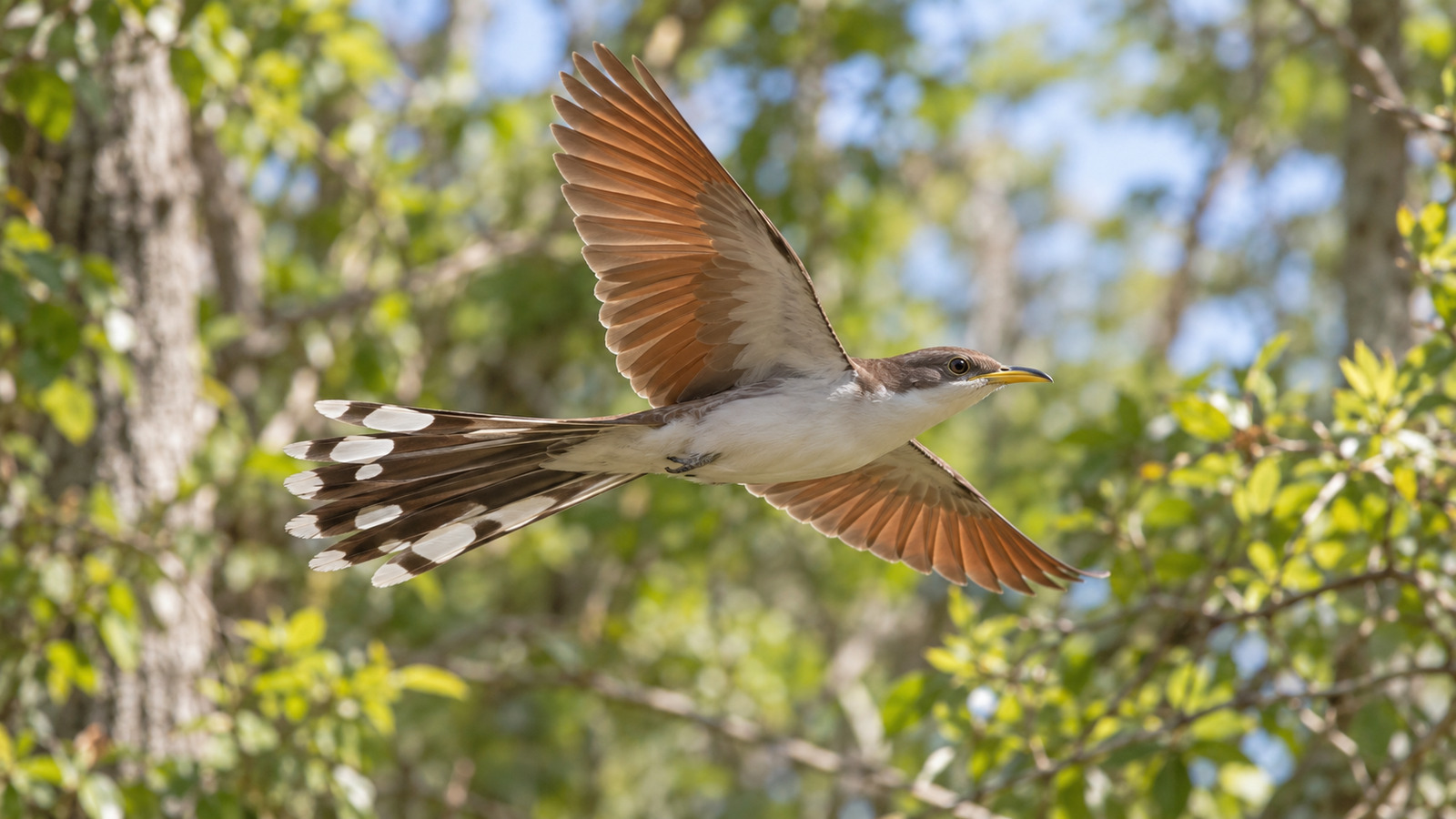
This species is long and slim with a flat head, a slightly downcurved bill that is mostly yellow, warm brown upperparts, clean white underparts, and a dark facial mask. Rufous panels flash in the wings during flight. The long tail shows broad white spots and narrower black bands from below.