
Yellow-Rumped Warbler
Setophaga coronata
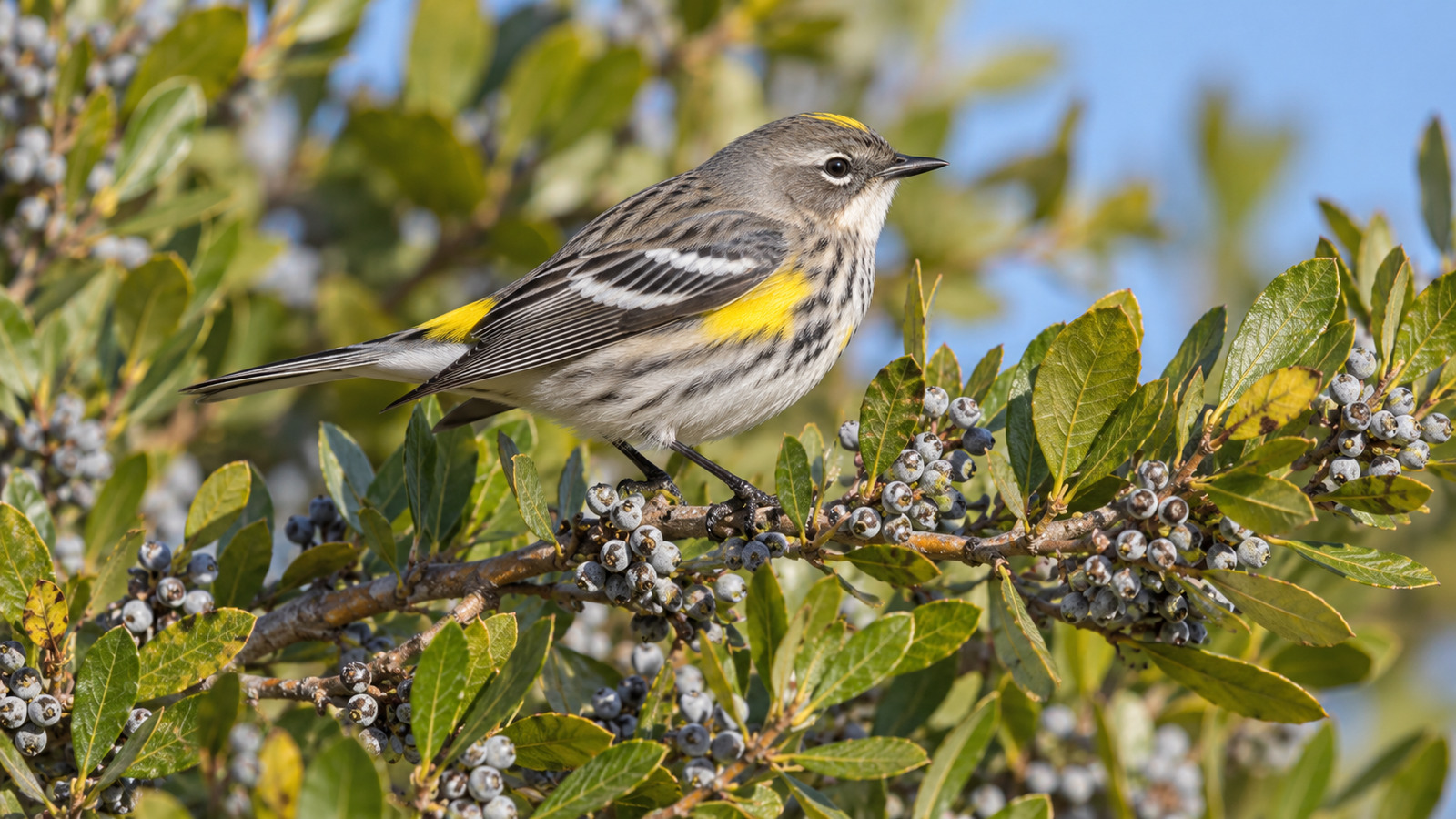
A common winter warbler in Florida, recognized by its yellow rump, streaked sides, white wing bars, and active insect-catching behavior.
Yellow-Rumped Warblers arrive across Florida during fall and remain common through winter and early spring. They use pine woods, forest edges, coastal scrub, parks, and residential landscapes.
Florida birds are primarily the eastern Myrtle form. Their ability to digest waxy berries helps them remain farther north in winter than most other warblers.
Habitat:
Forests and Woodlands, Scrub and Dry Prairie, Urban and Residential Areas
Area / Range:
Statewide
Diet:
Yellow-Rumped Warblers eat insects, spiders, and other small invertebrates. During fall and winter they also rely on berries, including wax myrtle and bayberry.
Behavior:
They forage from the ground to treetops, gleaning insects from foliage and making short aerial flights after flying prey.
Wintering birds often travel in loose flocks through trees, shrubs, lawns, and coastal vegetation.
Day
Active Times:
Best time to see:
Late fall through early spring in wooded edges, parks, wax-myrtle thickets, and residential trees
Florida Native Status:
Native winter resident and migrant
Conservation Status:
Common and widespread, though habitat loss, pesticide exposure, window strikes, and free-roaming cats create preventable local risks.
Safety Level:
Harmless. Respect Nests
Safety Information:
Harmless to people and pets. Observe without chasing, keep cats indoors, and use bird-safe window treatments where collisions occur.
Benefits to Property:
Yellow-Rumped Warblers consume insects and use native berries, helping connect Florida yards and parks to the seasonal migration food web.
Property Concerns:
They do not damage landscapes. Preserve fruiting native shrubs and avoid broad insecticide use where birds are feeding.
Fun Fact:
The species can digest waxes in bayberries and wax myrtle fruit, a rare ability among warblers.
Older field guides called the eastern form the Myrtle Warbler and placed it in the genus Dendroica.
Wildlife Laws:
Protected migratory bird. Do not capture, harm, possess, or destroy active nests, eggs, or young. Federal authorization may be required before removing an active nest.
Identification:
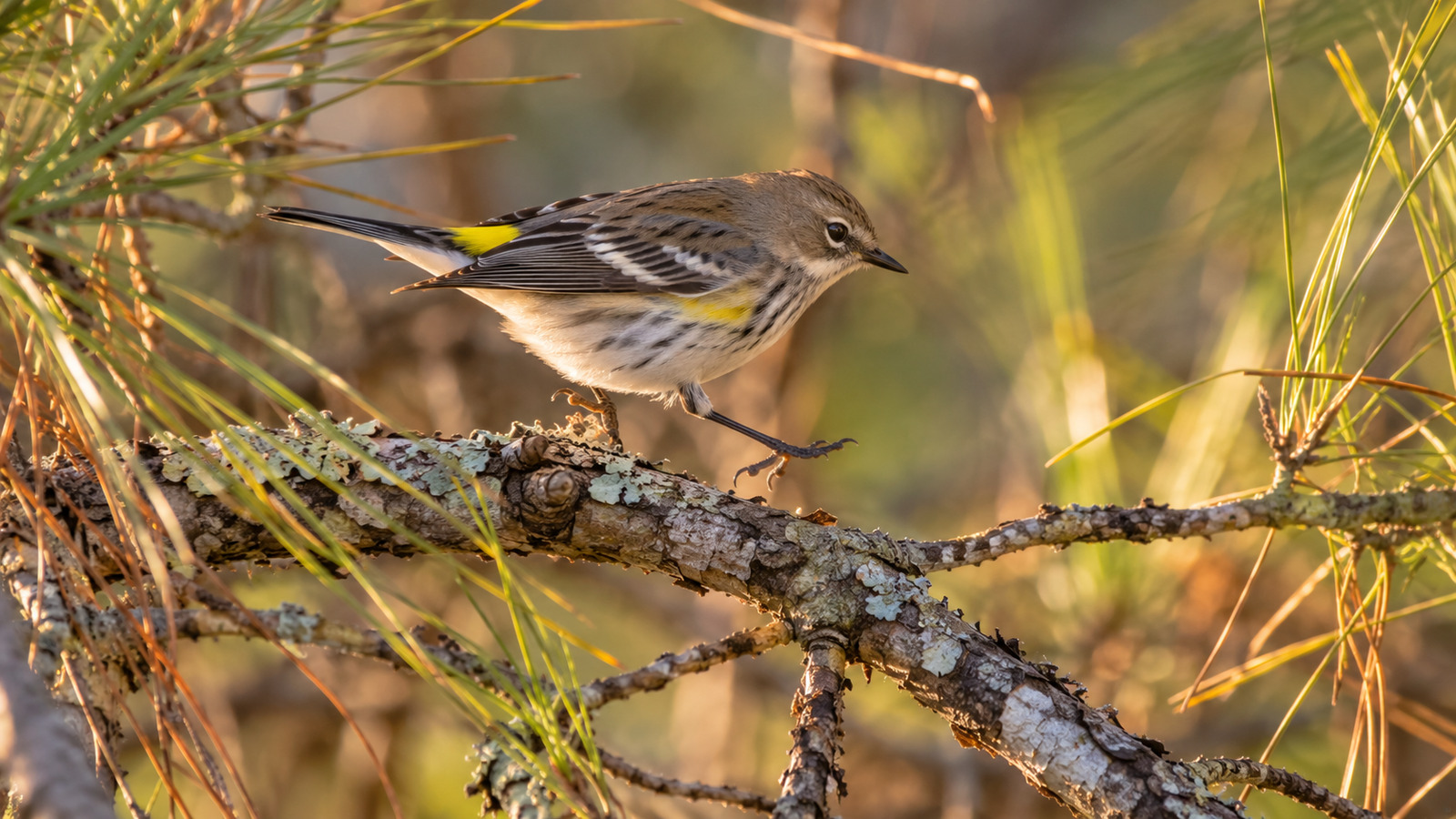
Winter birds are gray-brown above with streaked sides, two pale wing bars, white tail patches, and a bright yellow rump. Yellow side patches are often visible.
Breeding males show stronger black, gray, white, and yellow contrast. The yellow rump flashes when the bird flies or turns away.