
Zebra Longwing
Heliconius charithonia
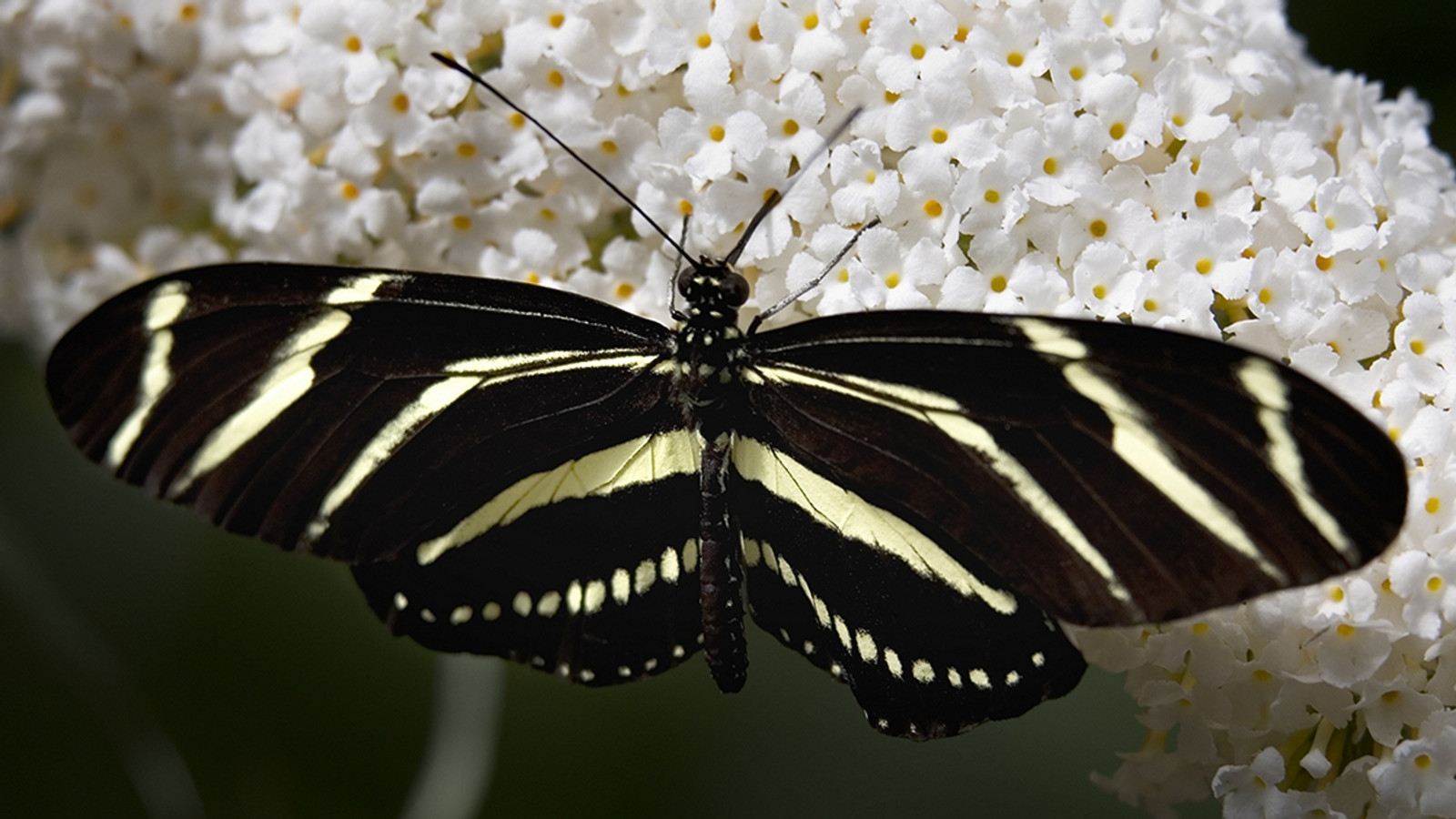
Florida's state butterfly, recognized by long black wings crossed with pale yellow stripes.
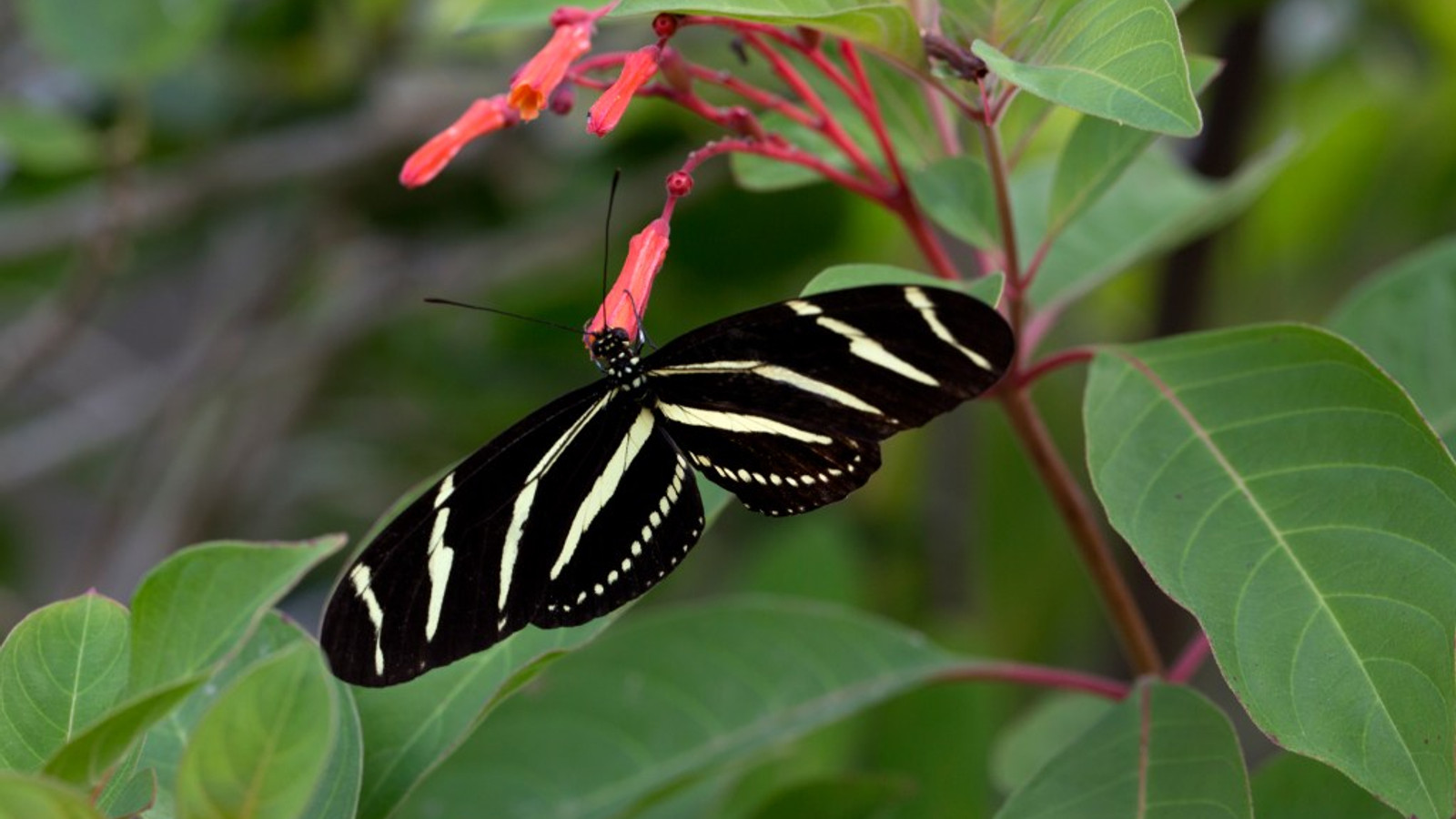
Zebra Longwings live in shaded hammocks, woodland edges, mangroves, and gardens with passionflower vines. Adults feed on both nectar and pollen, an unusual habit that helps support a long adult life.
At night, groups may gather repeatedly on the same sheltered branches. Native passionflowers provide essential caterpillar food.
Habitat:
Mangroves and Salt Marshes, Forests and Woodlands, Urban and Residential Areas
Area / Range:
Statewide
Diet:
Adults take nectar and pollen from flowers. Caterpillars feed on passionflower leaves.
Behavior:
Flies slowly through shaded vegetation, visits flowers for extended periods, and forms communal night roosts.
Daytime
Active Times:
Best time to see:
Warm daylight hours around native passionflowers, firebush, lantana, and sheltered hammock edges.
Florida Native Status:
Native
Conservation Status:
Not federally or state listed; cold weather, habitat loss, and pesticide use can reduce local populations.
Safety Level:
Low
Safety Information:
Harmless. Avoid touching wings or disturbing night roosts.
Benefits to Property:
Pollinates flowers and provides visible evidence of a pesticide-conscious, wildlife-friendly landscape.
Property Concerns:
Caterpillars chew passionflower foliage, which is their natural host plant. Established vines usually recover.
Fun Fact:
- Florida designated it the state butterfly.
- Adults collect pollen as well as nectar.
- They often return to the same communal roost.
Wildlife Laws:
No special listed-species protection applies. Collecting in parks or preserves and pesticide applications remain subject to applicable rules and label directions.
Identification:
Slender butterfly with elongated black wings marked by narrow pale yellow stripes and small red spots near the body. Its flight is slow and floating.