
Climbing Aster
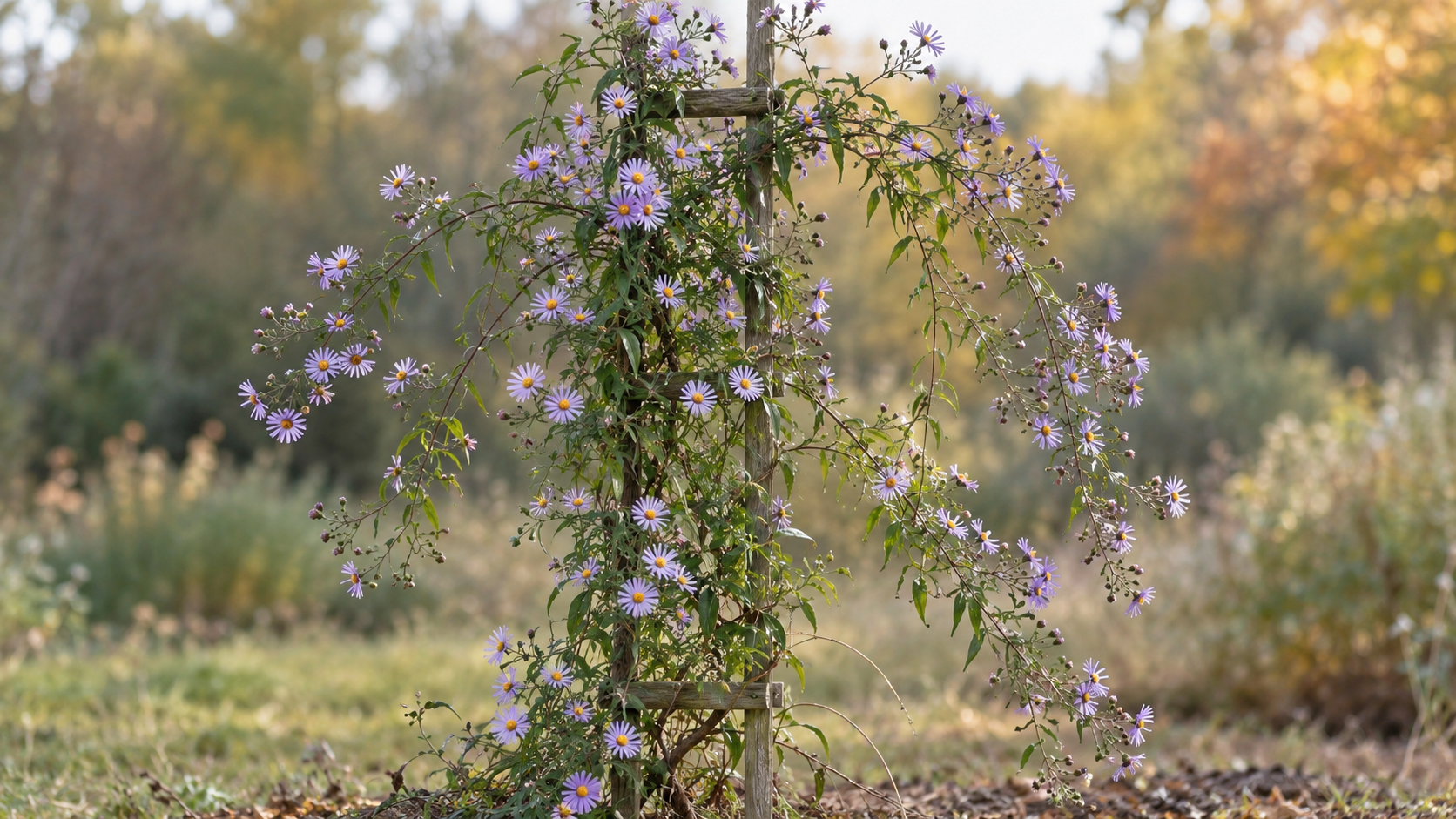
Climbing Aster vine with lavender daisy flowers trained on a support
Ampelaster carolinianus
Overview
Climbing Aster is a Florida-native scrambling perennial with long arching stems and lavender-pink daisy flowers in fall. It does not climb with tendrils, so it weaves through nearby vegetation or rests on a sturdy support.
Mature Size and Habit
Stems commonly travel 8 to 15 feet and may extend farther in favorable moist soil. The plant forms a substantial woody-based mass over time and can become broad if it is not trained.
Best Landscape Uses
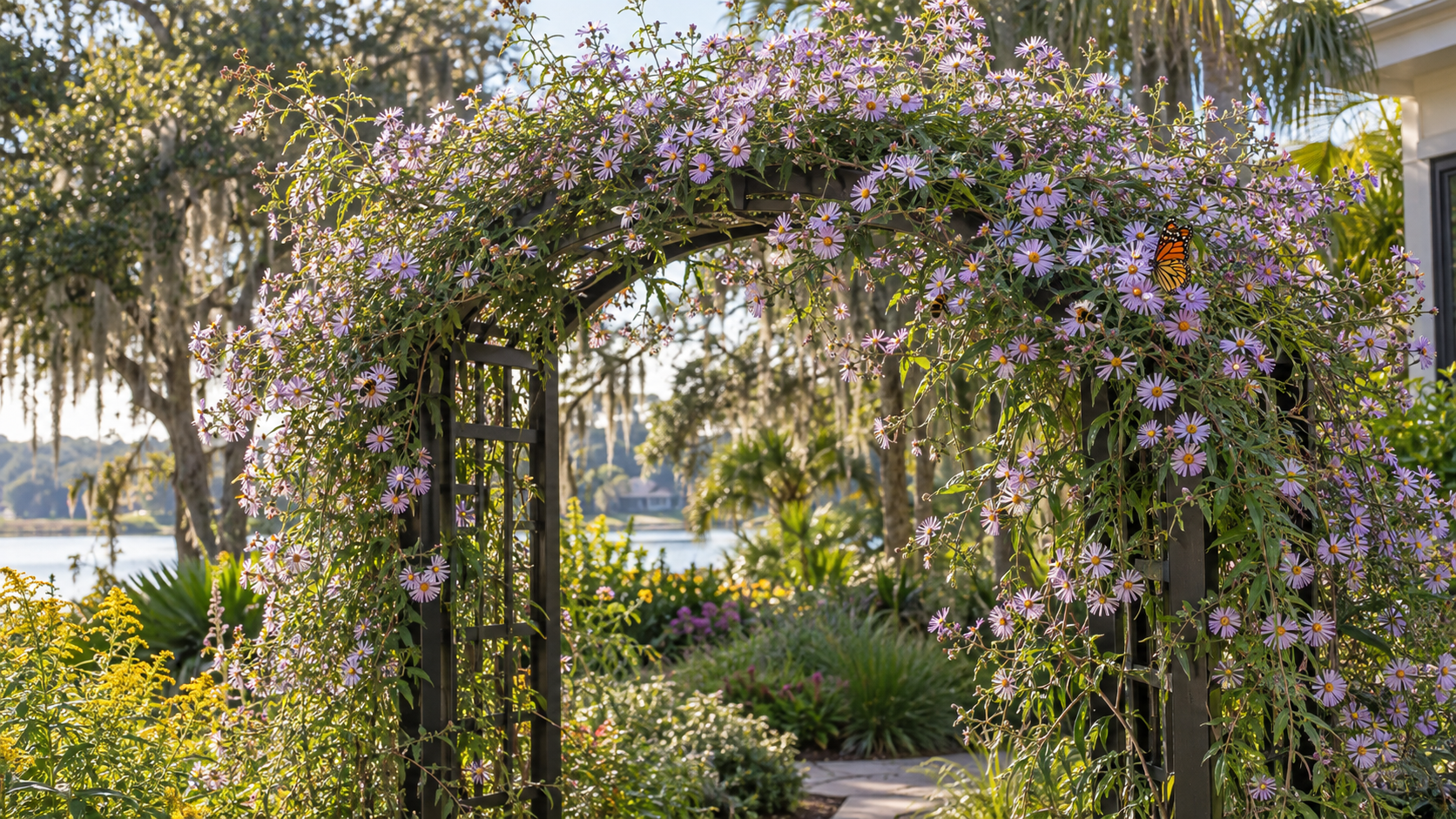
Train it on a strong arbor, open fence, or large trellis, or allow it to scramble through a spacious native shrub border. Late-season flowers are valuable when many other plants have finished blooming. It is not suitable for a small mailbox post or lightweight trellis.
Sunlight
Full sun to partial shade works well. Several hours of direct light encourage heavier flowering. In deep shade, growth becomes loose and bloom declines.
Soil and Drainage
It prefers moist, acidic to neutral soil with organic matter and tolerates periodically wet conditions. Average garden soil is acceptable when it does not remain severely dry. Good airflow helps keep dense growth healthy.
Irrigation
Keep the root zone consistently moist during establishment. Mature plants appreciate supplemental water during extended dry weather, especially in full sun, but should not be kept in stagnant water.
Best Planting Season
Plant from fall through early spring in Tampa and Central Florida. The root system can establish during cooler weather before vigorous warm-season growth begins.
Pruning and Maintenance
Cut back and thin stems in late winter before new growth. Tie new canes loosely to their support and remove wandering stems during the growing season. Avoid trimming away the developing late-season flower display.
Wildlife Value
Fall blooms supply nectar and pollen to native bees, butterflies, and other insects at an important seasonal transition. Dense growth can also provide light cover for small wildlife.
Cold and Heat Sensitivity
The roots tolerate Central Florida winter cold, and top growth may thin or die back after frost. Summer heat is well tolerated when soil moisture is adequate.
Toxicity, Thorns, and Roots
No prominent thorn hazard is present, and serious toxicity is not commonly reported for landscape contact. The spreading root crown and long stems are vigorous, so keep the plant away from gutters, screens, and delicate shrubs.
Invasive and Placement Concerns
This is a Florida native and is not considered invasive, but vigorous stems can overwhelm a small support or neighboring plants. Annual pruning and a defined training structure are essential.
Authoritative Resources
Read the Lady Bird Johnson Wildflower Center profile and the Royal Botanic Gardens, Kew record search.
Installed Prices
(No price means not available)
1 Gallon Price
3 Gallon Price
7 Gallon Price
15 Gallon Price
25 Gallon Price
30 Gallon Price
2 Gallon Price
5 Gallon Price
45 Gallon Price
65 Gallon Price
100 Gallon Price
200 Gallon Price
2" Pot Price
3" Pot Price
4" Pot Price
6" Pot Price
8" Pot Price
10" Pot Price
Bloom Color
Pink, Purple
Bloom Season
Summer, Fall
Wildlife Benefits
Butterflies, Bees, Wildlife Shelter
Safety Concerns
Toxic if Eaten, Thorns
Plant Features
Flowering
Growth Rate
Moderate
Drought Tolerance
Low
Water Needs
High
Maintenance Level
Moderate
Landscape Use
Border
Mature Width
4–8 Feet
Mature Height
15–30 Feet
Sun Exposure
Full Sun, Partial Sun, Shade