
Coralbean
Erythrina herbacea
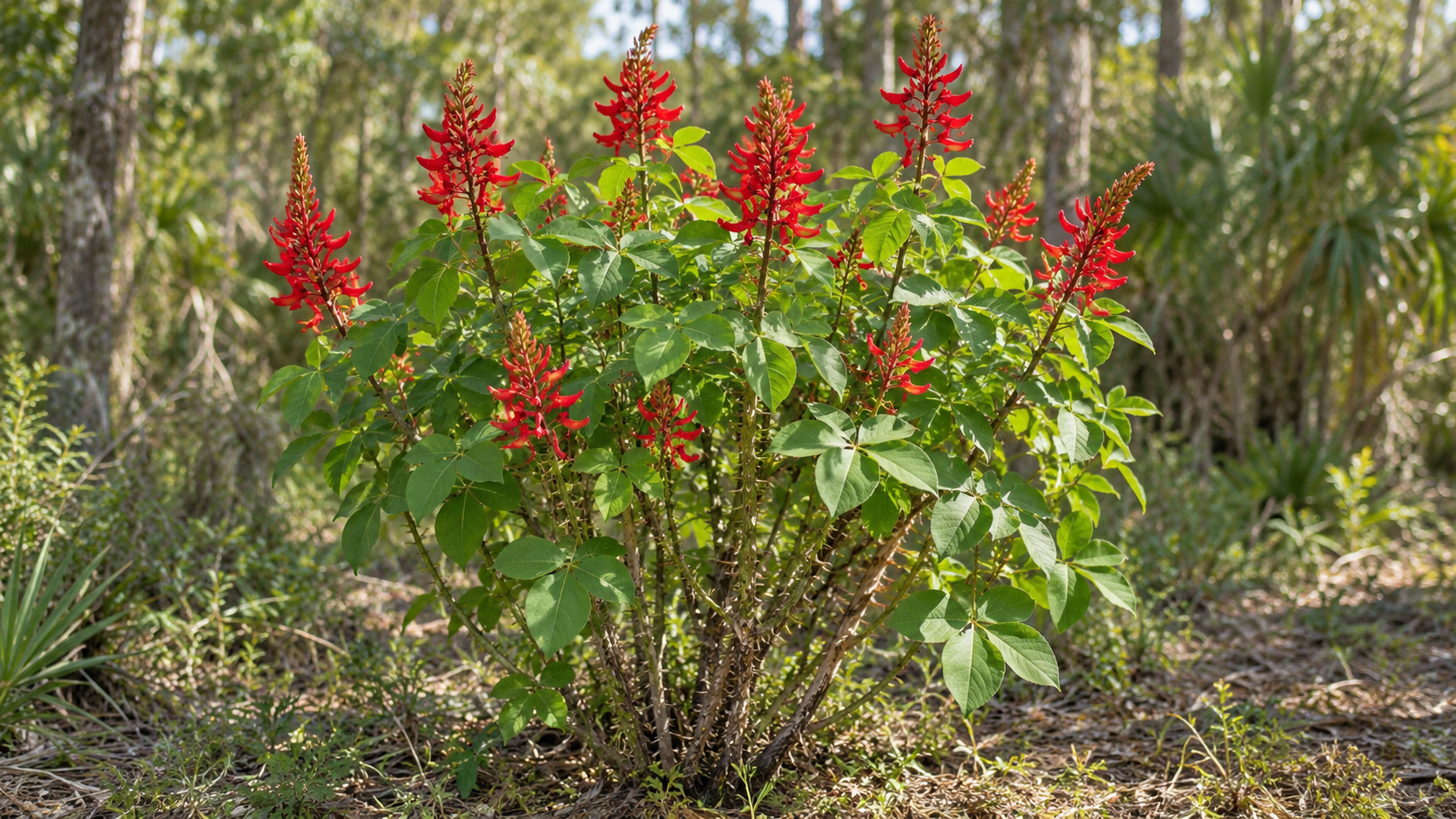
Florida Coralbean shrub with red tubular flower spikes and trifoliate leaves
Overview
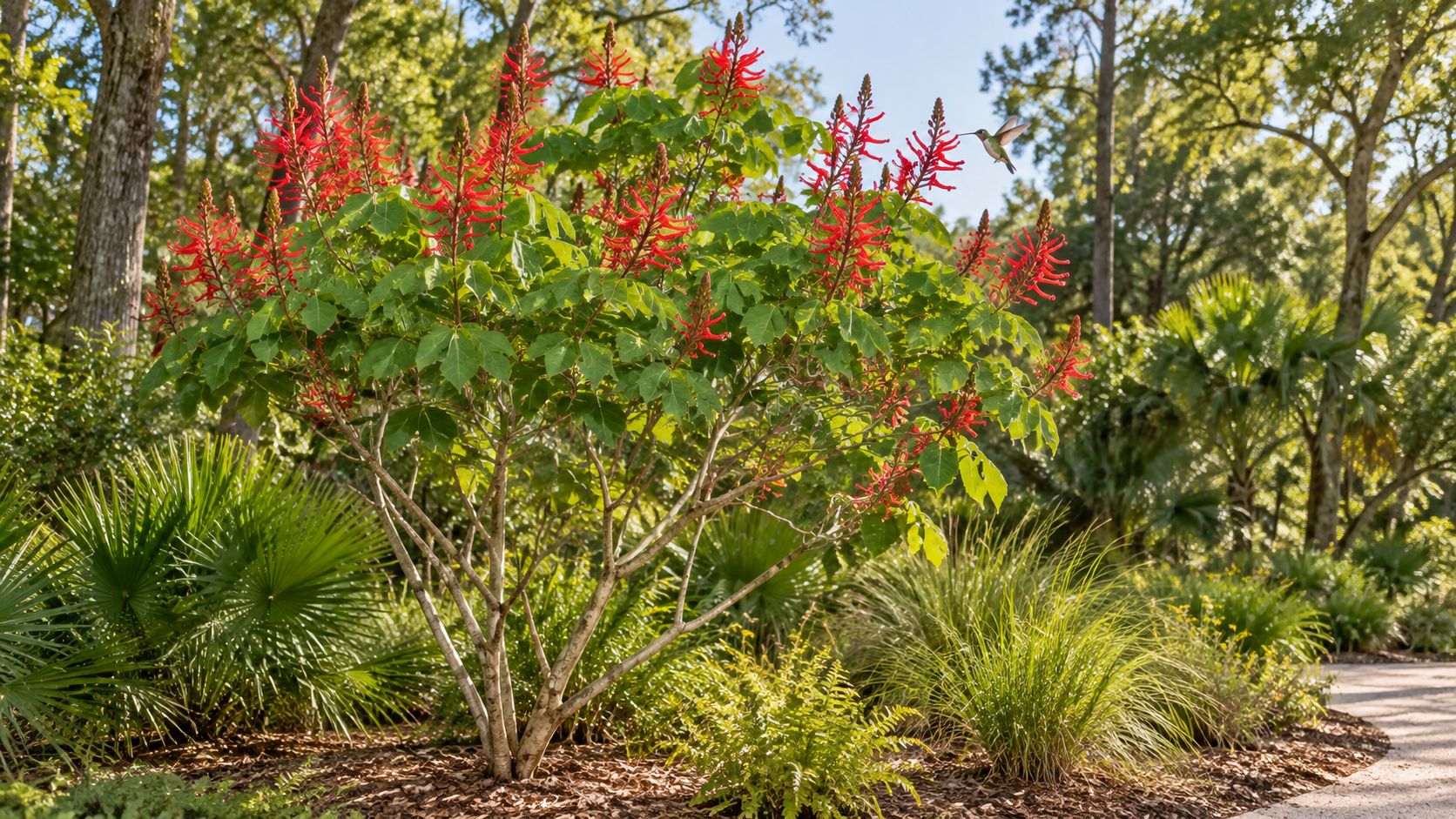
Coralbean is a Florida-native shrub or small tree celebrated for tall spikes of scarlet tubular flowers. Its open form, bold three-part leaves, and hummingbird activity make it a memorable accent in naturalistic landscapes.
Mature Size and Habit
In Central Florida it commonly reaches 6 to 12 feet tall and 4 to 8 feet wide, sometimes dying back after a freeze and returning from the roots. In mild protected sites it can develop woody stems and grow larger.
Best Landscape Uses
Use in native wildlife gardens, sunny woodland edges, informal borders, and as a seasonal focal plant. Position it toward the back of a bed where its open winter appearance, prickly stems, and toxic seeds will not create a contact risk.
Sunlight
Full sun produces the strongest flowering. Partial shade is tolerated, especially beneath an open canopy, but dense shade reduces bloom and can make stems lanky.
Soil and Drainage
Well-drained sand or loam is ideal. Established plants tolerate dry, nutrient-poor Florida soils. Avoid constantly saturated locations and heavy irrigation zones.
Irrigation
Water regularly until established, then reduce frequency. Mature plants are drought tolerant and generally need supplemental water only during extended dry periods.
Best Planting Season
Plant in late fall through spring in Tampa, with early spring especially useful where winter dieback is expected. Keep new plants evenly moist through their first warm growing season.
Pruning and Maintenance
Prune dead or freeze-damaged stems after the risk of hard cold has passed. Remove seed pods before they mature when children or pets use the area. Wear gloves and preserve enough older wood to support the spring flower display.
Wildlife Value
The red tubular flowers are an important nectar source for hummingbirds and also attract butterflies. The plant contributes seasonal structure to native wildlife beds.
Cold and Heat Sensitivity
Coralbean thrives in Florida heat and handles drought after establishment. Frost may remove top growth in Tampa, but healthy roots often resprout in spring.
Toxicity, Thorns, and Roots
The bright red seeds are highly toxic if eaten. Stems and leaf stalks may carry curved prickles. Roots are not normally considered pavement-breaking, but the plant should remain well away from play areas, pet runs, walkways, and edible gardens.
Invasive and Placement Concerns
This Florida native is not considered invasive. Seedlings may appear near a fruiting plant, and the open branching habit can look informal. Provide a naturalistic setting and enough clearance for safe maintenance.
Authoritative Resources
See the NC State Extension Coralbean profile and the USDA plant profile.
Installed Prices
(No price means not available)
1 Gallon | 2 Gallon | 3 Gallon | 5 Gallon | 7 Gallon | 15G Price | 25 Gallon | 30 Gallon | 45 Gallon |
|---|---|---|---|---|---|---|---|---|
Bloom Color
Red
Bloom Season
Spring
Wildlife Benefits
Butterflies, Hummingbirds
Safety Concerns
Toxic if Eaten, Pet Concern
Plant Features
Flowering
Growth Rate
Moderate
Drought Tolerance
High
Water Needs
Moderate
Maintenance Level
Moderate
Landscape Use
Border, Accent Plant
Mature Width
4–8 Feet
Mature Height
8–15 Feet
Sun Exposure
Full Sun, Partial Sun, Shade