
Dwarf Fakahatchee Grass
Tripsacum floridanum
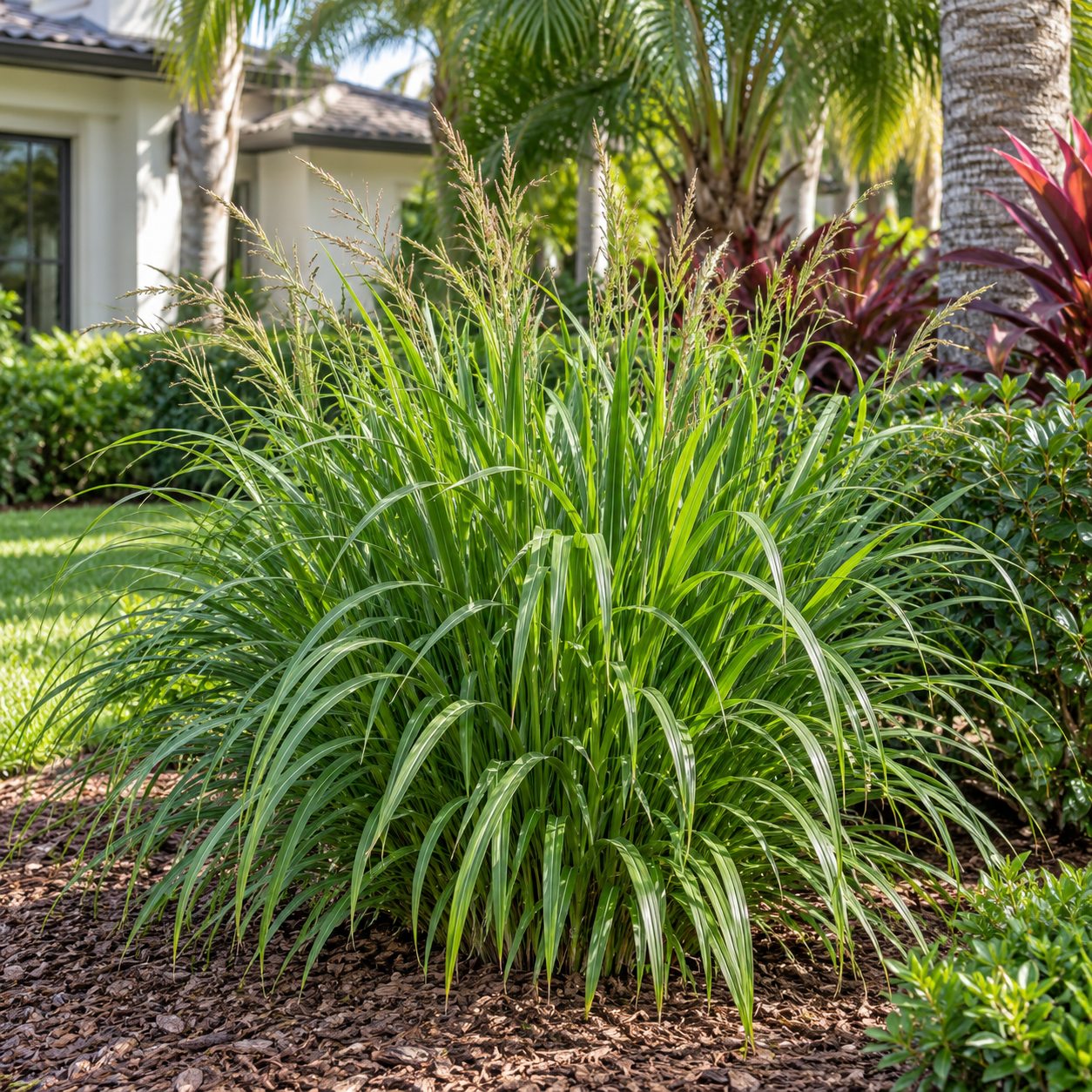
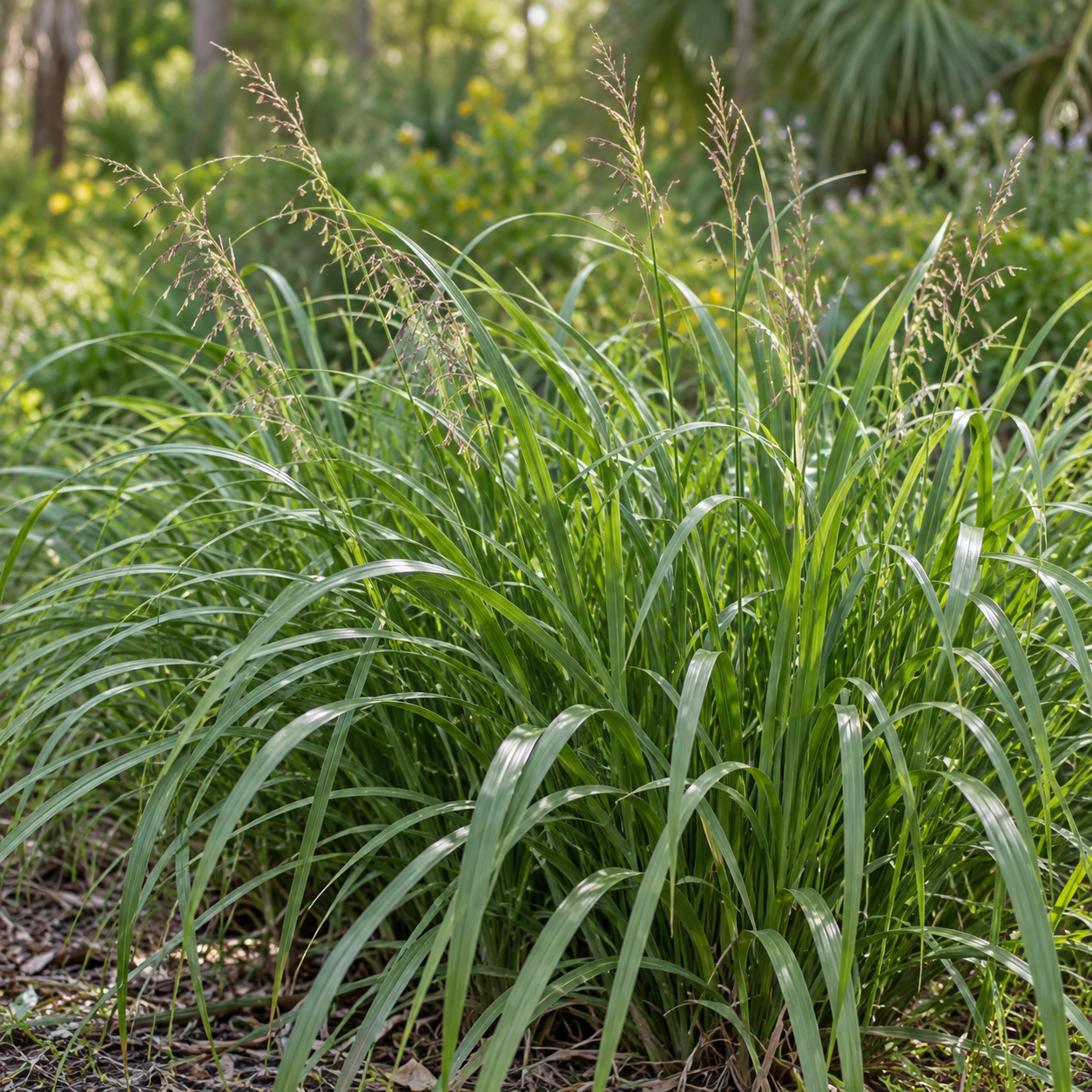
Dwarf Fakahatchee grass forming a compact fountain of glossy green leaves
Overview
Dwarf Fakahatchee Grass is a compact Florida-native grass with glossy narrow leaves and a clean fountain form.
Mature Size and Habit
Clumps generally reach 2 to 3 feet tall and about 2 to 3 feet wide.
Best Landscape Uses
Use it along borders, in native gardens, rain-garden edges, repeated masses, erosion-control plantings, or as a low grassy accent.
Sunlight
Full sun to partial sun is suitable. Brighter light promotes a dense, upright clump, while afternoon shade can be helpful on very hot exposed sites. Deep shade may lead to thin or floppy foliage.
Soil, Drainage, and Irrigation
The grass adapts to moist or seasonally wet soil and also handles ordinary well-drained beds once established. Water consistently during establishment, then irrigate during extended drought. It does not tolerate prolonged saltwater inundation.
Best Planting Season for Tampa and Central Florida
Fall through spring provides comfortable transplanting weather, but container plants can be installed year-round when irrigation is available.
Pruning and Maintenance
Cut old foliage back near the end of winter before new blades emerge, or selectively remove brown leaves to retain a natural look. Avoid repeated shearing. Divide oversized clumps every few years and keep mulch out of the crown.
Wildlife Value
Dense blades provide cover for small animals and beneficial insects, while seeds may be used by birds.
Cold and Heat Sensitivity
The species is adapted to South and Central Florida heat and humidity. Frost may brown foliage, but established crowns usually recover. Prolonged drought during establishment or stagnant water can cause decline.
Safety, Roots, and Placement Warnings
No major toxicity or thorn hazard is known. Leaf edges can feel coarse, so gloves are useful during cutback. The fibrous roots are nonaggressive, but mature clumps should not block drainage channels or narrow pedestrian routes.
Invasive Concerns
Tripsacum floridanum is native to Florida and is not invasive; wild populations are of conservation interest.
Helpful Resources
Review the Florida Native Plant Society profile and UF/IFAS plant profile for native status, dimensions, and site tolerances.
Installed Prices
(No price means not available)
1 Gallon | 2 Gallon | 3 Gallon | 5 Gallon | 7 Gallon | 15G Price | 25 Gallon | 30 Gallon | 45 Gallon |
|---|---|---|---|---|---|---|---|---|
$7.80 | $16.20 |
Bloom Color
Other or Inconspicuous
Bloom Season
Spring, Summer
Wildlife Benefits
Birds, Wildlife Shelter
Safety Concerns
No Major Concern
Plant Features
Florida Native, Native, Evergreen, Distinctive Foliage
Growth Rate
Moderate
Drought Tolerance
Moderate
Water Needs
Moderate
Maintenance Level
Low
Landscape Use
Accent, Border, Mass Planting, Native Garden, Rain Garden, Erosion Control
Mature Width
2–4 Feet
Mature Height
2–4 Feet
Sun Exposure
Full Sun, Partial Sun