
Elaine Agapanthus
Agapanthus 'Elaine'
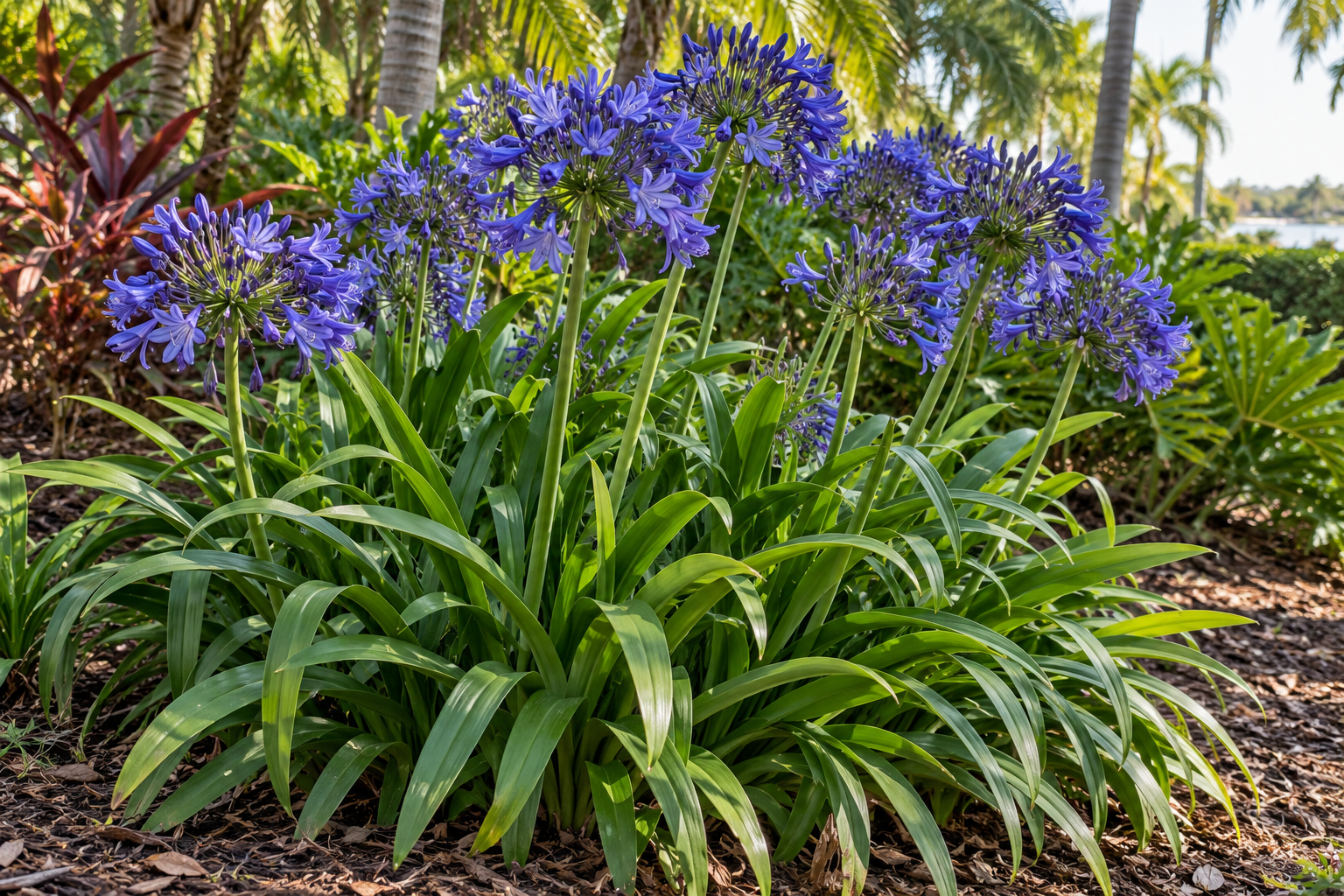
Elaine agapanthus with tall violet-blue flower umbels above arching green leaves in a Tampa garden
Overview
Elaine Agapanthus is an evergreen clumping perennial with large violet-blue flower umbels above arching green foliage. It is not native to Florida but suits maintained Tampa landscapes.
Mature Size and Habit
Foliage forms a dense clump about 2 to 3 feet tall and wide. Sturdy summer flower stalks can reach 4 to 5 feet. Allow the rhizomatous crown room to broaden.
Best Landscape Uses
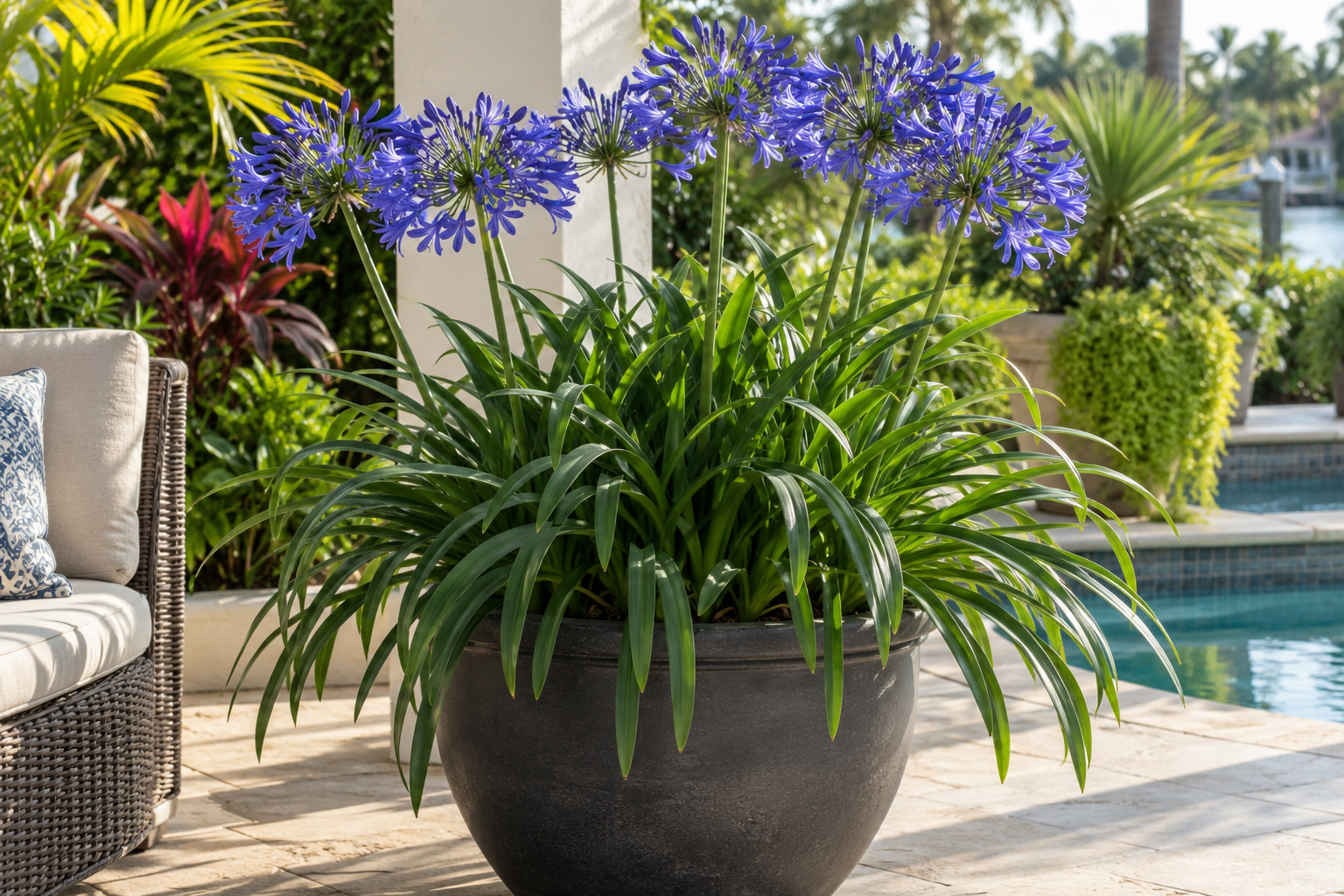
Use Elaine as an accent, in repeated border groups, beside patios, or in a large container. Upright blooms add height, while straplike leaves provide structure between flowering periods.
Sunlight
Full sun produces the strongest flowering. Partial sun works in Tampa where afternoon shade reduces reflected heat, but deep shade can reduce flowers and weaken stems.
Soil, Drainage, and Irrigation
Plant in fertile, well-drained soil and keep roots evenly moist during establishment. Water moderately after establishment. Avoid low spots and constant saturation because crowns can rot.
Best Planting Season for Tampa and Central Florida
Plant from fall through spring so roots establish in mild weather. Summer installation is possible with reliable irrigation, but avoid dividing clumps during extreme heat or drought.
Pruning and Maintenance
Remove spent flower stalks at the base and trim damaged leaves. Divide crowded clumps when flowering declines. Keep mulch two to three inches deep and off the crown.
Wildlife Value
Nectar-rich flowers attract bees, butterflies, and other pollinators. Limit broad-spectrum pesticides and pair Elaine with plants that bloom in other seasons.
Cold and Heat Sensitivity
Elaine tolerates Central Florida heat with good drainage and moisture. Frost may burn foliage, although established crowns often recover. Protect new plants during unusual freezes.
Safety, Roots, and Placement Warnings
Leaves and sap can irritate skin, eyes, and the mouth, and plant parts should not be eaten. Wear gloves, supervise pets and children, and keep arching leaves clear of narrow walks.
Invasive Concerns
Agapanthus has naturalized in some regions outside Florida. Remove unwanted seedlings, dispose of divisions responsibly, and keep expanding clumps inside maintained beds.
Helpful Resources
Review UF/IFAS Agapanthus guidance and the NC State profile for culture, wildlife, and safety details.
Installed Prices
(No price means not available)
1 Gallon | 2 Gallon | 3 Gallon | 5 Gallon | 7 Gallon | 15G Price | 25 Gallon | 30 Gallon | 45 Gallon |
|---|---|---|---|---|---|---|---|---|
$20.40 | $27.60 |
Bloom Color
Blue, Purple
Bloom Season
Spring, Summer
Wildlife Benefits
Bees, Butterflies, Pollinator Support
Safety Concerns
Toxic if Eaten, Irritating Sap, Pet Concern
Plant Features
Evergreen, Flowering
Growth Rate
Moderate
Drought Tolerance
Moderate
Water Needs
Moderate
Maintenance Level
Low
Landscape Use
Accent Plant, Border, Container, Mass Planting
Mature Width
2–4 Feet
Mature Height
4–8 Feet
Sun Exposure
Full Sun, Partial Sun