
Moonlit Lace Viburnum
Viburnum hybrid 'sPg-3-024' (Viburnum tinus × Viburnum davidii)
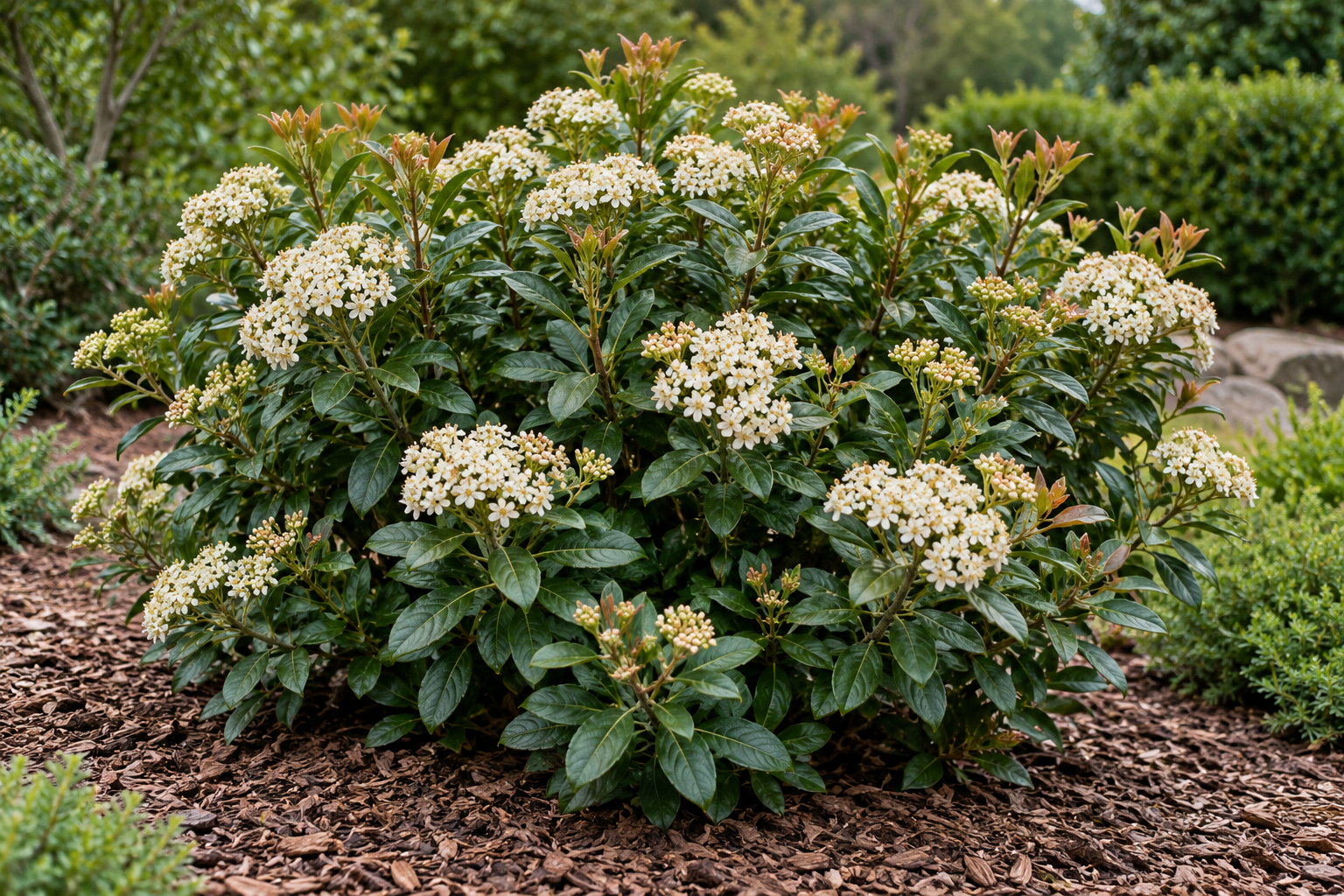
Moonlit Lace viburnum with glossy oval foliage, bronze new growth, and clusters of small white flowers
Overview
Moonlit Lace is an evergreen viburnum with glossy foliage, reddish new growth, and clusters of small white flowers. Cold weather produces darker purple foliage tones. Its broad habit works best in a bed with generous room.
Mature Size and Habit
Do not plan this selection as a permanent 3- to 4-foot dwarf shrub. Juniper Level Botanic Garden reported a nine-year specimen at 7 feet tall and 12 feet wide in January 2026, with continued growth. Site conditions and pruning affect the final size.
Best Landscape Uses
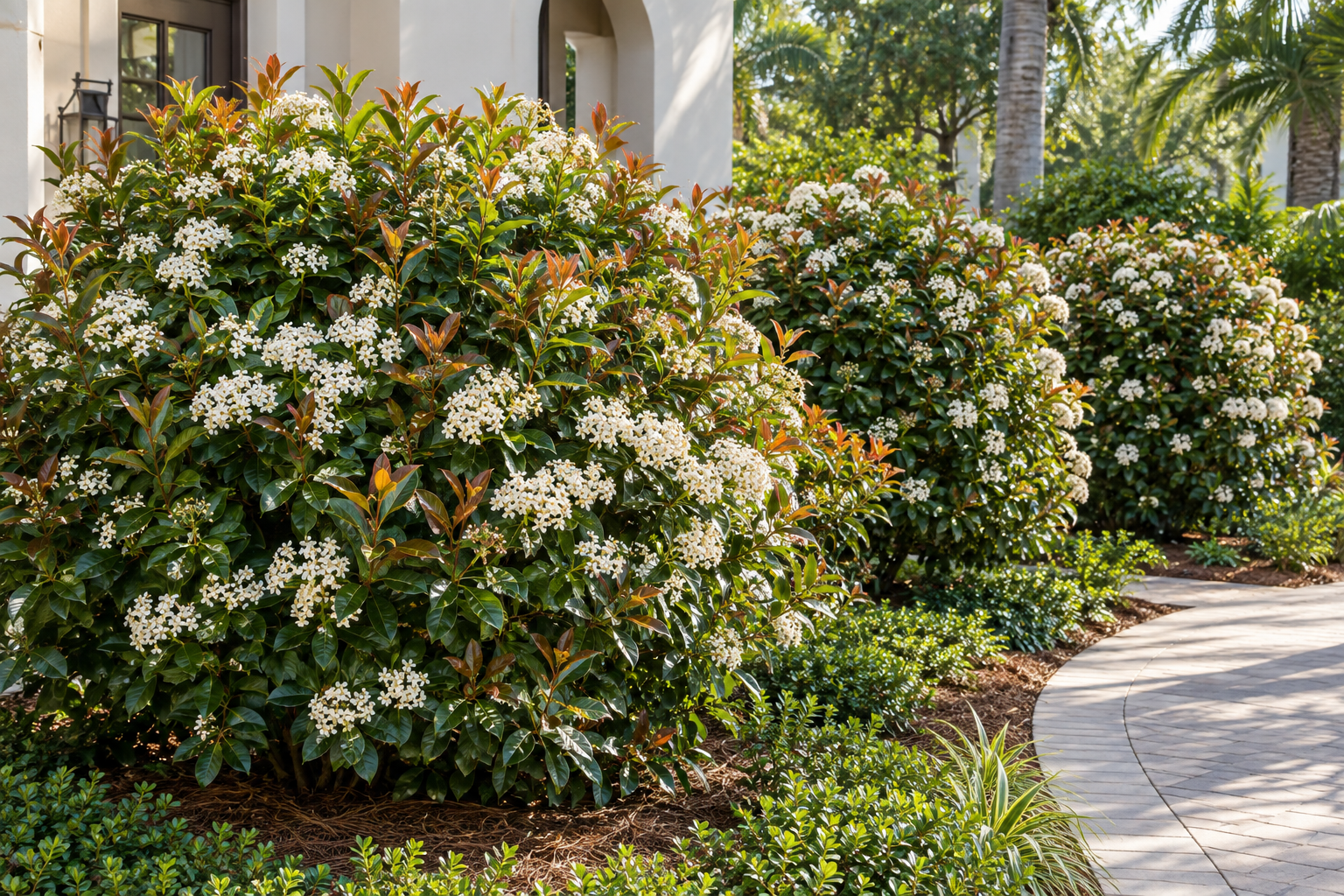
Use it for a broad informal screen, a large shrub border, or an evergreen backdrop. Leave generous separation from paths and low windows. Choose a different plant where the design requires a permanently small footprint.
Sunlight
Full sun to partial sun is suitable according to the breeder. In hot urban beds, evaluate afternoon exposure and irrigation before planting. Avoid crowded sites with poor air movement.
Soil, Drainage, and Irrigation
Provide well-drained soil and irrigate the root ball carefully during establishment. Check moisture beneath the mulch instead of watering by appearance alone. Keep drainage outlets clear and avoid covering the trunk flare.
Best Planting Season for Tampa and Central Florida
Cooler months simplify initial care. Confirm suitability for the property's heat and soil conditions before installation. This cultivar's published hardiness information ends at zone 9b, so do not assume dependable performance in every hotter Tampa microclimate.
Pruning and Maintenance
Shape after flowering when needed. Selective pruning preserves its branching and reduces constant shearing. Review its spread each year so growth does not block access or cover nearby plants.
Wildlife Value
Spring flowers provide opportunities for pollinator visits. Dense branching provides cover in a mixed planting. Combine ornamental screening with native species when wildlife habitat is a project priority.
Cold and Heat Sensitivity
The breeder and trial garden rate the plant for zones 7 through 9. Winter purple tones depend on cool temperatures. At warmer sites, prioritize drainage, establishment irrigation, and avoiding reflected afternoon heat.
Safety, Roots, and Placement Warnings
Do not treat ornamental fruit as edible. Keep children and pets from sampling berries. The large mature spread requires clearance around patios, windows, irrigation controls, and service access.
Invasive Concerns
This is a cultivated hybrid rather than a Florida native. Contain it within managed beds and monitor its growth instead of relying on small nursery labels for permanent spacing.
Helpful Resources
Breeder profile and Juniper Level mature-size observations provide useful references.
Installed Prices
(No price means not available)
1 Gallon | 2 Gallon | 3 Gallon | 5 Gallon | 7 Gallon | 15G Price | 25 Gallon | 30 Gallon | 45 Gallon |
|---|---|---|---|---|---|---|---|---|
$44.40 | $114.00 |
Bloom Color
White
Bloom Season
Spring
Wildlife Benefits
Bees, Pollinators, Wildlife Shelter
Safety Concerns
Fruit Concern
Plant Features
Evergreen, Flowering, Winter Foliage Color
Growth Rate
Moderate
Drought Tolerance
Moderate
Water Needs
Moderate
Maintenance Level
Moderate
Landscape Use
Privacy Screen, Hedge, Mass Planting, Accent Plant
Mature Width
8–12 Feet
Mature Height
4–8 Feet
Sun Exposure
Full Sun, Partial Sun