
Mrs. G. G. Gerbing Azalea
Rhododendron indicum 'Mrs. G. G. Gerbing'
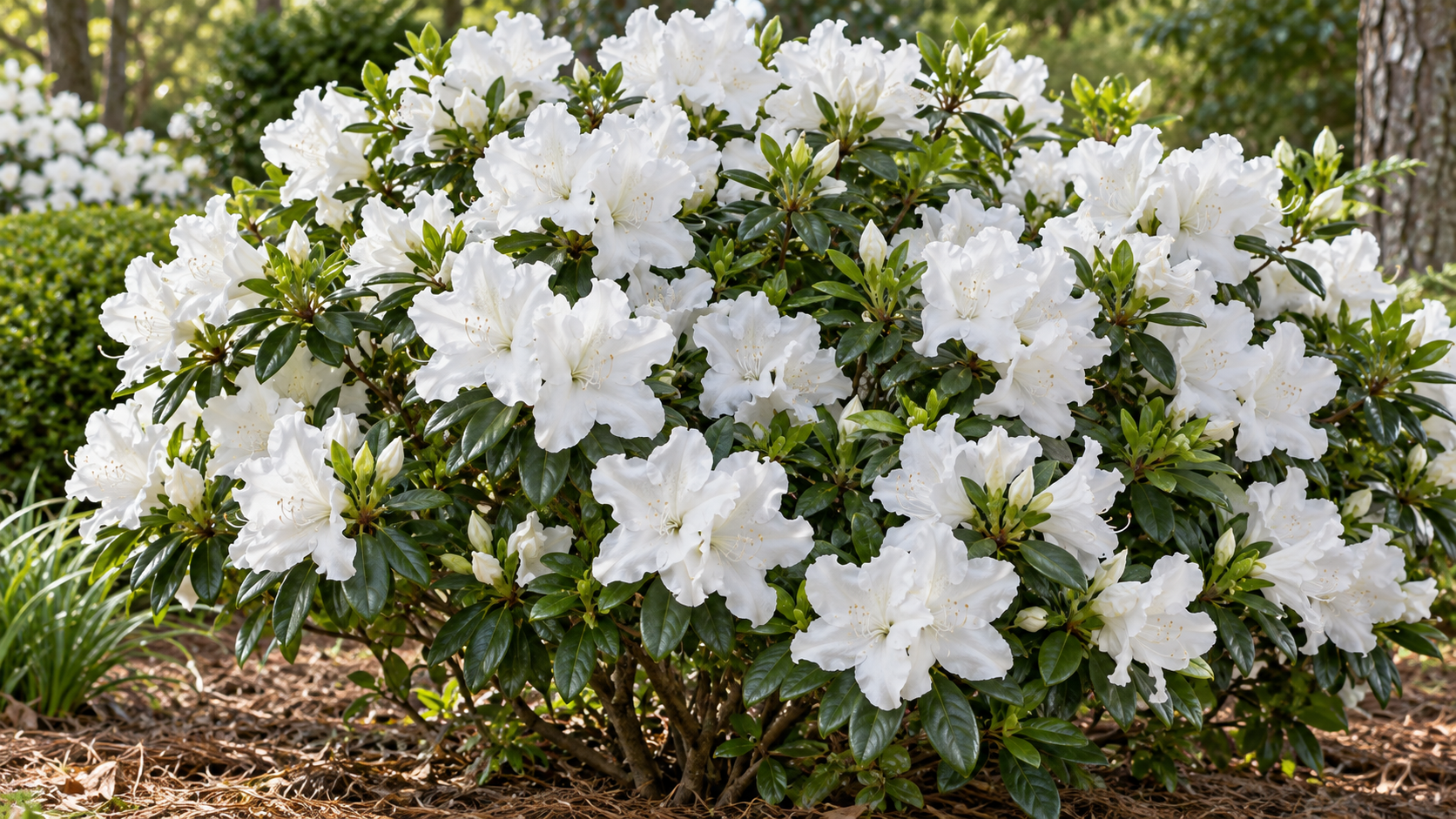
Mrs. G. G. Gerbing Azalea showing its identifying foliage, flowers, and natural growth habit
Overview
Mrs. G. G. Gerbing Azalea is a broad evergreen Southern Indica azalea known for a heavy spring display of large pure white flowers. It is not native to Florida, but it is widely used in managed Central Florida landscapes when sited correctly. In the Tampa area it provides dependable structure and a clear ornamental role when its mature size and site needs are respected.
Mature Size and Habit
Expect approximately 4–8 feet in height and 4–8 feet in width under typical landscape care. Growth is moderate. Space plants for their mature spread rather than their nursery size so air circulation, access, and long-term form remain balanced.
Best Landscape Uses
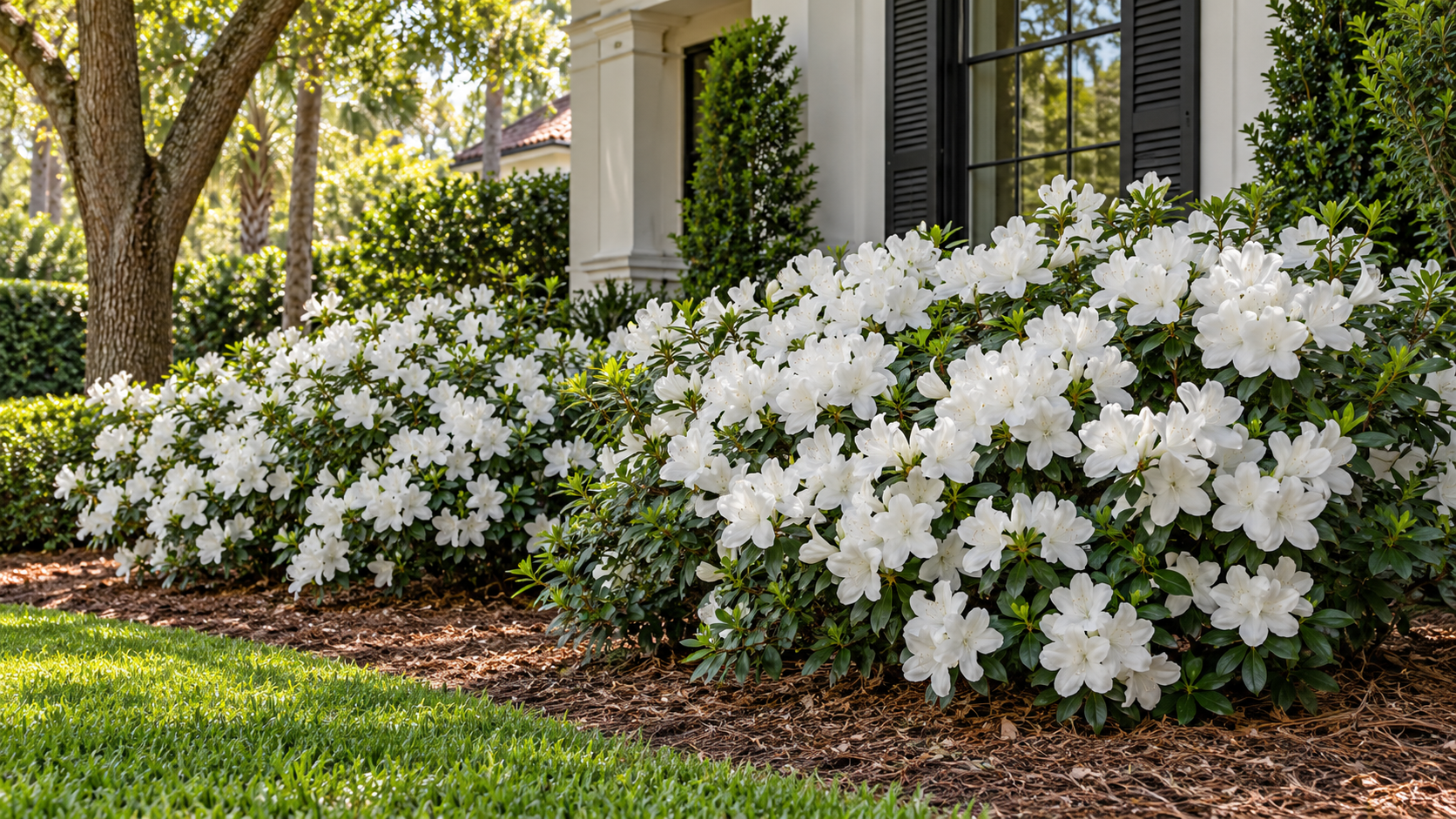
Strong uses include accent, border, foundation planting, mass planting, hedge. It works best where its texture, color, and seasonal character support the larger planting design. Grouping several plants creates continuity, while a single well-placed plant gives a focused accent.
Sunlight
Provide partial sun. Morning sun and protection from the harshest reflected afternoon heat are useful for plants placed near walls, pavement, pools, and other heat-holding surfaces. Too little light reduces density and flowering.
Soil, Drainage, and Irrigation
Plant in acidic, organic, well-drained soil that stays evenly moist without remaining saturated. Water deeply after installation and keep the root ball evenly moist while new roots move into surrounding soil. After establishment, adjust irrigation to rainfall and soil drainage. Do not allow routine irrigation to keep the root zone constantly saturated.
Best Planting Season for Tampa and Central Florida
The preferred planting window is fall through early spring. Planting during mild weather reduces transplant stress and gives roots time to establish before extreme summer heat or winter cold. Container-grown plants can be installed outside that window when irrigation and aftercare are closely managed.
Pruning and Maintenance
Shape immediately after flowering and finish major pruning before midsummer so next year's buds are preserved. Maintain a mulch layer two to three inches deep, pulled back from stems and trunks. Inspect irrigation coverage, remove damaged growth, and use fertilizer only when soil or plant performance indicates a need.
Wildlife Value
Landscape value for wildlife includes bees, butterflies, pollinator support. Flowering plants are most useful when pesticide use is limited and nearby plantings provide additional bloom periods, water, and cover.
Cold and Heat Sensitivity
Established plants tolerate normal Tampa heat when the root zone is mulched and irrigation is appropriate. Young plants are more vulnerable to sudden cold, drying wind, and reflected heat. Protect newly installed specimens during unusual freezes and avoid heavy pruning immediately before temperature extremes.
Safety, Roots, and Placement Warnings
Azalea foliage and flowers are toxic if eaten. Keep this shrub away from pets and play areas. Confirm setbacks from structures, utilities, walks, and neighboring properties before installation. Match the plant's mature form to the available space to reduce future corrective pruning.
Invasive Concerns
This selection is intended for maintained landscapes. Monitor seedlings, suckers, spreading stems, or expanding clumps and remove unwanted growth before it escapes the designed bed. Follow current local and UF/IFAS guidance if regional status or management recommendations change.
Helpful Resources
For Florida-specific planting, irrigation, pest, and maintenance guidance, visit UF/IFAS Gardening Solutions. Local site conditions vary, so final placement should account for drainage, exposure, irrigation coverage, and the space available at maturity.
Installed Prices
(No price means not available)
1 Gallon | 2 Gallon | 3 Gallon | 5 Gallon | 7 Gallon | 15G Price | 25 Gallon | 30 Gallon | 45 Gallon |
|---|---|---|---|---|---|---|---|---|
$21.48 | $61.20 |
Bloom Color
White
Bloom Season
Spring
Wildlife Benefits
Bees, Butterflies, Pollinator Support
Safety Concerns
Toxic if Eaten, Pet Concern
Plant Features
Evergreen, Flowering
Growth Rate
Moderate
Drought Tolerance
Low
Water Needs
Moderate
Maintenance Level
Moderate
Landscape Use
Accent, Border, Foundation Planting, Mass Planting, Hedge
Mature Width
4–8 Feet
Mature Height
4–8 Feet
Sun Exposure
Partial Sun