
Portora Alocasia
Alocasia 'Portora'
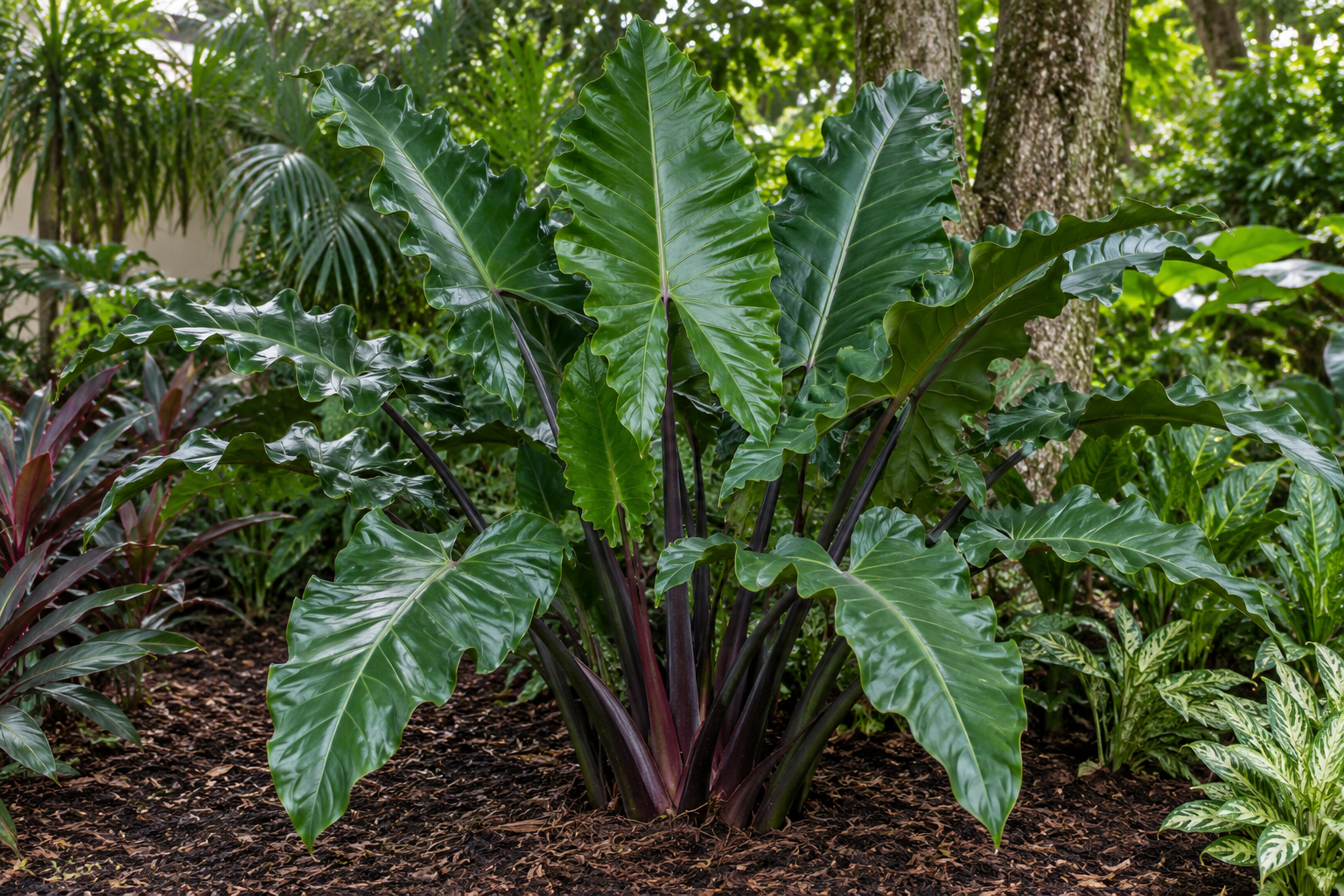
Portora alocasia with upright ruffled green leaves and dark stalks in a tropical garden
Overview
Portora alocasia is an upright hybrid with glossy arrow-shaped leaves, rippled margins, and dark stalks. It comes from A. portei and A. odora and is not native to Florida.
Mature Size and Habit
In a warm Tampa garden, expect a clump about 5 to 8 feet tall and 4 to 8 feet wide. Tall stalks hold the ruffled leaves nearly upright.
Best Landscape Uses
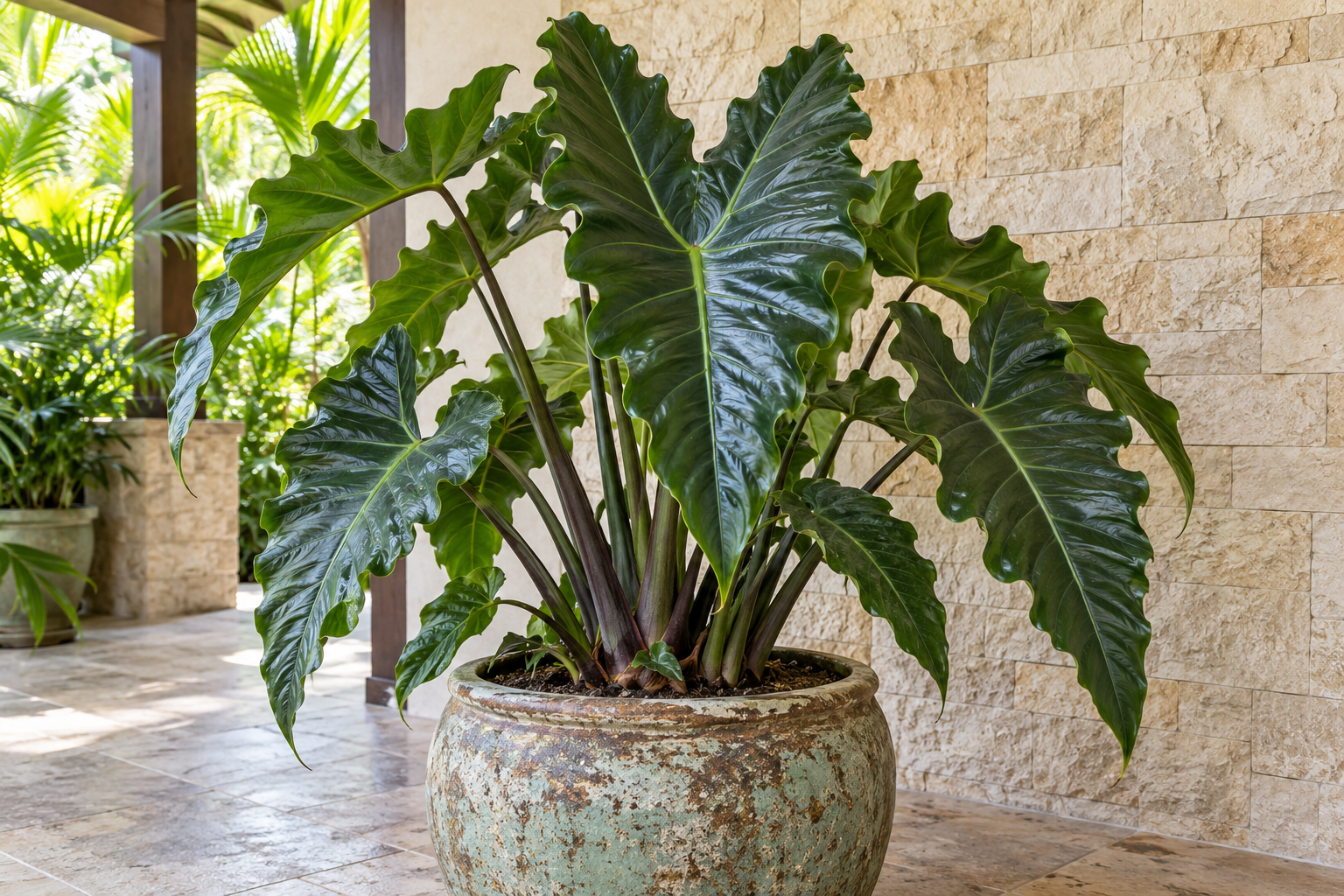
Use it beside a sheltered lanai, shaded entry, tropical border, or protected pool area. It also suits a large container. Keep wind-tossed leaves away from doors and walks.
Sunlight
Provide bright filtered light, dappled sun, or partial shade. Morning sun supports growth with reliable moisture, while hard afternoon sun can scorch the wavy edges.
Soil, Drainage, and Irrigation
Grow it in humus-rich soil that stays moist but drains freely. Water through establishment and dry periods. Standing water can cause root rot and leaf spots.
Best Planting Season for Tampa and Central Florida
Install in spring or early summer after frost danger passes. Early fall works in a protected site with irrigation, but avoid planting before a cold event.
Pruning and Maintenance
Remove damaged leaves at the base without cutting central growth. Keep mulch off the crown, divide excess offsets in warm weather, and monitor for mites, aphids, and mealybugs.
Wildlife Value
Portora is valued for foliage rather than flowers or fruit. Its inconspicuous blooms have limited wildlife value, while the leaves give short-term shelter to small garden animals.
Cold and Heat Sensitivity
It handles humid heat with steady moisture and filtered light. Wind can shred leaves and near-freezing weather injures foliage, so shelter it and protect the crown during frost.
Safety, Roots, and Placement Warnings
All parts contain calcium oxalate crystals and are toxic if eaten by people or pets. Wear gloves and avoid sap in the eyes. Fleshy roots are not woody, but the clump needs space from pipes and traffic.
Invasive Concerns
Portora is a nonnative hybrid. Some Alocasia spread in Gulf Coast habitats, so remove unwanted offsets and never dump plant pieces near waterways or natural areas.
Helpful Resources
Review hybrid care through NC State Extension. The Royal Horticultural Society lists Portodora as a related trade name, and the ASPCA documents toxicity.
Installed Prices
(No price means not available)
1 Gallon | 2 Gallon | 3 Gallon | 5 Gallon | 7 Gallon | 15G Price | 25 Gallon | 30 Gallon | 45 Gallon |
|---|---|---|---|---|---|---|---|---|
$33.00 | $108.00 |
Bloom Color
Other or Inconspicuous
Bloom Season
Does Not Flower
Wildlife Benefits
Limited Wildlife Value, Wildlife Shelter
Safety Concerns
Toxic if Eaten, Irritating Sap, Pet Concern
Plant Features
Evergreen, Distinctive Foliage, Fast Growing
Growth Rate
Fast
Drought Tolerance
Low
Water Needs
Moderate
Maintenance Level
Moderate
Landscape Use
Accent Plant, Container, Tropical Garden, Poolside
Mature Width
4–8 Feet
Mature Height
4–8 Feet
Sun Exposure
Partial Sun, Shade