
Red Yucca
Hesperaloe parviflora
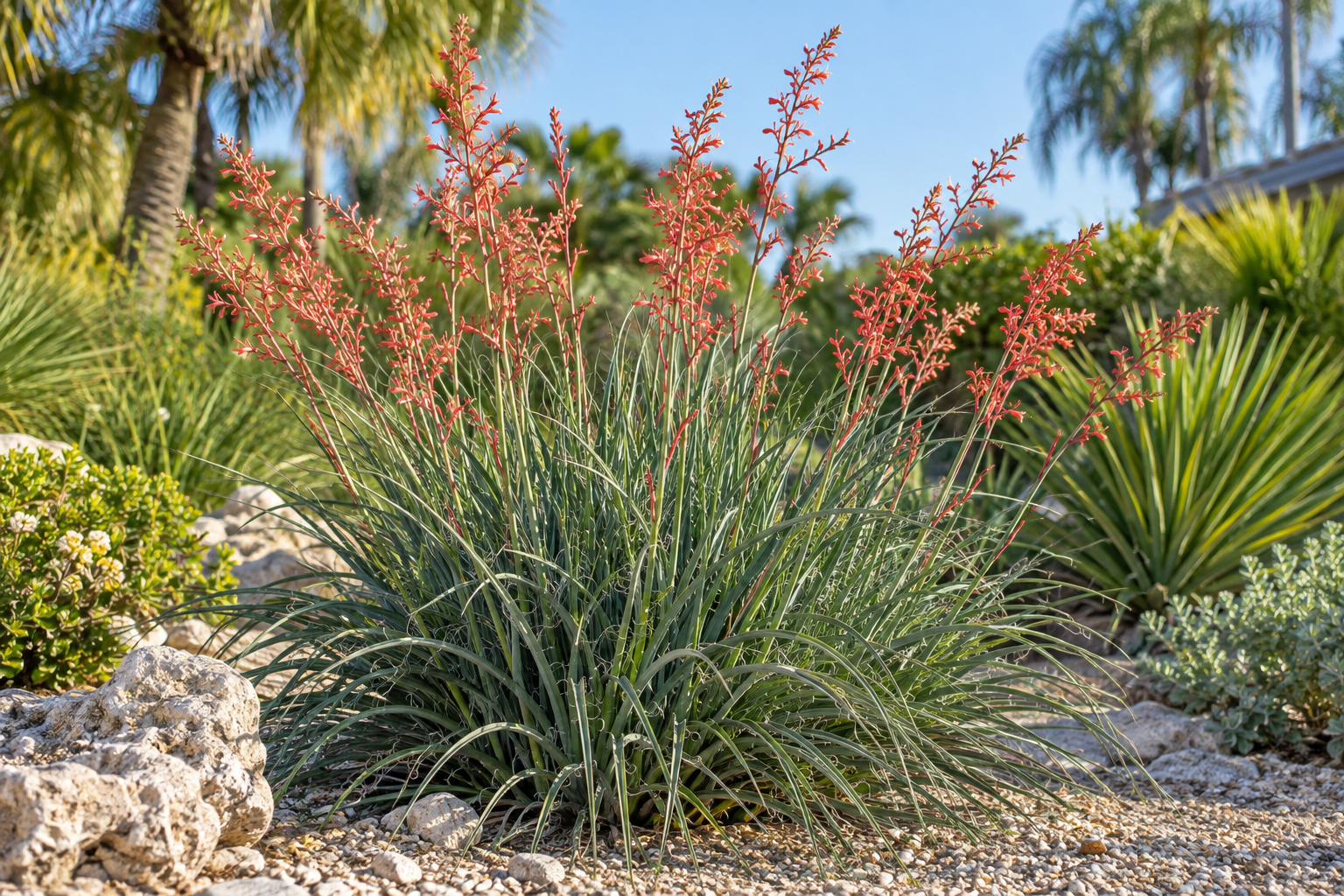
Mature Red Yucca with arching thread-edged green leaves and tall coral-red flower spikes in a sunny Florida rock garden
Overview
Red yucca (Hesperaloe parviflora) is a clumping evergreen succulent with narrow arching leaves and coral-red tubular flowers. Though not a true yucca, it provides a softer, grasslike accent for sunny Tampa landscapes.
Mature Size and Habit
The foliage forms a rounded clump about 3–4 feet tall and wide. Flower stalks may reach 5–6 feet, while basal offsets slowly broaden an established plant.
Best Landscape Uses
Use it as a specimen, repeated border accent, rock-garden plant, container feature, or pollinator-garden focal point. Its open flowers pair well with stone and modern architecture.
Sunlight
Full sun produces the tightest habit and strongest flowering. Deep shade causes weaker foliage and fewer blooms.
Soil, Drainage, and Irrigation
Excellent drainage is essential in humid Central Florida. Use sandy or gravelly soil, a raised bed, or a fast-draining container mix. Water to establish, then irrigate only after the root zone begins to dry.
Best Planting Season for Tampa and Central Florida
Plant from fall through spring so roots establish before summer rain. Keep the crown at grade and space plants about 3–4 feet apart.
Pruning and Maintenance
Remove spent flower stalks and fully brown leaves. Thin offsets when the clump outgrows its space, and never shear the foliage into a ball.
Wildlife Value
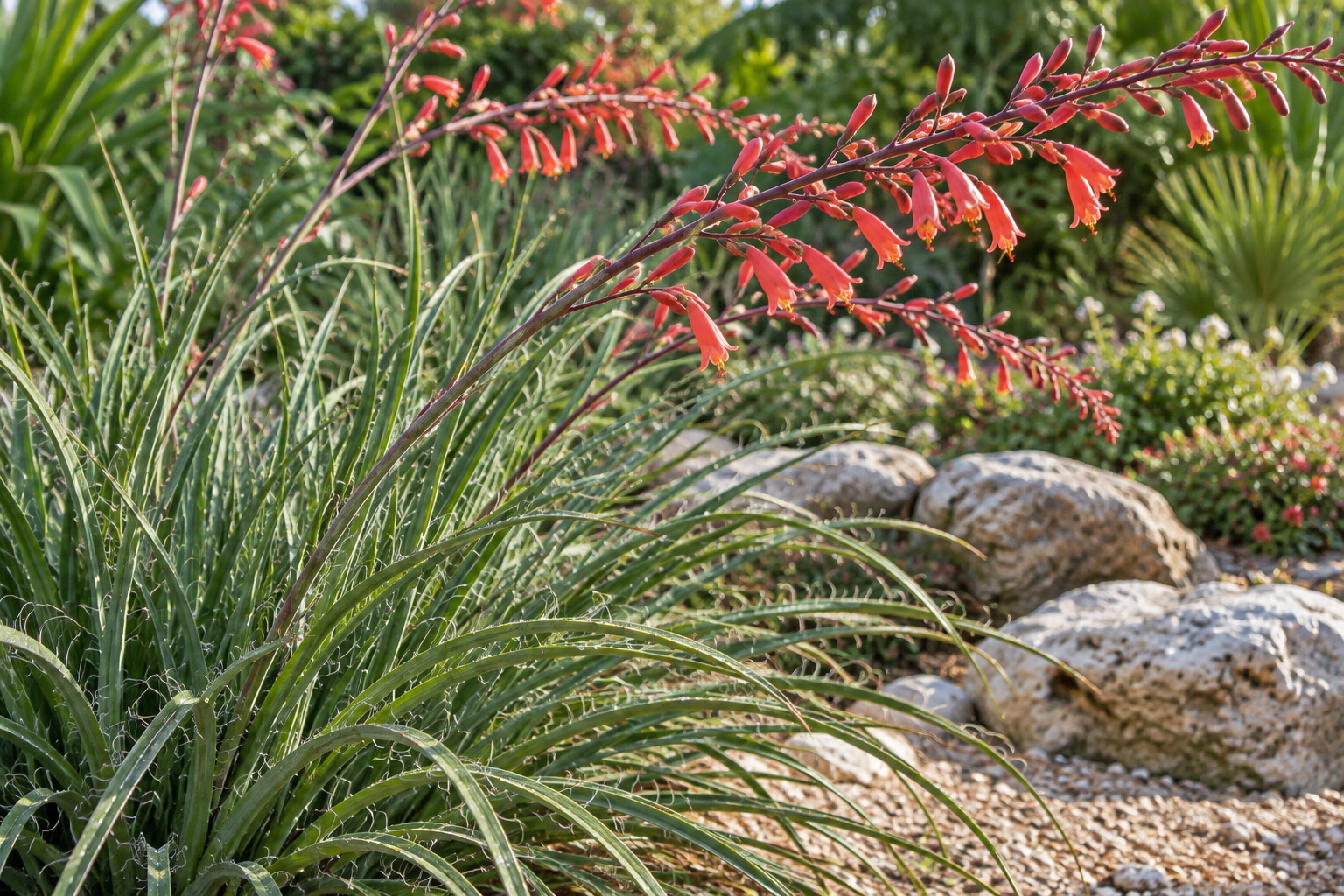
The tubular flowers are especially attractive to hummingbirds and also support insect pollinators. The long warm-season bloom provides an extended nectar source.
Cold and Heat Sensitivity
Red yucca tolerates intense heat, reflected sun, drought, and normal Tampa winters. Cool, saturated soil is a greater concern than brief cold.
Safety, Roots, and Placement Warnings
Leaves lack the rigid terminal spear of true yuccas, but fibrous edges and tall stalks need clearance from narrow walks. Roots are not destructive; expanding offsets are the main spacing concern. Do not treat landscape parts as food.
Invasive Concerns
This Texas-and-Mexico native is not a Florida native or known invasive landscape plant. Remove unwanted offsets and seed capsules where strict containment is desired.
Helpful Resources
See the NC State Extension profile and the University of North Florida Botanical Garden profile for identification and culture guidance.
Installed Prices
(No price means not available)
1 Gallon | 2 Gallon | 3 Gallon | 5 Gallon | 7 Gallon | 15G Price | 25 Gallon | 30 Gallon | 45 Gallon |
|---|---|---|---|---|---|---|---|---|
$27.00 |
Bloom Color
Coral, Red
Bloom Season
Spring, Summer, Fall
Wildlife Benefits
Hummingbirds, Pollinators
Safety Concerns
No Major Concern
Plant Features
Distinctive Foliage, Drought Tolerant, Evergreen, Flowering, Long Bloom Season
Growth Rate
Moderate
Drought Tolerance
High
Water Needs
Low
Maintenance Level
Low
Landscape Use
Accent, Border, Container, Mass Planting, Pollinator Garden, Rock Garden, Specimen, Wildlife Garden
Mature Width
3–6 Feet
Mature Height
3–6 Feet
Sun Exposure
Full Sun