
Saltbush
Baccharis halimifolia
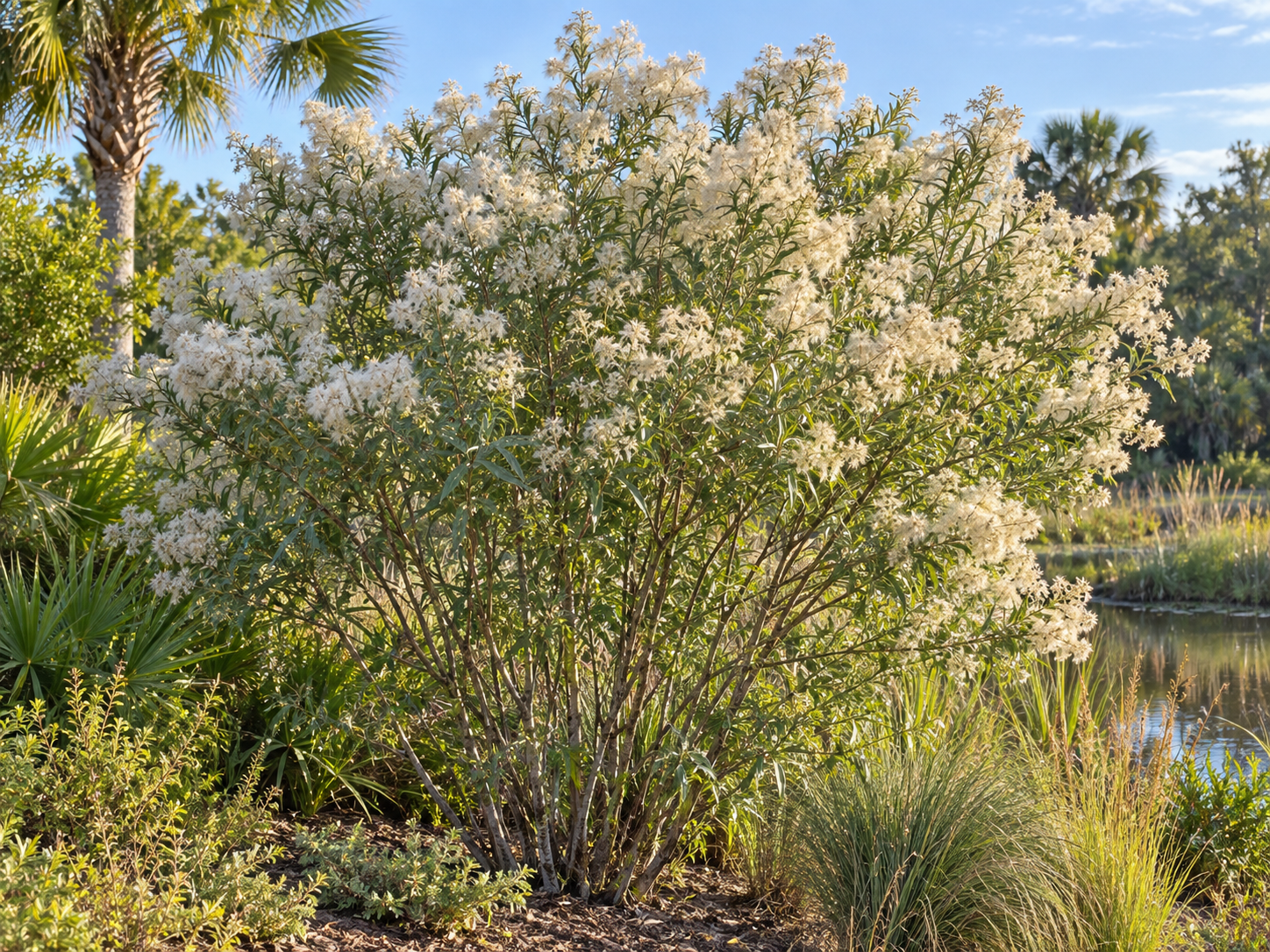
Mature Florida saltbush shrub with gray-green foliage and fluffy white fall seed plumes beside a rain garden
Overview
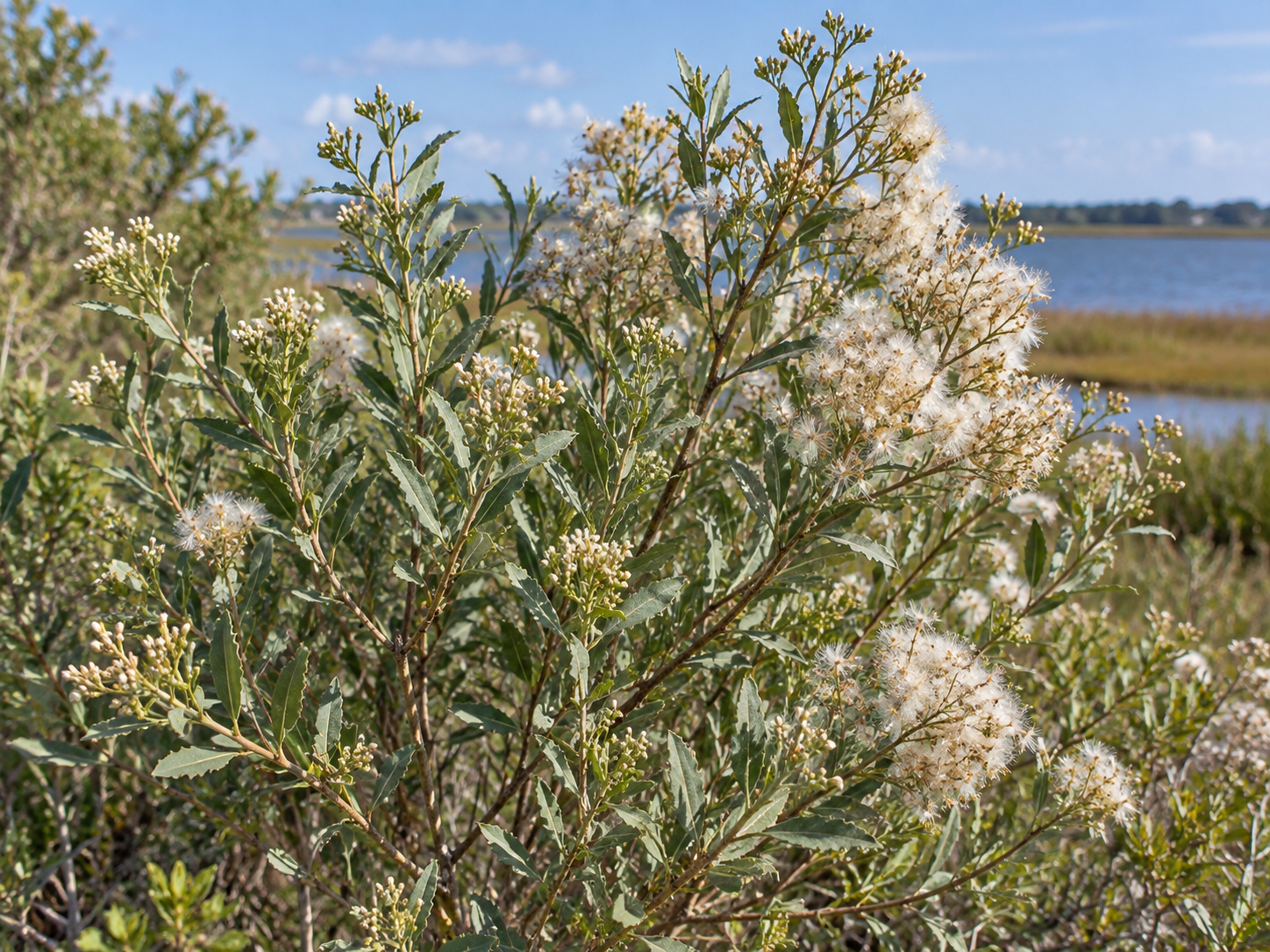
Saltbush (Baccharis halimifolia), also called groundsel tree or sea myrtle, is a Florida-native woody shrub with airy gray-green foliage and a striking late-season display. Female plants become a cloud of silky white fruiting plumes in fall; male flowers are yellowish cream.
Mature Size and Habit
Expect a rapid-growing, irregular, multi-trunked shrub about 5–12 feet tall and 4–7 feet wide. Central Florida plants may lose their leaves in winter.
Best Landscape Uses
Use it in rain gardens, pond edges, coastal landscapes, wildlife plantings, informal hedges, or naturalized masses. Give its open form room behind lower plants.
Sunlight
Full sun gives the densest habit and strongest bloom, although light partial sun is tolerated. Deep shade encourages leggy growth.
Soil, Drainage, and Irrigation
Saltbush accepts sand, loam, clay, poor soil, periodic flooding, and coastal salt. Water through establishment; afterward it handles wet spells and moderate drought.
Best Planting Season for Tampa and Central Florida
Plant from fall through early spring for cool-weather rooting, or install during warm months with dependable irrigation. Keep the root flare at grade.
Pruning and Maintenance
Prune after the fall display, with optional light shaping in early summer. Remove weak wood and hand-pull seedlings. Avoid repeated hard shearing.
Wildlife Value
Late flowers provide nectar for monarchs, other butterflies, bees, and many pollinators. Branches offer cover, and birds may use the seeds.
Cold and Heat Sensitivity
This shrub tolerates Tampa heat, humidity, salt, and ordinary Central Florida cold. Winter leaf drop here is normal.
Safety, Roots, and Placement Warnings
There are no thorns or aggressive structural roots, but pollen is allergenic, wood can be brittle, and female seeds are poisonous if eaten. Keep seeds and clippings from children, pets, and livestock.
Invasive Concerns
Saltbush is native in Florida, but female plants can self-seed heavily when a male is nearby. Monitor naturalized areas and remove unwanted seedlings.
Helpful Resources
See the UF/IFAS Saltbush guide and the Extension plant profile for culture, wildlife, and safety details.
Installed Prices
(No price means not available)
1 Gallon | 2 Gallon | 3 Gallon | 5 Gallon | 7 Gallon | 15G Price | 25 Gallon | 30 Gallon | 45 Gallon |
|---|---|---|---|---|---|---|---|---|
$30.00 |
Bloom Color
White
Bloom Season
Fall
Wildlife Benefits
Bees, Birds, Butterflies, Pollinators, Wildlife Shelter
Safety Concerns
Fruit Concern, Toxic if Eaten, Rapid Growth
Plant Features
Florida Native, Native, Flowering, Drought Tolerant, Fast Growing
Growth Rate
Fast
Drought Tolerance
High
Water Needs
Moderate
Maintenance Level
Moderate
Landscape Use
Coastal Landscape, Hedge, Mass Planting, Native Garden, Pollinator Garden, Rain Garden, Wildlife Garden
Mature Width
4–8 Feet
Mature Height
6–15 Feet
Sun Exposure
Full Sun, Partial Sun