
Why are some areas of my lawn dry while others stay wet?
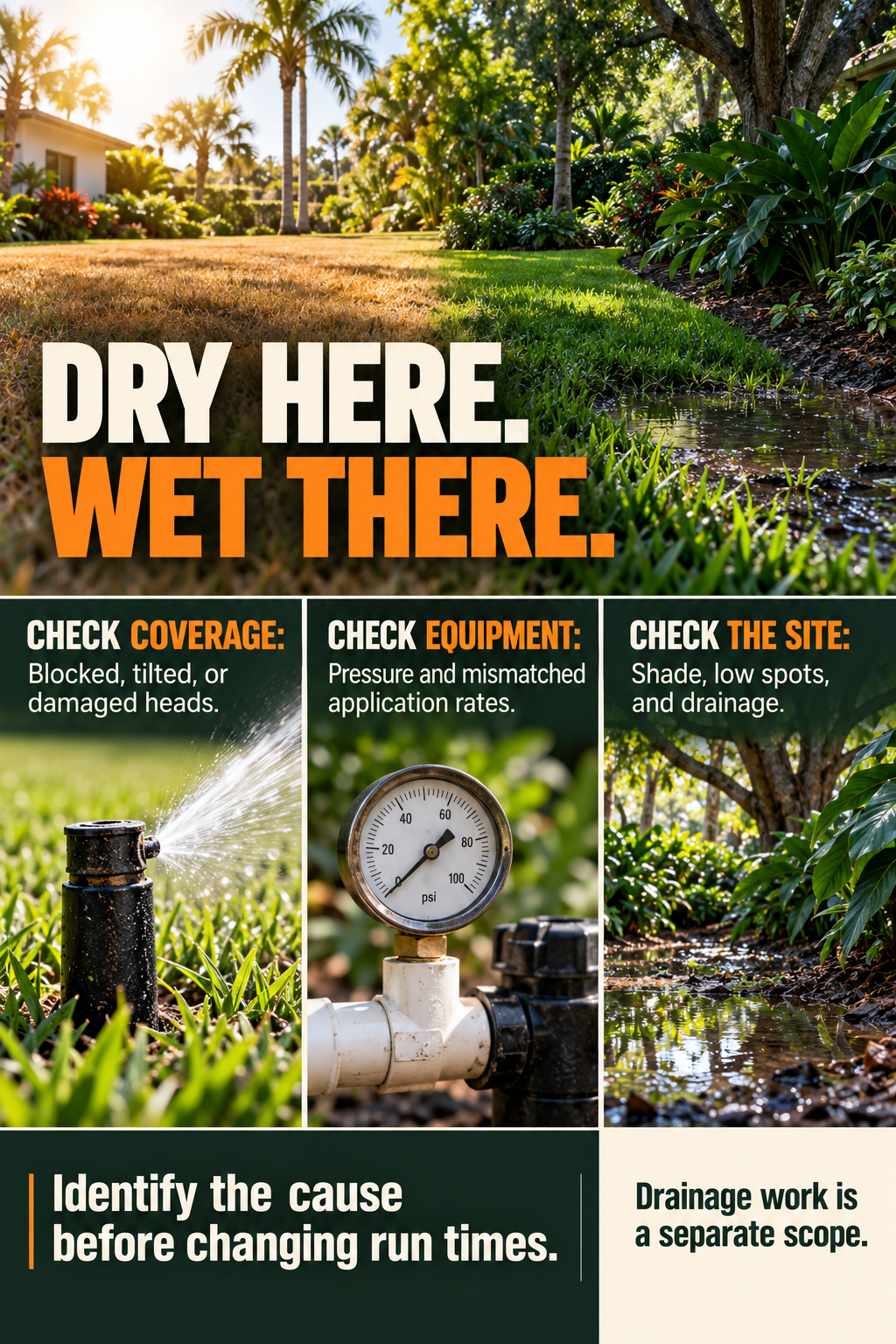
Uneven watering often starts with uneven coverage. A blocked nozzle, tilted head, broken riser, incorrect spray pattern, or inadequate pressure leaves one area short of water while another receives too much.
Different sprinkler types and nozzles deliver water at different rates. Combining equipment with mismatched application rates in the same zone creates uneven results. Mature plants also block spray, and changes to beds or hardscape alter the coverage your original layout provided.
Not every wet area is an irrigation problem. Low spots, compacted soil, shade, and poor drainage influence how long water remains in the ground. We review these conditions alongside the irrigation system rather than assuming longer or shorter run times will solve everything.
The recommended correction depends on the cause. Work includes adjustments, replacement parts, head relocation, or a separately quoted zone change when appropriate. Drainage and grading corrections are separate work. Do not add more watering time to the entire zone before we evaluate the dry and wet areas.
Before the visit, identify both the dry and wet areas rather than showing only the worst patch. Tell the office whether the condition follows rainfall, an irrigation cycle, or both, and whether any planting or landscape changes occurred before it began. Photos taken at different times can help describe an intermittent problem without requiring you to diagnose it yourself.
UF/IFAS irrigation maintenance problems
Book an irrigation consultation online. For an active leak or urgent concern, contact the office at (813) 518-5555.
Book an irrigation consultation
Related FAQs
