
Brace Newly Planted Palms Without Damaging the Trunk
Support Should Protect Establishment
A newly planted palm may need temporary support when its root ball is large, the site is exposed, or wind movement threatens new roots. Bracing should steady the palm while roots establish in surrounding soil. It should not hold the trunk rigid forever. South Tampa storm gusts and saturated summer soil increase movement, yet unnecessary or poorly built braces often wound the trunk and create a separate structural problem.
Set the Palm Correctly First
No brace will correct a palm planted too deep, leaning inside the root ball, or sitting in unstable backfill. Place the root initiation zone at the proper finished grade and keep the trunk vertical before securing supports. Backfill evenly and remove large air pockets with careful watering. Do not bury the trunk with extra soil or mulch. Confirm irrigation reaches the root ball without leaving the planting hole continuously saturated.
Create a Padded Attachment Point
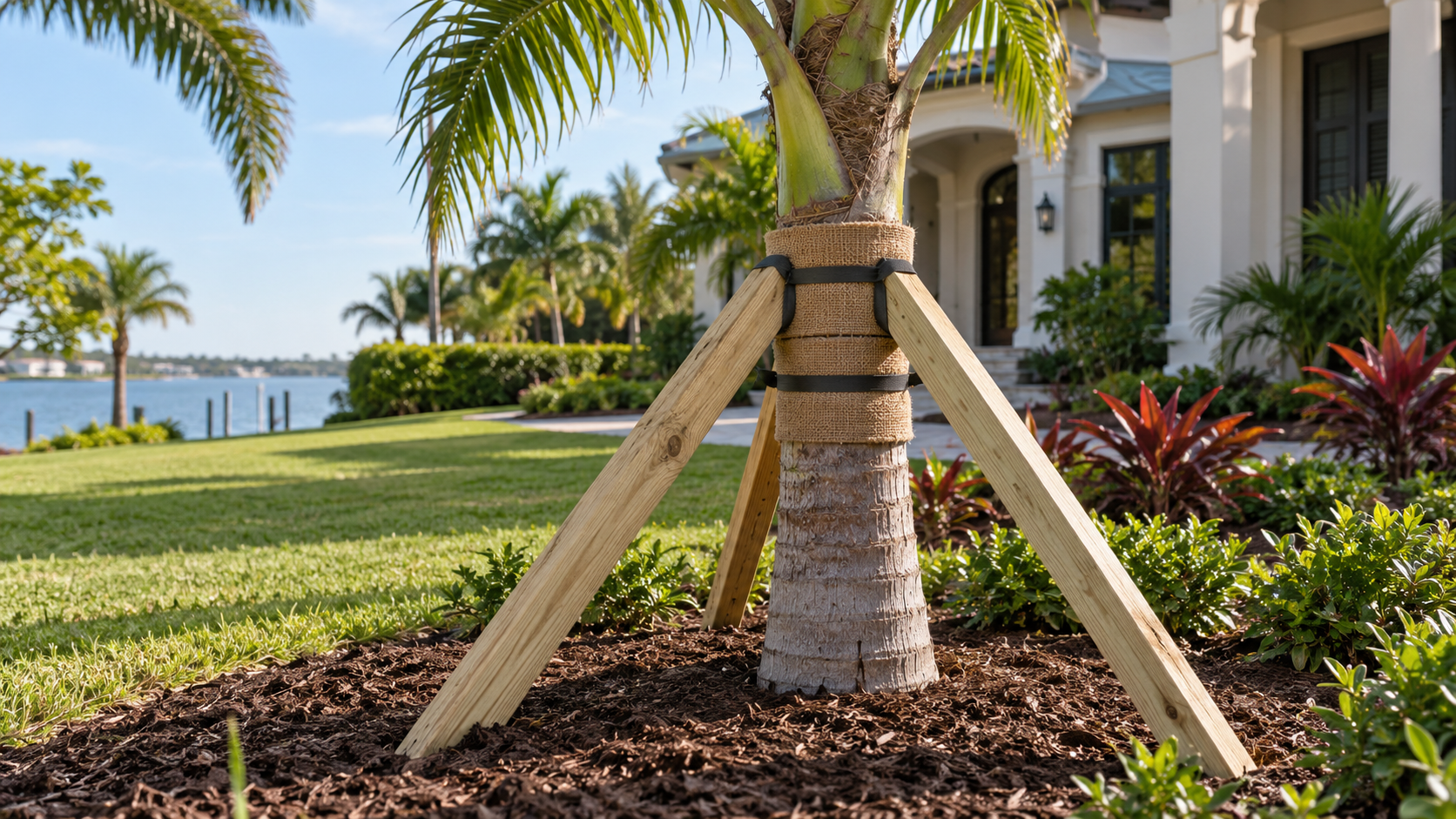
Wrap the trunk with a breathable protective layer at the brace contact area, then secure wood blocks or a collar over the padding. The support system should spread pressure and prevent abrasion. Never place bare lumber, wire, rope, or narrow straps directly against palm tissue. Check that the attachment does not squeeze the trunk. Palms do not form wound wood like broadleaf trees, so trunk injuries remain permanent.
Keep Nails Out of the Palm
Do not drive nails, screws, or bolts through the support blocks into the living trunk. Fasteners should connect brace components to each other, not penetrate palm tissue. Trunk punctures invite decay, weaken fibers, and leave lasting scars. Build three or more angled supports when site conditions call for stability, anchor them in firm soil beyond the root ball, and keep every support visible so crews and visitors do not trip over it.
Inspect After Wind and Rain
Check the system after strong wind, heavy rain, irrigation repairs, and nearby landscape work. Look for loose anchors, shifting soil, rubbed padding, constriction, and a trunk moving inside the support collar. Tighten or rebuild the brace instead of adding another strap around the palm. Keep mulch and equipment away from the lower trunk. If the root ball rocks independently from the surrounding grade, correct the installation promptly.
Remove Bracing on Schedule
Temporary supports must not become permanent fixtures. Set a review date when the palm is installed and assess root stability at regular intervals. Remove the system once the root ball remains firm under normal conditions and the establishment period has passed. Leaving braces too long traps moisture, hides insects, restricts growth, and allows padding or straps to cut into tissue. Save dated photos to document movement and removal.
Coordinate Planting and Follow-Up
Ecoscape Outdoor Services installs and monitors palms with attention to planting depth, irrigation, root-ball stability, trunk protection, and future removal. For South Tampa properties, we also consider wind exposure, access, drainage, and maintenance traffic before choosing a support layout. Recheck the palm within the first week, after the first major storm, and at the planned removal date. Proper bracing supports roots without sacrificing the trunk.
