Build a Compacted Base Under Decorative Gravel Paths
Why the Hidden Base Matters
The decorative stone is only the wearing surface of a successful gravel path. Without a stable base, foot traffic and heavy Florida rain push rock into soft soil, create low spots, and spread material into nearby lawn or beds. A compacted aggregate layer distributes weight and gives the finish gravel a firm platform. The correct depth depends on soil, drainage, expected use, and stone type, so the project should be planned as a small hardscape system rather than a thin layer of rock placed over bare ground.
Lay Out the Route and Finished Grade
Mark the path width and curves before excavation. Walk the route to confirm comfortable turns, access around gates, and clearance from irrigation heads, tree trunks, drains, and utility covers. Establish a finished elevation that will not trap water against a house or send runoff onto a neighboring property. A subtle cross-slope can move water off the walking surface, but steep grades need additional erosion control. Account for the base and finish-gravel thickness so the completed path meets patios and sidewalks without creating a trip edge.
Excavate and Prepare the Subgrade
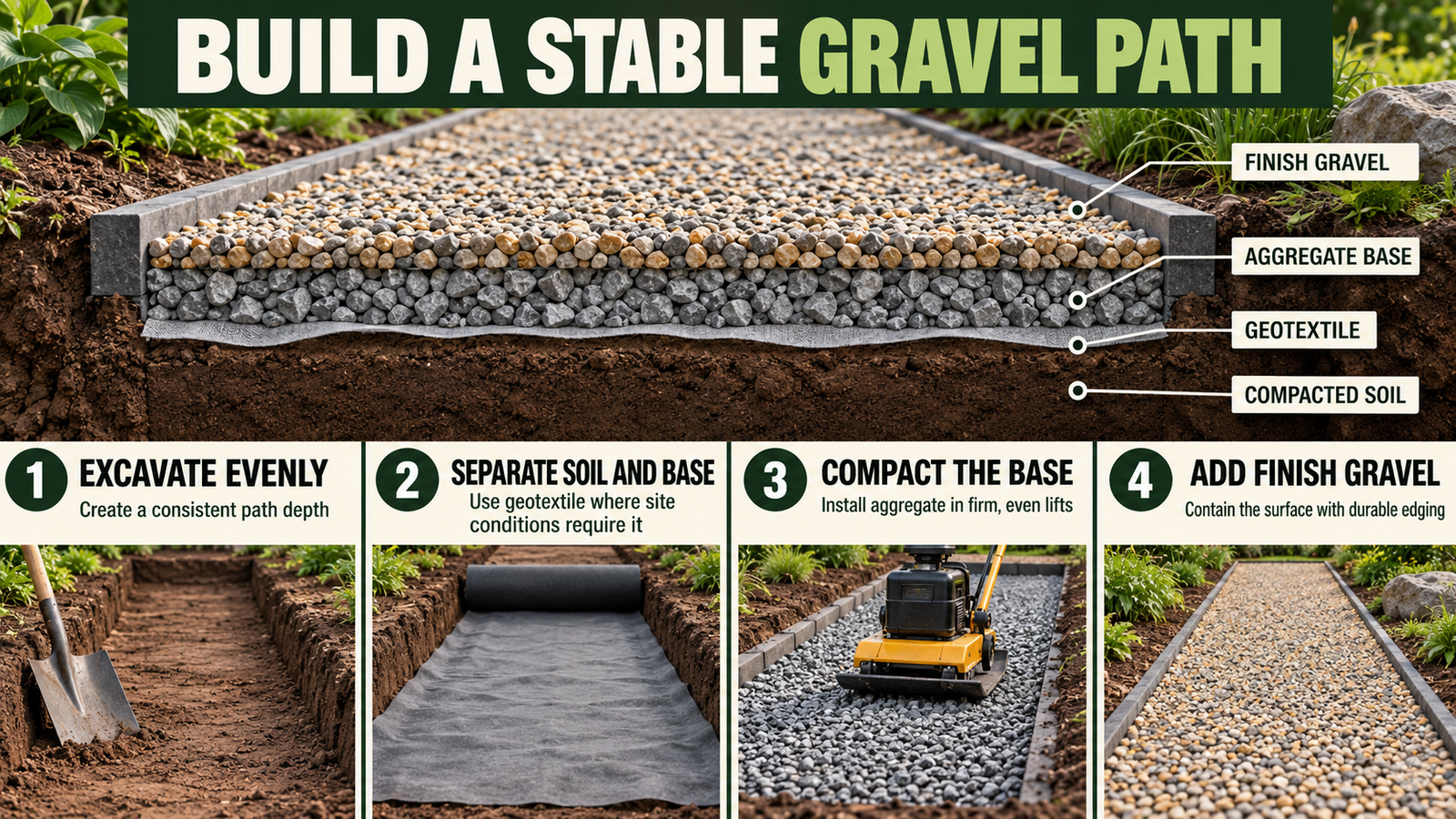
Remove sod, roots, loose organic matter, and soft pockets rather than burying them. Shape the exposed soil to the planned grade and compact it before adding stone. If the subgrade pumps, shifts, or remains saturated, stop and correct the drainage or unsuitable soil first. A separation geotextile can help keep aggregate from mixing with sandy or silty soil, but fabric does not replace a solid subgrade. Avoid placing impermeable plastic beneath the path, because trapped water can worsen settlement and create muddy edges.
Build the Base in Compact Layers
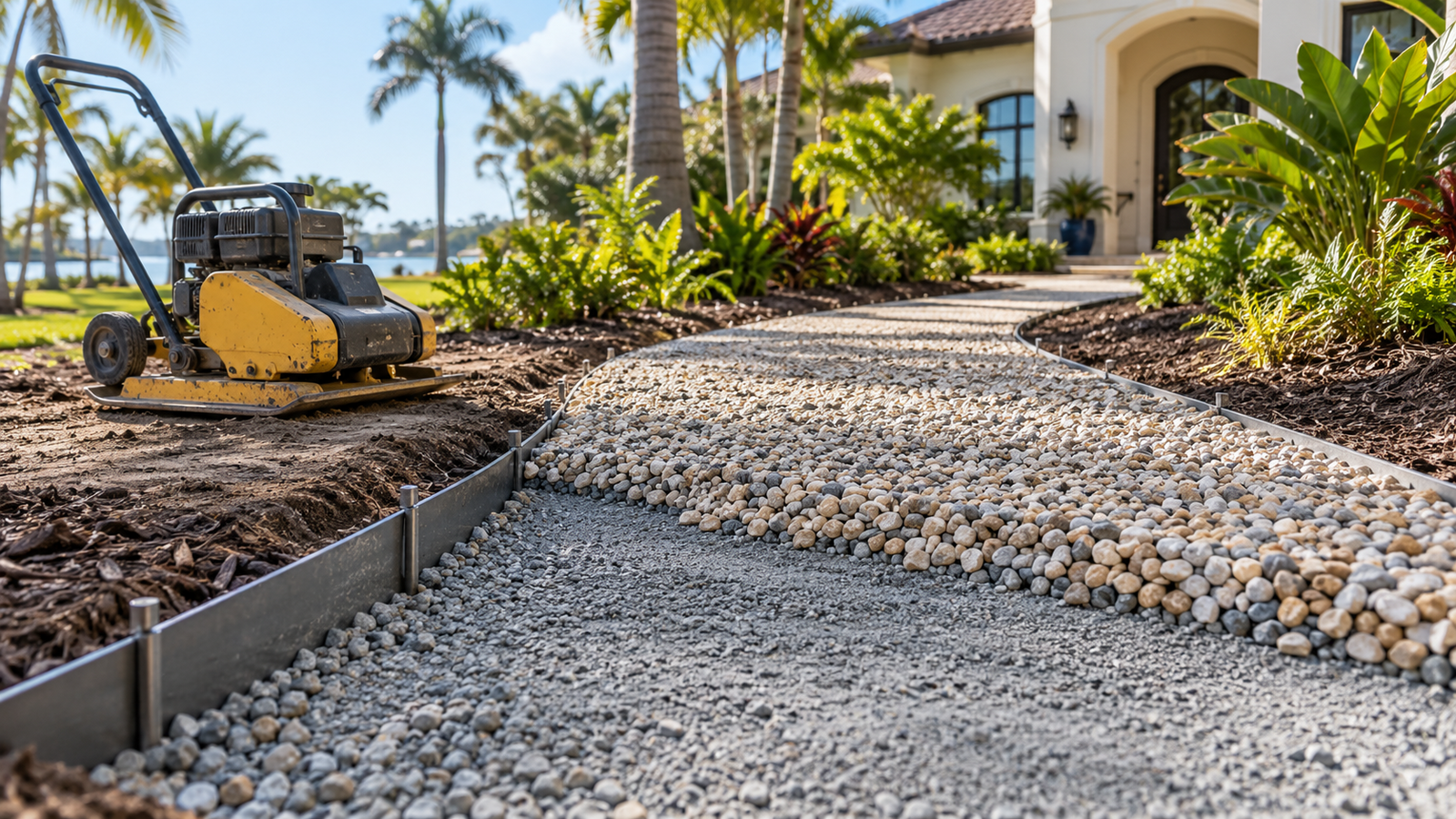
Use a well-graded aggregate intended for compaction rather than rounded decorative pebbles. Place it in manageable lifts, lightly moisture-condition it when appropriate, and compact each layer with equipment suited to the path and nearby structures. Thick loose fills may crust on top while remaining unstable below. Check grade with a straightedge and correct depressions as the work proceeds. Around irrigation pipes and shallow utilities, use care and hand methods where powered compaction could cause damage. The finished base should feel firm and show no rutting under foot.
Install Edging and Finish Gravel
Secure edging to the compacted system so it contains the stone without becoming a raised obstacle. Choose a finish gravel comfortable for the intended use, and install only enough to cover the base and allow the particles to settle together. An overly deep layer feels loose and makes wheels or feet sink. Rake evenly, keep material below adjacent hard surfaces, and test the path from both directions. At gates and downspouts, add details that prevent concentrated water from washing the gravel away.
Avoid These Common Shortcuts
Do not place decorative rock directly over turf, weeds, mulch, or uncompacted fill. Avoid relying on thin landscape fabric as the only support layer. Do not use glue or binder unless the product, stone, drainage plan, and application are specifically compatible. A surface that sheds all water may redirect runoff to unwanted areas. Skipping edging often leads to repeated raking and mower damage, while ignoring tree roots can harm the tree or lift the path later. Correct the structure before adding more decorative stone.
Plan Maintenance and Professional Installation
After heavy rain, inspect for settlement, washout, and water collecting along the edges. Rake displaced gravel back into place, remove leaves before they decompose, and add small amounts of matching stone only after the base remains stable. If the path crosses a wet area, carries equipment, or needs careful grading near a structure, professional planning can prevent expensive rebuilding. Schedule a free quote with Ecoscape Outdoor Services to design and install a decorative gravel path with the right base, edging, and drainage for your property.