Can You Install Sod in Tampa During Winter?
The Short Answer for Tampa
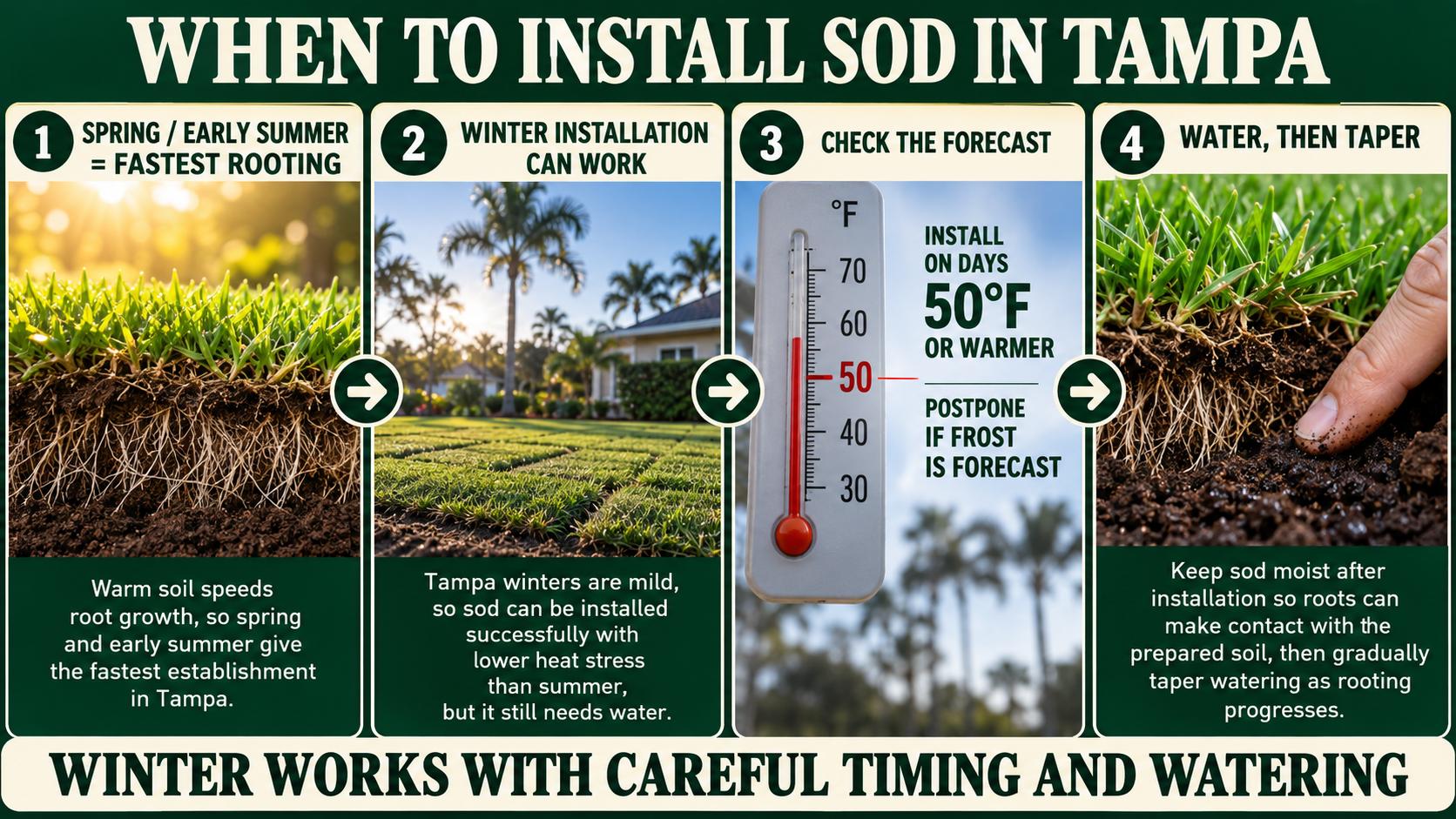
Spring and early summer usually give warm-season sod the fastest root growth in the Tampa area. That makes them strong choices when you want the lawn to establish quickly. Winter is still a workable installation season during our mild stretches. Cooler air and less intense sun reduce the heat stress and rapid drying that freshly cut sod faces on a hot summer afternoon. The tradeoff is slower rooting, especially during cold spells. A winter lawn may also look less vigorous until warmer weather returns. The calendar alone does not determine success. Soil preparation, fresh sod, dependable irrigation, and a suitable forecast matter more than choosing a month and hoping for the best.
Why Cooler Weather Helps, and What It Does Not Do
Fresh sod arrives with a short root system. Until new roots grow into your soil, the grass depends on careful moisture management. Mild winter days often slow evaporation and reduce the chance of rapid heat-related drying. This is more accurate than saying winter sod cannot be burned by the sun. Sod can still dry in bright sun, low humidity, or wind, even in January. Cooler weather may reduce how much water you apply on a given day, but a longer establishment period means no installer should promise a fixed total water saving. Check the sod and soil rather than watering by the calendar alone. The surface should stay moist during early establishment without puddles, runoff, or constantly saturated ground.
What the Cold Changes
St. Augustinegrass, zoysiagrass, and other warm-season turfgrasses slow their growth as temperatures and daylight decrease. The sod can remain healthy while it takes longer to grip the soil. Do not judge a winter installation by the same rooting schedule you expect in late spring. A few cool mornings are different from a freeze. Ecoscape uses a conservative installation rule: do not lay sod while the air temperature is below 50°F, and postpone the work when frost or freezing weather is forecast during the vulnerable establishment period. That 50°F mark is a practical scheduling threshold, not a claim that every grass plant dies below it. We choose a milder window and review the short-term forecast before delivery.
Prepare the Yard Before Sod Arrives
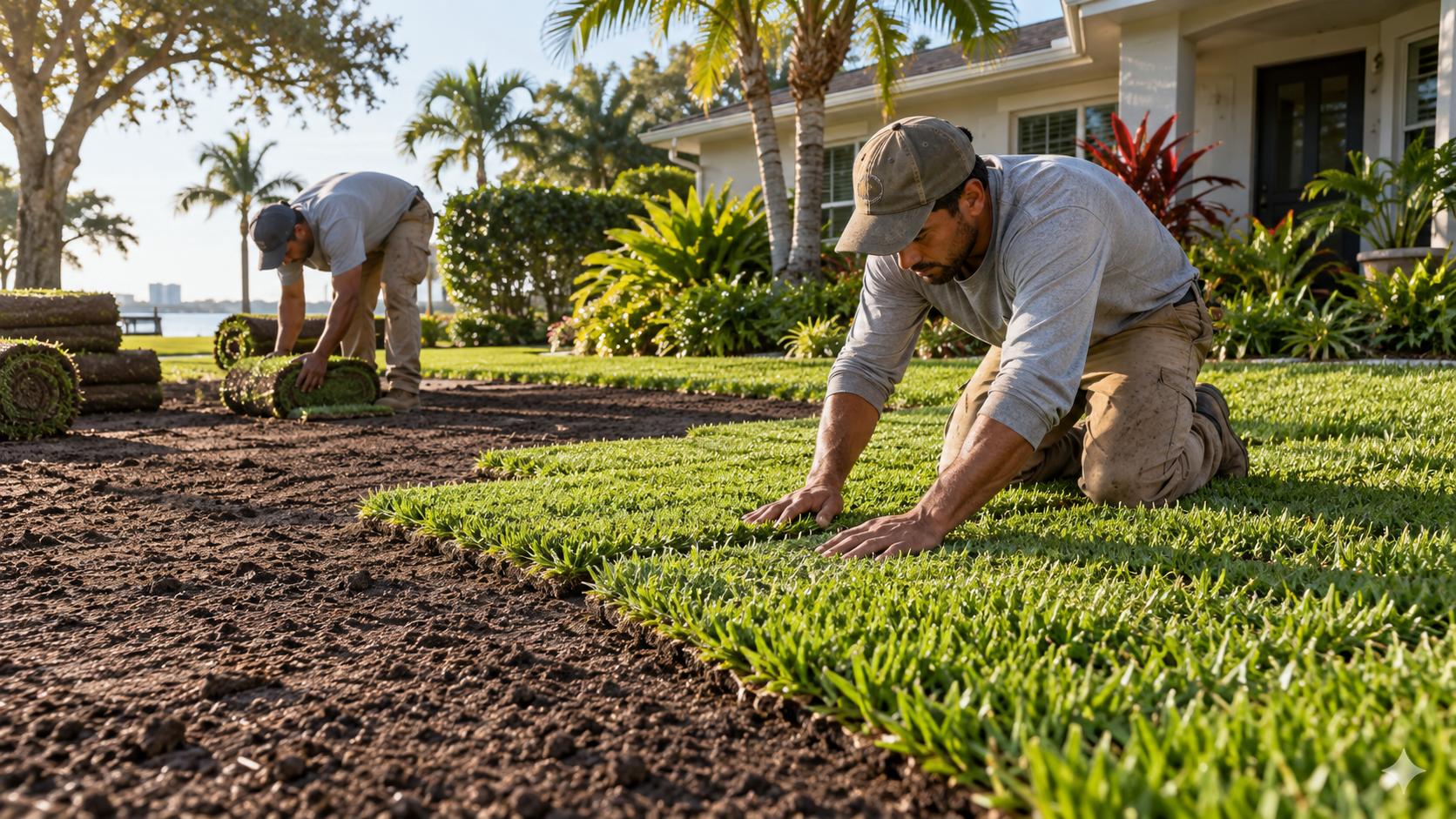
Remove dead turf, weeds, rocks, and construction debris. Correct low spots and drainage problems instead of covering them with new grass. Loosen compacted soil where appropriate and create a smooth finished grade that carries water away from structures. Run each irrigation zone and repair blocked, broken, or misaligned heads before installation. Account for the thickness of the new sod so sprinkler heads remain near finished grade. Inspect delivered sod for dryness, pests, weeds, or damaged pieces. Lay it promptly on prepared, lightly moistened soil. Fit the pieces tightly in staggered rows, avoid stretched seams, and firm them against the soil so roots have good contact.
Water for Rooting, Not for a Fixed Number of Minutes
Water immediately after installation to moisten the sod and underlying soil. During the first stage, keep the shallow root zone from drying out with short applications as needed. Check several places, including sunny edges and the far end of each irrigation zone. A gentle tug on a corner helps show when roots begin to hold, but do not pull up fresh sod repeatedly. As rooting progresses, reduce watering frequency and wet the developing root zone more deeply. Rainfall, soil texture, sun, wind, and sprinkler output change the schedule. Skip an automatic cycle when the soil is already wet. Winter weather does not remove the need for establishment watering, and saturated soil can create its own problems. Follow any local watering rules that apply to new sod.
Avoid These Winter Installation Mistakes
Do not place sod on frozen, waterlogged, or poorly prepared soil. Do not accept a pallet that sat too long and arrived hot, yellowed, or dried around the edges. Avoid walking, mowing, or turning equipment on the new lawn before it has secured to the soil. Resist the urge to add fertilizer immediately to force a winter-green appearance. New sod has limited roots, and fertilizer timing should follow the grass condition and local guidance. Never use the color alone as a rooting test. Cool weather can slow top growth while roots are developing. Check actual soil moisture and how firmly the pieces hold, then adjust the care plan when conditions change.
When to Book Your Sod Project
If your lawn has failed, planning ahead lets you inspect the site, correct irrigation and drainage, choose the right turf, and reserve a mild installation window. Winter can be a sensible choice for a Tampa property when those details are handled well. Ecoscape Outdoor Services can assess the old lawn, prepare the grade, coordinate fresh sod delivery, install it correctly, and give you a watering plan based on the weather and rooting progress. Schedule a free quote with Ecoscape Outdoor Services if you are considering sod replacement. We will evaluate your property and recommend an installation date that fits the lawn and forecast. For further reading, see the UF/IFAS guide to establishing a Florida lawn and UF/IFAS discussion of sod timing.