Check Hot Sunny Edges First for Chinch Bug Damage
Heat Reveals the First Warning Area
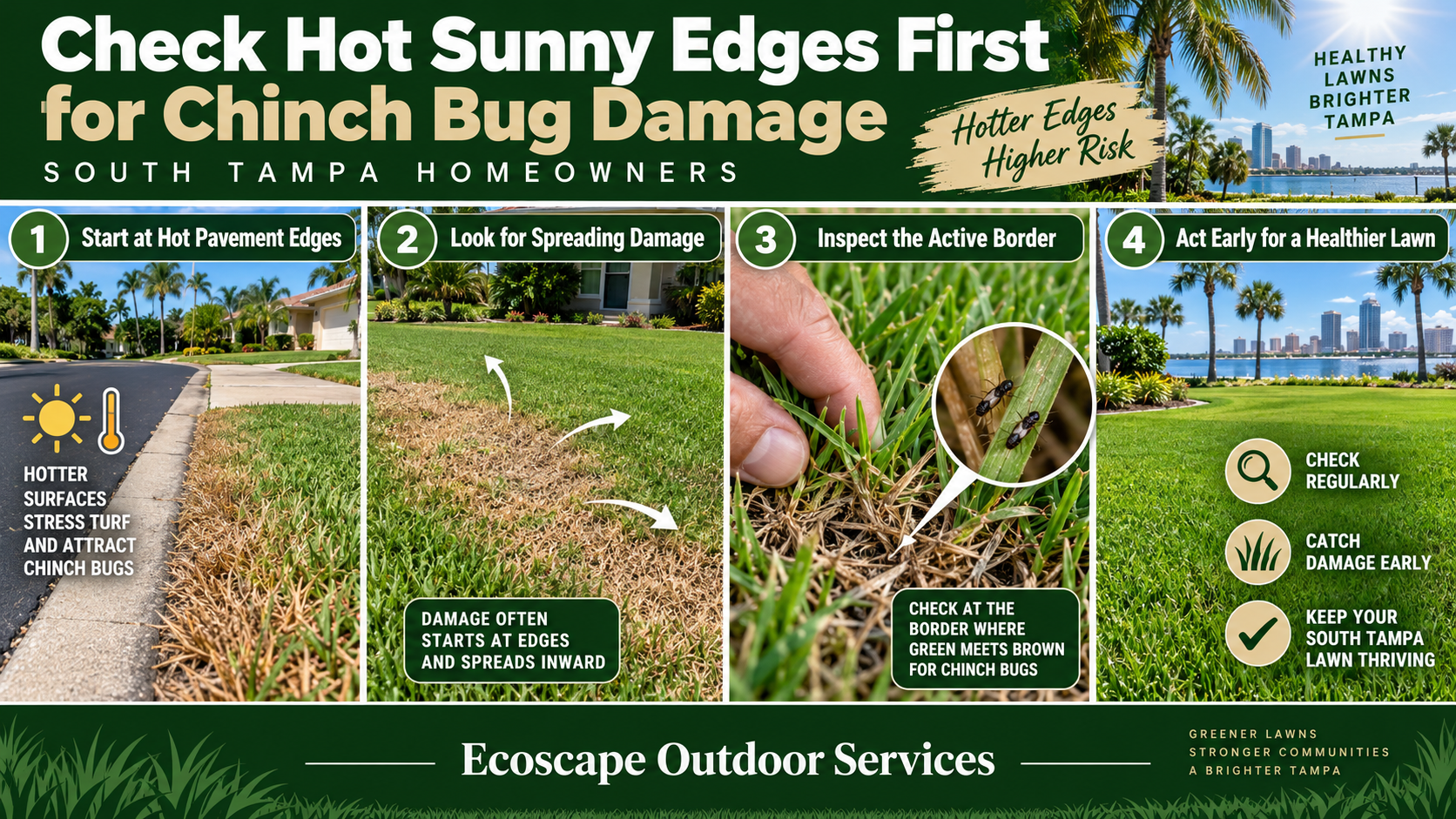
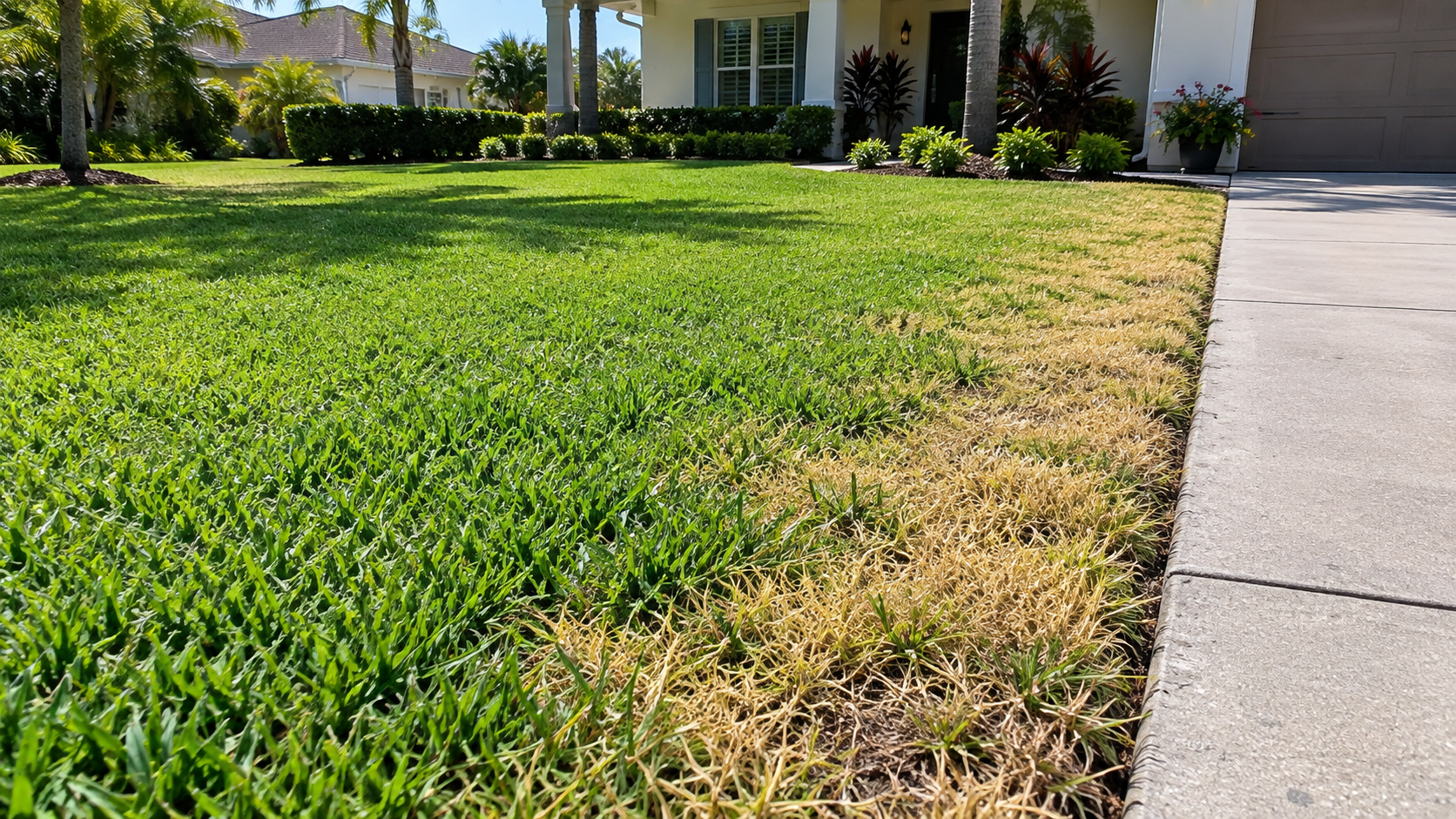
Southern chinch bug injury often becomes visible in sunny, dry sections of St. Augustinegrass. Pavement, walls, driveways, and sidewalks increase heat and reduce the margin for turf stress. A yellow strip beside concrete does not confirm insects, but it identifies a smart place to begin scouting. Check the hottest edge first, then compare it with cooler and better-irrigated parts of the lawn.
Look for Irregular Expansion
Chinch bug damage commonly begins as scattered yellow areas that turn reddish brown and then straw colored. The patch may spread outward and merge with nearby injury. Straight, sharply defined damage may point toward irrigation layout, spills, or equipment. Trace the outer boundary and inspect multiple points where declining turf still meets green, living grass.
Separate Heat From Dryness
Concrete radiates heat, but irrigation coverage also weakens near hard edges when heads are blocked or poorly spaced. Run the zone before assuming insects are responsible. Confirm spray reaches the full strip without overshooting onto pavement. Probe the soil several inches deep after irrigation. Dry soil beneath the affected turf strengthens the case for a water-distribution problem.
Search Low in the Turf
Part the grass at the active edge and inspect the lower stems and thatch. Chinch bugs avoid easy detection and move quickly through dense turf. Use a flotation test in two or three locations if visual inspection is inconclusive. Compare the sunny edge with a healthy control area. The difference between locations is more useful than a single isolated observation.
Avoid Stress During Investigation
Keep the mower at the proper height for the St. Augustinegrass cultivar and use a sharp blade. Scalping removes protective leaf area and increases heat at the soil surface. Do not add extra fertilizer to force color while the cause remains unknown. Excess growth and nitrogen will not repair insect feeding or failed irrigation and may complicate recovery.
Act on Evidence
Confirmed insects call for a licensed pest-control response. No insects plus dry soil calls for irrigation correction and measured watering. Saturated soil, soft lesions, or symptoms that worsen after long wet periods point toward a different diagnosis. Each path requires a different response, so the inspection result must control the decision.
Build Scouting Into Lawn Care
Ecoscape Outdoor Services pays close attention to hot borders, driveways, curb lines, and full-sun areas during South Tampa lawn service. We document new discoloration early and help owners separate maintenance or irrigation problems from likely pest activity. Early detection limits the area at risk and gives the appropriate specialist better information before treatment begins.