Check Landscape Lighting Voltage Drop Before Adding Fixtures

Why Voltage Drop Matters
Low-voltage landscape lighting loses some voltage as electricity travels through cable. Longer runs, smaller wire, loose connections, and higher fixture loads increase that loss. A system may look acceptable near the transformer while the last fixture is noticeably dim. Adding more lights without testing can create flicker, uneven brightness, premature component failure, or nuisance shutdowns. Florida moisture and heat can make weak connections and overloaded equipment even less reliable over time.
How to Recognize the Problem
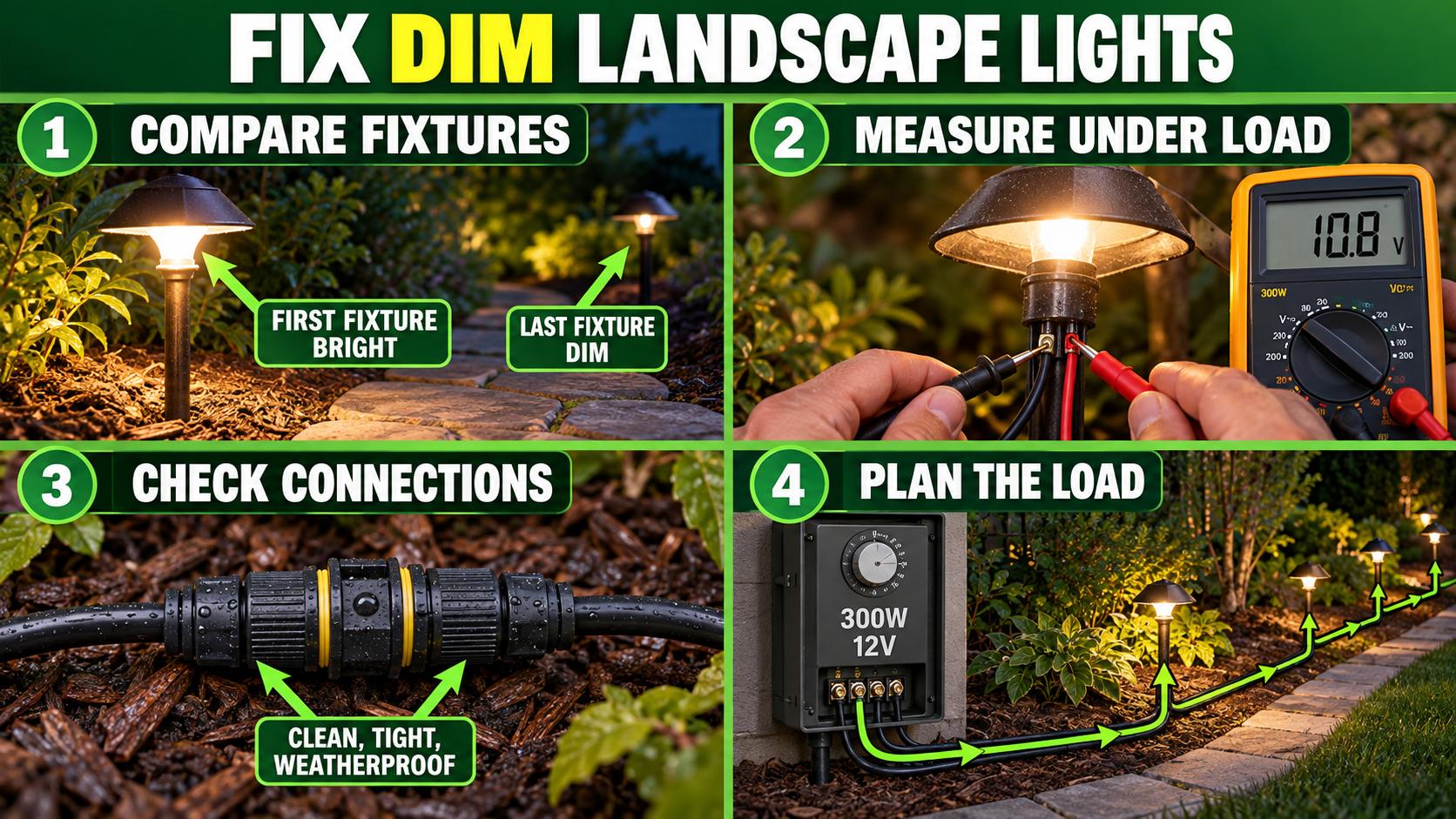
Typical signs include lights that become dimmer farther from the transformer, fixtures that flicker when other lights turn on, and lamps that fail repeatedly at the end of a run. Color temperature may also appear inconsistent when LED fixtures receive unsuitable voltage. Inspect the system after dark, then compare the first and last fixtures. Uneven brightness is not always a lamp problem, especially when several fixtures on the same cable show a clear pattern.
Measure the System Under Load
Voltage should be checked while the lighting system is operating because unloaded readings do not show the actual loss. A qualified technician measures at the transformer output, at representative junctions, and at the farthest fixture. The fixture manufacturer’s acceptable input range should guide the evaluation. Total wattage, cable length, wire gauge, connection condition, and transformer capacity all matter. Record the readings so future additions can be compared with the original system.
Plan Additions Before Digging
Map every existing fixture and cable route before adding lights. Calculate the new load and consider whether fixtures should be divided across separate runs or transformer taps. A hub layout or heavier cable may reduce voltage differences on long routes. Place connections in accessible, weather-resistant locations and keep them out of standing water. Test the proposed layout before burying cable or completing planting so corrections do not disturb finished landscape work.
Common Mistakes
Do not judge transformer capacity only by the number of open terminals. Avoid mixing incompatible lamps, connectors, and cable sizes without reviewing specifications. Do not compensate for low voltage by selecting an excessively high transformer tap without confirming the voltage at the nearest fixtures. That can expose some equipment to more voltage than intended. Another mistake is burying wire splices directly in wet soil where corrosion and intermittent failures become difficult to locate.
When Professional Help Makes Sense
Professional service is appropriate when the transformer is near capacity, cable routes are unknown, fixtures have inconsistent brightness, or electrical testing is needed outdoors. Ecoscape Outdoor Services can document the existing lighting layout, measure performance, rebalance loads, and design additions that fit the transformer and cable network. A planned expansion delivers consistent light and avoids repeatedly opening beds to chase faults after new fixtures are installed.
Follow-Up After Installation
Review the lighting after dark from the street, walkways, and main outdoor living areas. Confirm that brightness is even, glare is controlled, and every connection remains dry and accessible. Recheck voltage after all fixtures have operated for a full cycle. Update the cable map and load notes whenever the system changes. Seasonal plant growth can block beams and strain fixtures, so include aiming, cleaning, and connection checks in routine property maintenance. Book Ecoscape Outdoor Services to diagnose dim landscape lights and assess cable runs before adding fixtures.