
Check Thatch Before Dethatching St. Augustine Grass
Understand What Thatch Is
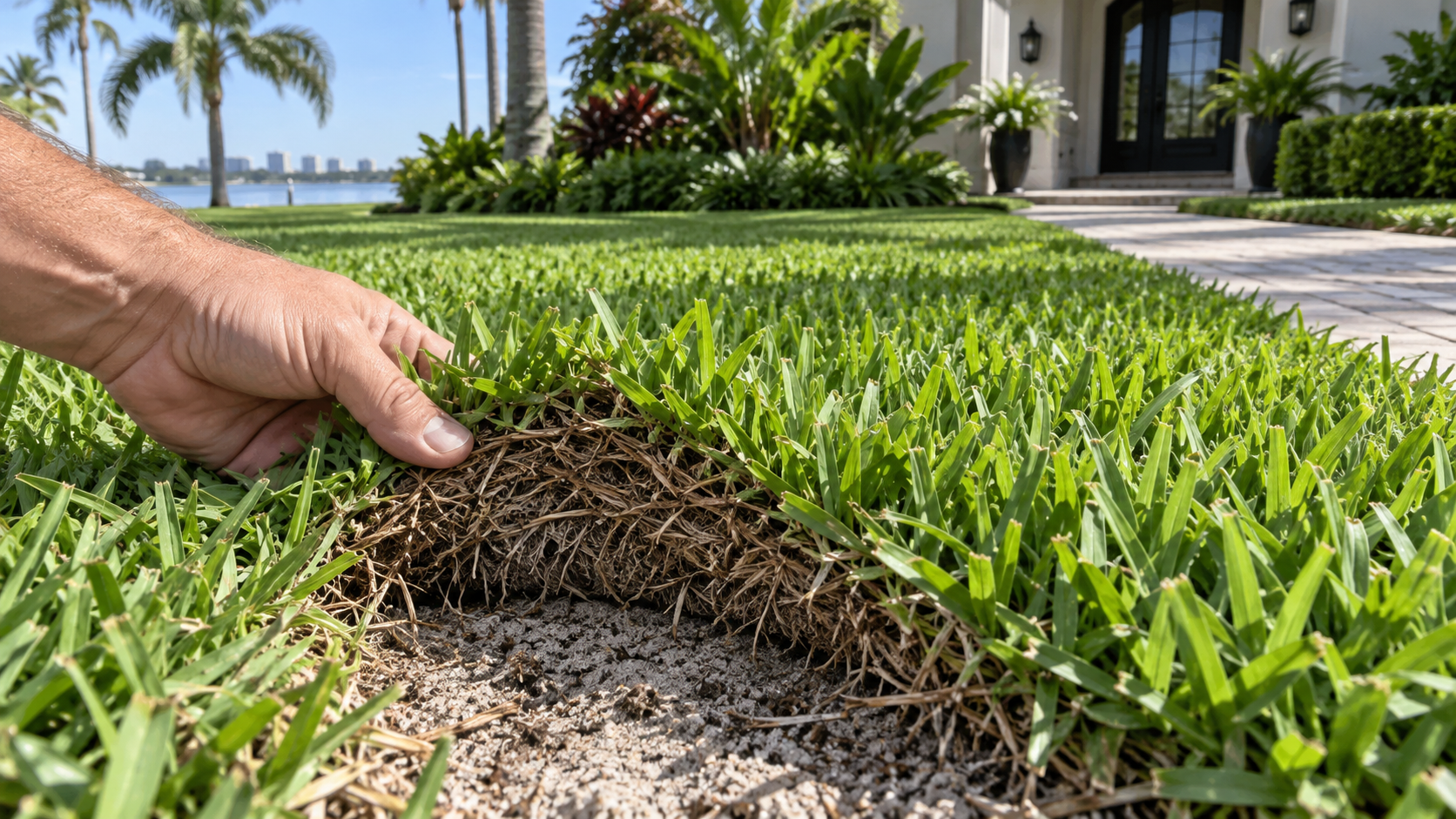
Thatch is the layer of living and dead stems, roots, and plant material between green grass blades and the soil. A thin layer helps cushion the lawn and slow moisture loss. Trouble starts when the layer grows thick enough to block water, air, and nutrients from reaching the root zone. St. Augustine grass naturally produces runners, so South Tampa lawns deserve periodic checks rather than automatic dethatching.
Measure Before You Act
Cut a small wedge from the lawn with a knife or narrow shovel. Look between the green growth and the soil surface. If the spongy brown layer approaches one inch, closer inspection is warranted. Check several locations because buildup often varies near shaded areas, heavily watered zones, and sections receiving repeated fertilizer. Replace each sample and water lightly. Never judge thatch by surface softness alone.
Find the Cause of Buildup
Excess nitrogen, frequent shallow watering, overwatering, compacted soil, and poor mowing habits often increase organic buildup faster than microbes break it down. A dull mower also tears leaf tissue and adds stress. Review irrigation coverage, mowing height, growth rate, and soil conditions before removing material. Dethatching without correcting the cause gives short-term improvement, followed by the same problem returning during Florida’s long growing season.
Choose the Right Timing
Schedule corrective work while St. Augustine grass is actively growing and has enough warm weather to recover. Avoid winter dormancy, drought stress, saturated soil, active disease, or the weeks surrounding a major storm. Tampa’s summer heat also raises moisture demands after aggressive work. Plan irrigation and recovery care before starting. Treat small areas first when the lawn is already thin or rooted poorly.
Use a Controlled Method
Light buildup often responds to improved mowing, irrigation, and soil management. Heavy thatch sometimes requires vertical mowing or professional equipment. St. Augustine stolons sit above the soil and suffer serious damage from blades set too deep. Mark irrigation heads, drains, lighting cable, and shallow utilities. Make a test pass, inspect runner damage, and remove loosened debris promptly so it does not smother surviving grass.
Guide the Lawn Through Recovery
After corrective work, keep traffic off weak areas and monitor soil moisture daily. Water deeply enough to reach roots without creating runoff or standing water. Resume mowing after the grass begins growing upright, using a sharp blade and the proper height for the cultivar. Watch for weeds, exposed soil, dry patches, and disease. Recheck the thatch layer several months later instead of repeating treatment on a fixed calendar.
Get a Lawn-Specific Plan
Ecoscape Outdoor Services evaluates South Tampa lawns before recommending aggressive work. We examine turf type, thatch depth, irrigation, drainage, compaction, mowing history, and recovery conditions. This approach protects valuable St. Augustine runners and targets the reason buildup developed. A measured plan produces better results than routine dethatching and reduces the risk of turning a manageable layer into widespread lawn damage.
