Choose Landscape Rock Size for Drainage and Foot Traffic
Why Rock Size Matters
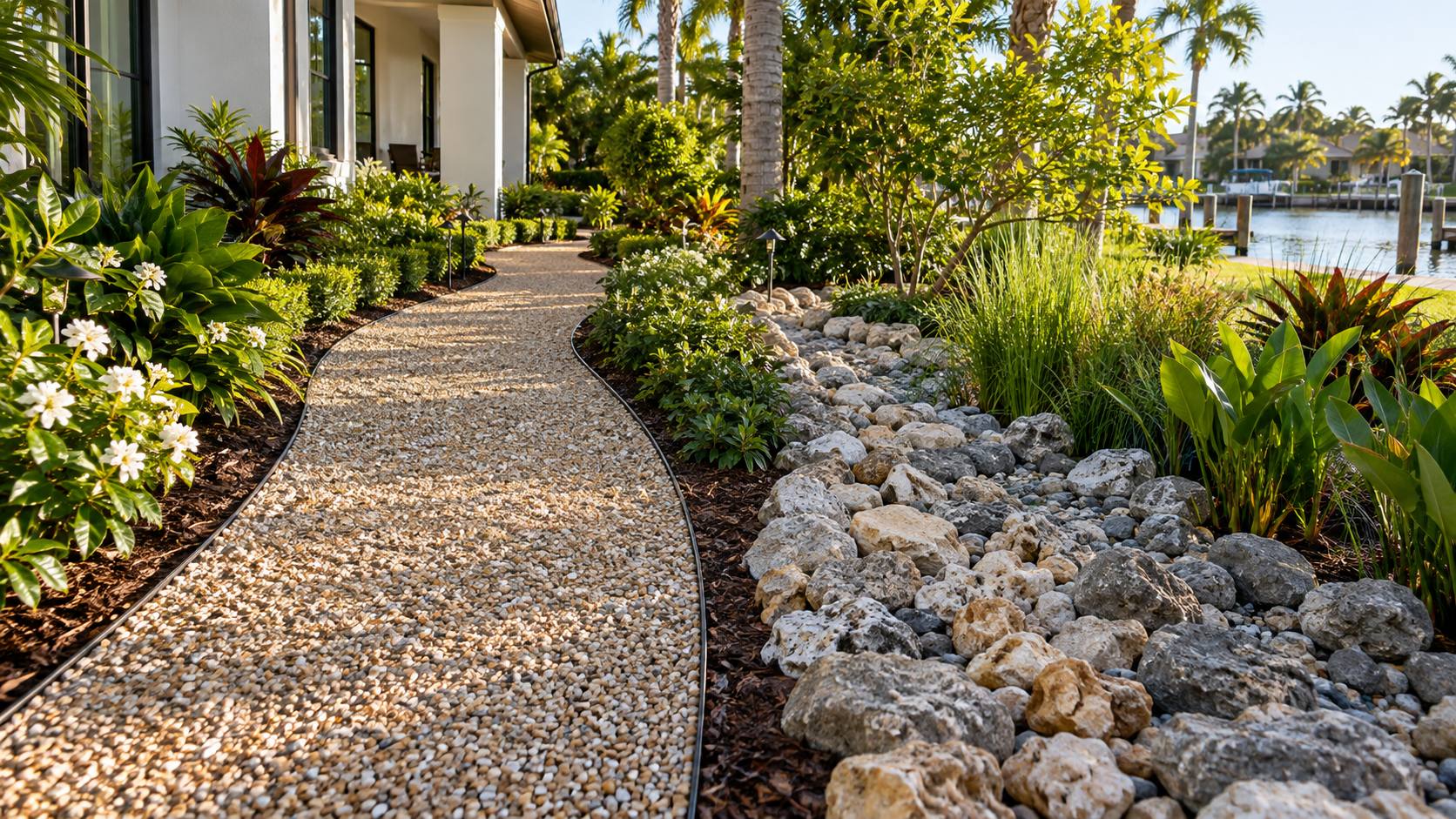
Landscape rock is not a one-size material. Small gravel can create a compact walking surface, medium decorative stone can cover planting beds, and larger rock can slow water in selected drainage features. The wrong size may migrate into turf, trap debris, roll underfoot, or wash toward a drain. In South Tampa, intense rain and flat grades make stability and water movement just as important as color and curb appeal.
Match the Material to the Use
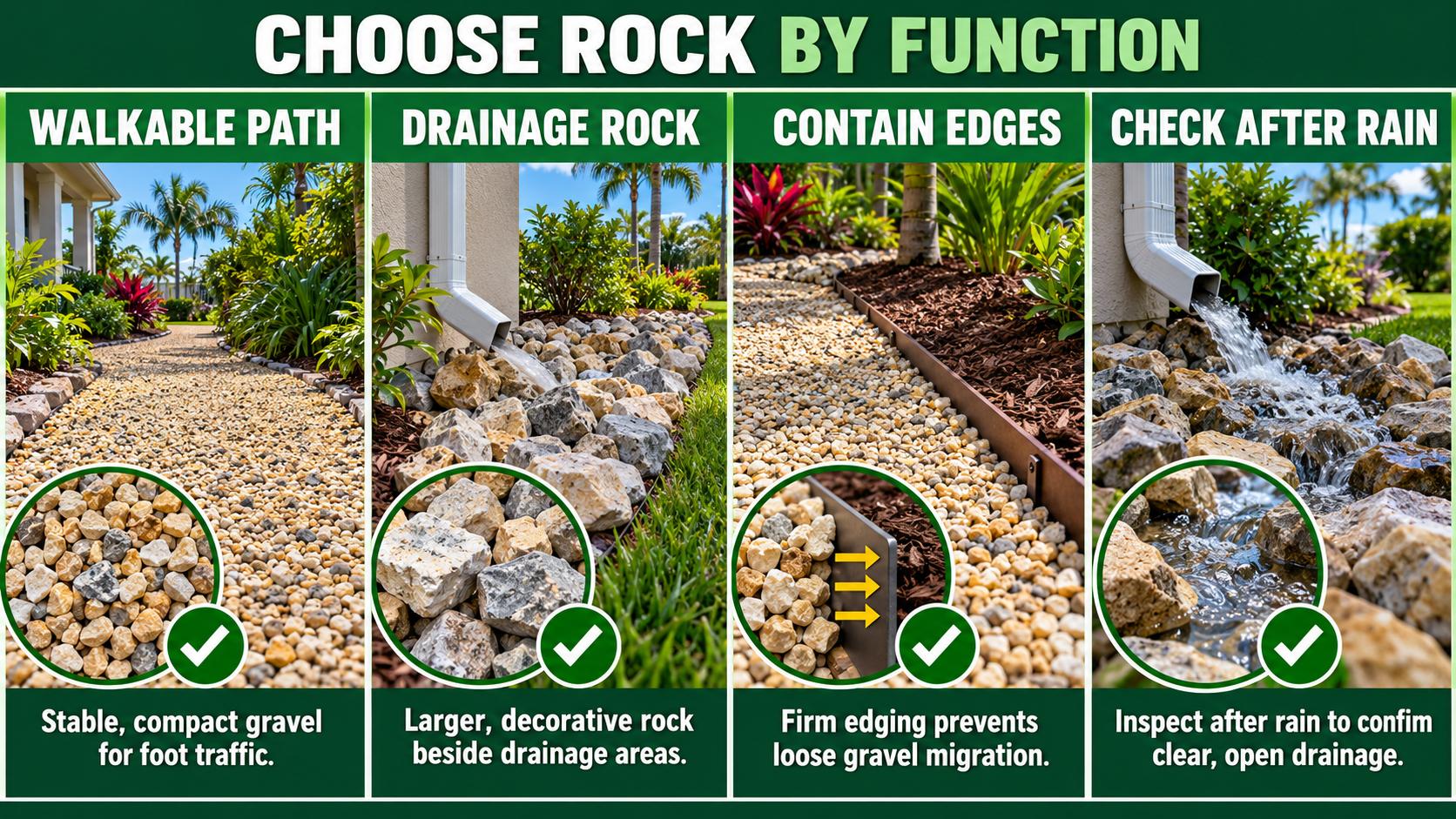
For paths, choose small angular gravel that locks together more effectively than smooth round pebbles. For decorative beds, medium rock is usually easier to contain and less likely to disappear into the base layer. Larger stone can work at downspout outlets or in designed drainage channels, but it does not correct a poor slope by itself. Around plants, leave room for trunks and crowns, and consider how the rock will affect reflected heat.
Plan the Base and Edges
Remove weeds and unstable organic material before installation. Shape the soil so water moves away from structures and toward an approved outlet rather than a neighboring property. A compacted aggregate base may be needed for walking areas. Use edging tall and strong enough to contain the selected stone, while keeping it low enough to avoid a trip hazard. Geotextile may separate rock from soil, but it should not block intended infiltration.
Check Drainage Before Ordering
Watch the area during a heavy rain or test it with controlled water. Identify where runoff enters, where it slows, and where sediment collects. Rock placed over standing water can hide the symptom without solving the cause. Calculate area and planned depth, then include a modest allowance for settlement and future touch-up. Confirm that gates, drains, cleanouts, valve boxes, and utility access will remain usable after the finished grade is raised.
Common Mistakes
Avoid loose round stone on slopes or frequently used paths because it can roll and spread. Do not place a thin decorative layer directly over soft mud and expect it to remain clean. Using very small rock near roof runoff can lead to displacement, while oversized stone in a narrow bed can overwhelm plants and be difficult to maintain. Skipping edging is another common cause of rock entering lawn areas and damaging mower blades.
When Professional Help Makes Sense
Seek design help when the project affects drainage, accessibility, large quantities, or several connected landscape areas. Ecoscape Outdoor Services can evaluate grades, recommend practical rock sizes, prepare the base, install containment, and coordinate planting so the material performs as intended. Professional quantity estimates also reduce leftover pallets and shortages. After installation, schedule periodic blowing and hand removal of debris rather than pushing soil and leaves deeper into the stone.
Helpful Resources
Before redirecting runoff, review local requirements and understand the watershed serving the property. The Southwest Florida Water Management District offers regional information at Watersheds. Reinspect the finished area after the first major storm. Reset displaced edges, clear blocked outlets, and correct any erosion promptly before a small movement becomes a larger maintenance problem. Book Ecoscape Outdoor Services to choose and install rock suited to your walkway, landscape bed, or drainage area.