Choose Mulch Particle Size for Slopes and Wind Exposure
Why Particle Size Matters
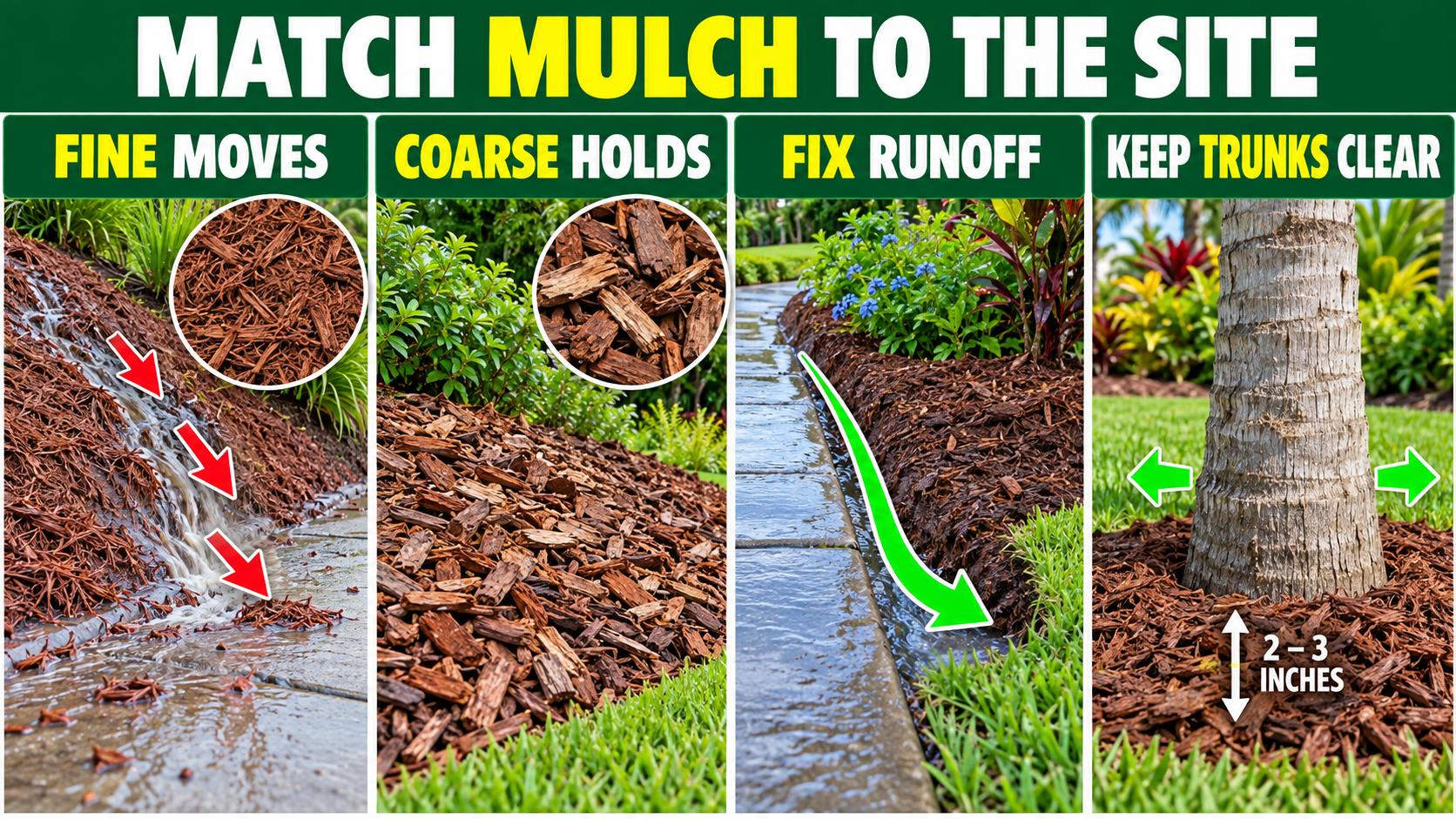
Mulch is sold in different textures, from fine shredded material to larger chips and nuggets. Those pieces do not behave the same way in a landscape. Fine mulch can knit together on a flat, protected bed, but it may wash into a sidewalk or drain when concentrated water crosses it. Larger, irregular pieces usually have more weight and interlock better, which can help them remain in place on gentle slopes and wind-exposed South Tampa properties.
Match Mulch to the Site
Evaluate the bed’s slope, irrigation pattern, roof runoff, foot traffic, and exposure before choosing a material. Coarser mulch is often the practical choice for open corners, raised beds, and areas receiving strong wind. Medium-textured mulch works well in many protected planting beds. Very fine material is better reserved for flatter areas where water spreads evenly. Around small plants, avoid pieces so large that they cover crowns or make routine hand care difficult.
Prepare the Bed First
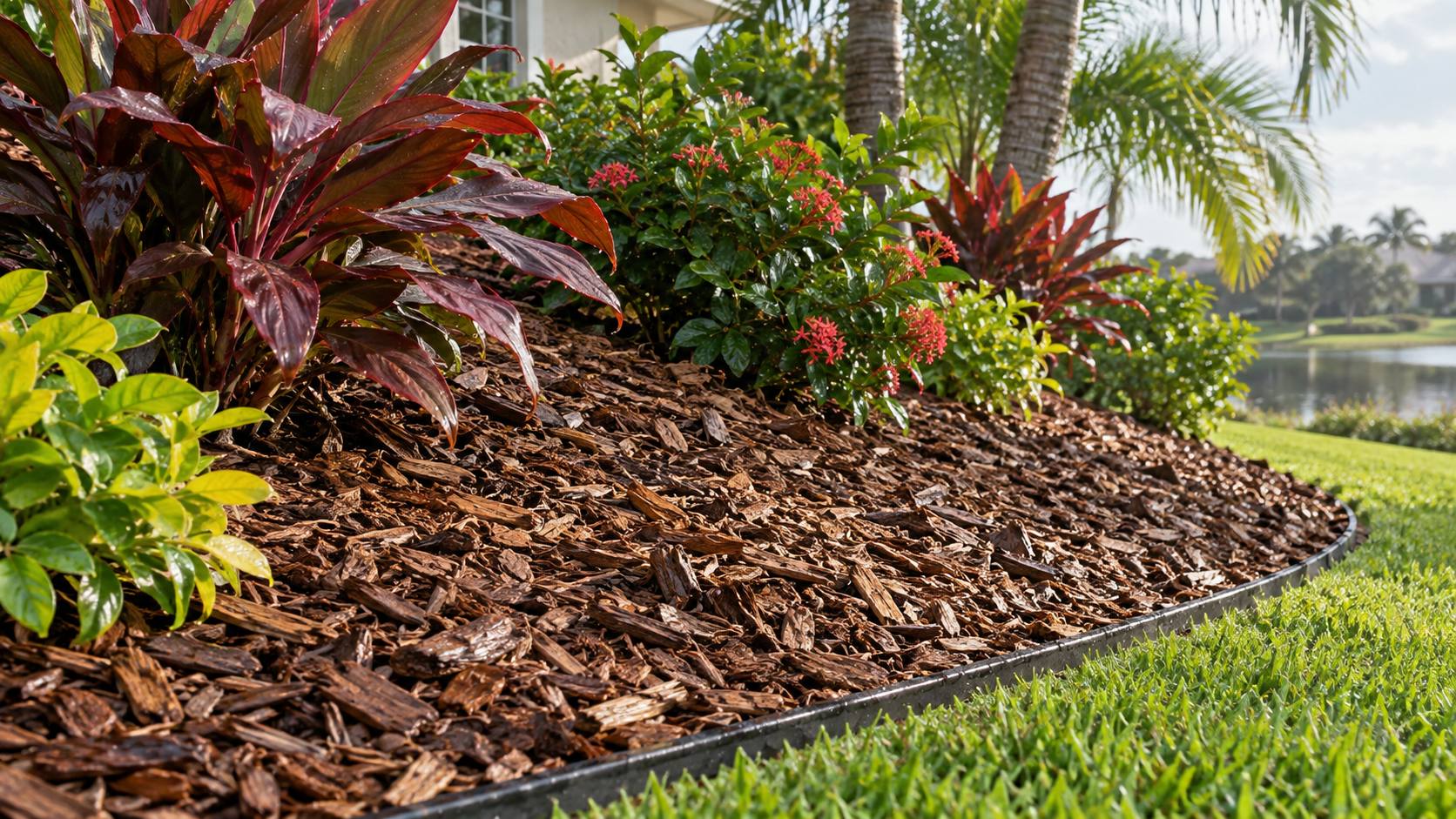
Remove weeds, excess old mulch, and loose debris before installation. Correct downspouts or sprinkler heads that discharge directly across the bed. Shape the soil so runoff does not accelerate beneath the mulch, and preserve drainage openings. Install a clean edge that is strong enough to contain the chosen material without becoming a trip hazard. Mulch should support the bed design, not serve as a cover for unstable soil or unresolved erosion.
Install a Practical Depth
For most ornamental beds, a finished layer of roughly two to three inches is sufficient. Spread it evenly and taper it away from trunks, plant crowns, siding, windows, and inspection areas. On a slope, work from the bottom upward and place the material without creating deep piles. Water lightly only if appropriate for the material and plants. Then observe whether the surface shifts, floats, or exposes bare soil before adding more.
Common Mistakes
Do not apply a thick new layer over years of decomposed mulch. Excess buildup can hold moisture, reduce air movement, and raise the grade around plants and structures. Avoid using adhesive as a substitute for correct material selection, drainage, and edging. Glues can create uneven surfaces and complicate future maintenance. Another mistake is blowing leaves aggressively into the bed, which can scatter lightweight mulch and mix organic debris into the finished surface.
When Professional Help Makes Sense
Professional installation helps when beds are steep, runoff crosses several landscape areas, quantities are large, or edging and drainage need correction first. Ecoscape Outdoor Services can evaluate exposure, recommend a practical mulch texture, remove buildup, prepare the bed, and install the material at a consistent depth. Coordinating mulch with irrigation and grading produces a cleaner result than replacing material repeatedly after every strong storm.
Follow-Up After Wind and Rain
Inspect the bed after the first heavy rain and after strong wind. Reset displaced material before bare channels deepen. Clear mulch from drains, walkways, air-conditioning pads, and pavement edges. If the same area repeatedly washes out, trace the water source and correct the flow rather than adding another bag. Turn or refresh usable mulch when possible, and replace only the amount needed to restore an even protective layer. Book Ecoscape Outdoor Services if your mulch repeatedly washes away or you need bed preparation and installation matched to your site.