Choose the Right Plants for a Narrow Side Yard
Why This Tip Matters
A narrow side yard has to perform several jobs in very little space. It may carry foot traffic, roof runoff, air-conditioning equipment, utility lines, trash bins, gates, drainage flow, and access for repairs. Adding plants without measuring mature size often creates a cramped path, blocked equipment, constant pruning, and moisture against the house. A good plan begins with function, then adds plants suited to the remaining space.
Measure the Usable Width
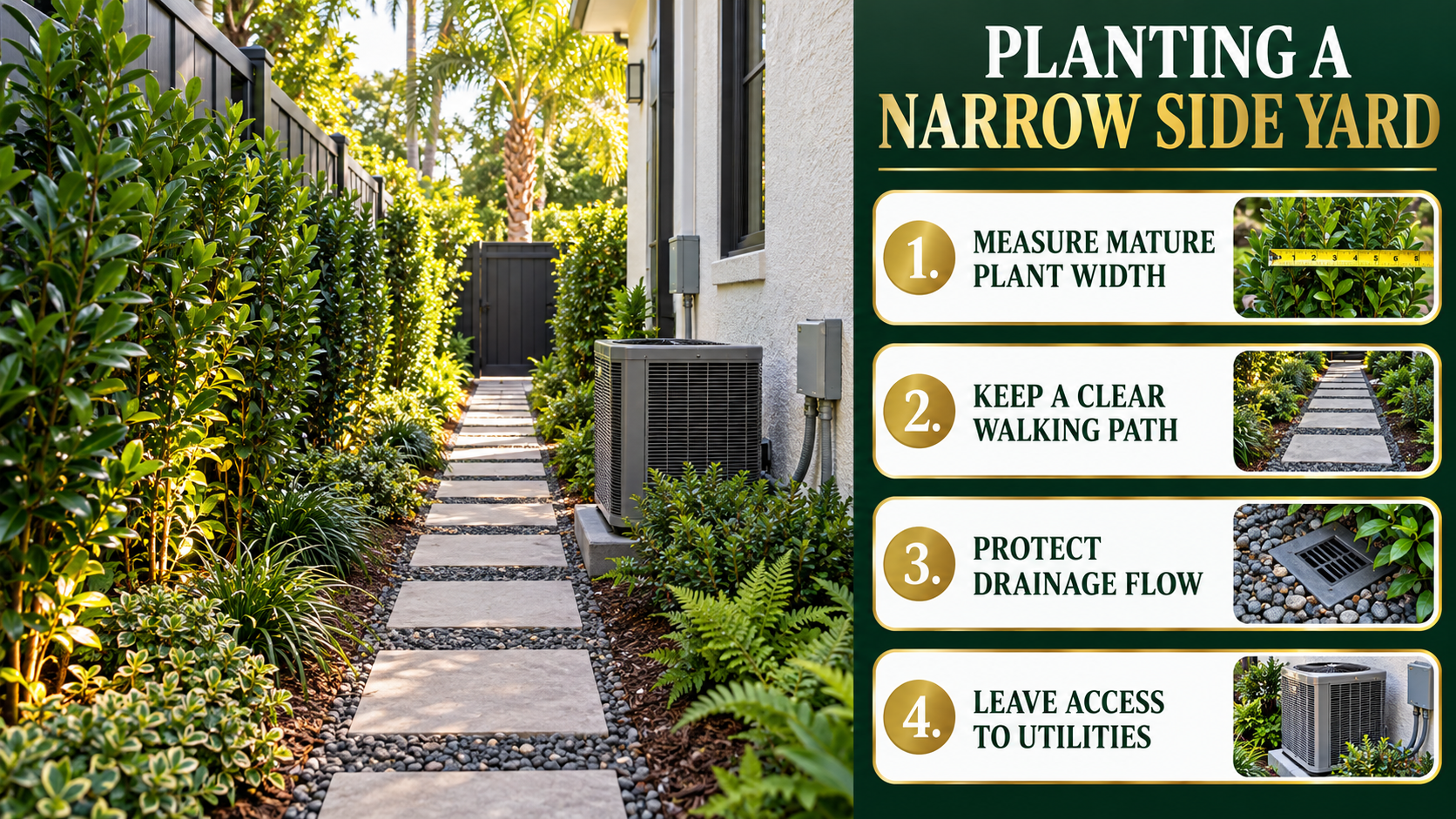
Measure from the house to the fence or property-side boundary at several points. Subtract the width needed for a comfortable walking route. Leave extra room near gates, hose connections, electrical panels, irrigation valves, cleanouts, pool equipment, and air-conditioning units. Record window locations, roof drip lines, downspouts, low spots, and changes in grade. A sketch with exact measurements prevents a plant selected at nursery size from consuming the entire corridor at maturity.
Study Light and Moisture
Side yards often receive bright reflected light for part of the day and deep shade for the rest. The north side of a home may stay damp and shaded, while a west-facing wall becomes extremely hot in the afternoon. Observe the space in morning, midday, and late afternoon. Check soil moisture after rain and after irrigation. Water trapped between a wall and fence calls for drainage correction before planting. Plants do not solve standing water, and dense foliage can slow drying.
Select Plants by Mature Size
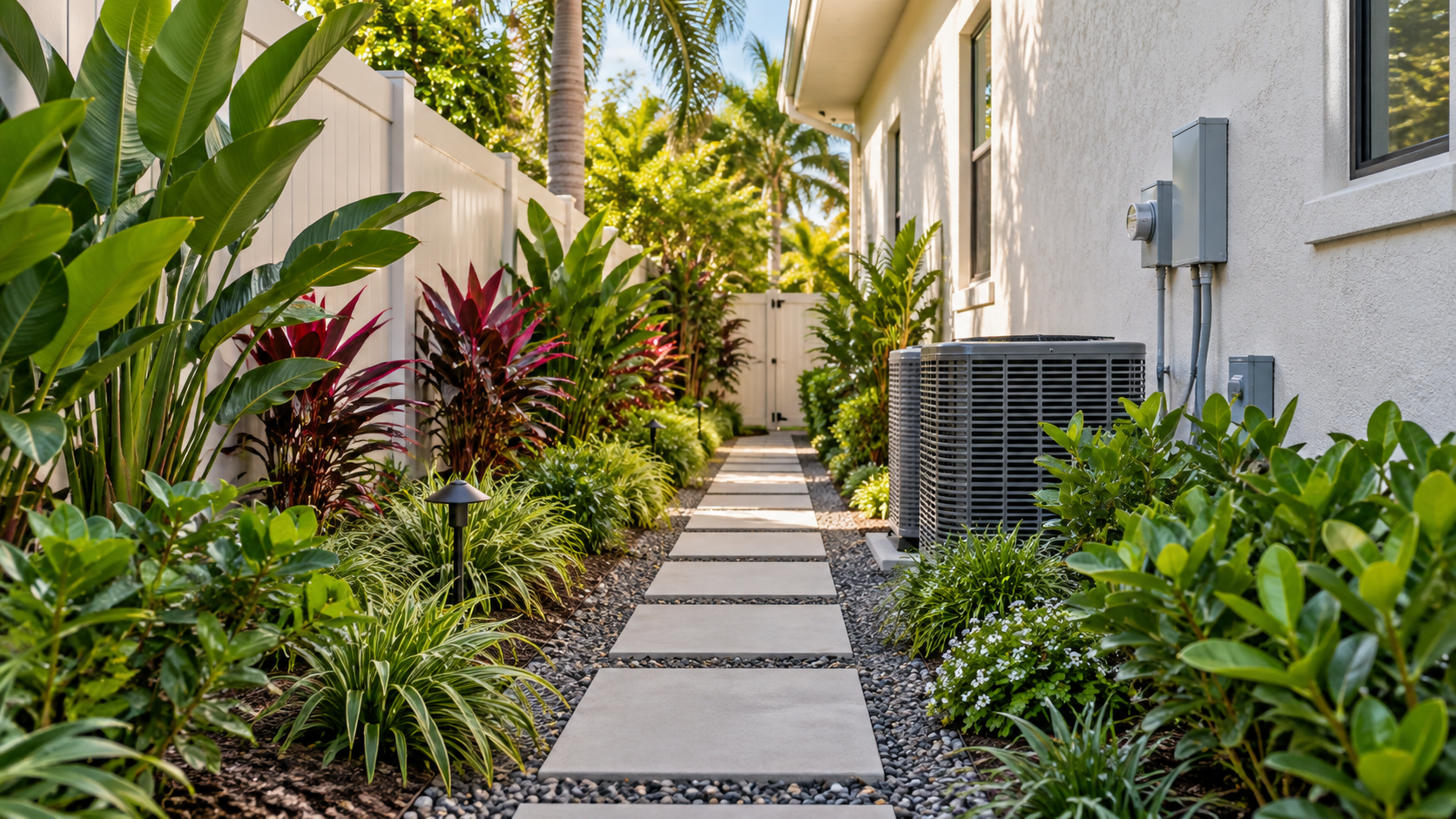
Choose upright, narrow, or naturally compact plants whose mature spread fits the measured bed. Read the mature width, not the size of the container. Avoid placing large clusia, viburnum, podocarpus, palms, or broad tropical plants where they require repeated hard pruning to stay off the path. Smaller shrubs, shade-tolerant groundcovers, ferns, liriope, dwarf varieties, and carefully selected vertical accents often work better. Match every plant to the actual light, drainage, salt exposure, and irrigation available in the corridor.
Protect Access and Airflow
Keep vegetation away from condenser coils and follow the equipment manufacturer’s service-clearance requirements. Do not bury utility boxes, meters, irrigation valves, or cleanouts behind shrubs. Leave windows, vents, stucco inspection areas, and gates visible. Maintain airflow around the house and avoid branches rubbing screens, siding, or roofing. A clear access route saves time and prevents plant damage when technicians need to enter the space.
Preserve Drainage
Do not raise a planting bed across an established swale or build edging that traps roof runoff. Direct downspouts toward a safe outlet and keep drain grates visible. Use permeable stepping materials where appropriate. Keep mulch below siding and away from weep screeds. Grade soil so water moves away from the foundation without being forced onto a neighboring property. If the side yard stays wet long after rainfall, solve the drainage problem before adding plants or decorative rock.
Create a Maintainable Layout
Use repetition and a limited plant palette to make the narrow area feel organized. Place taller material where it will not block windows or equipment, then use lower plants along the walking edge. Space plants for maturity and keep a small buffer from hard surfaces. Install irrigation where water reaches roots without spraying the wall. Choose finishes that allow leaves and debris to be removed easily. Review the plan from both ends of the corridor before installation.
How Ecoscape Outdoor Services Helps
Ecoscape Outdoor Services designs narrow South Tampa side yards around real measurements, drainage, utilities, mature plant size, and long-term maintenance. We build a practical plan before installation, coordinate irrigation needs, protect access points, and select materials that fit the property. The finished space looks intentional while remaining usable for the homeowner and service professionals.