Clean Pruning Tools Between Diseased Plants
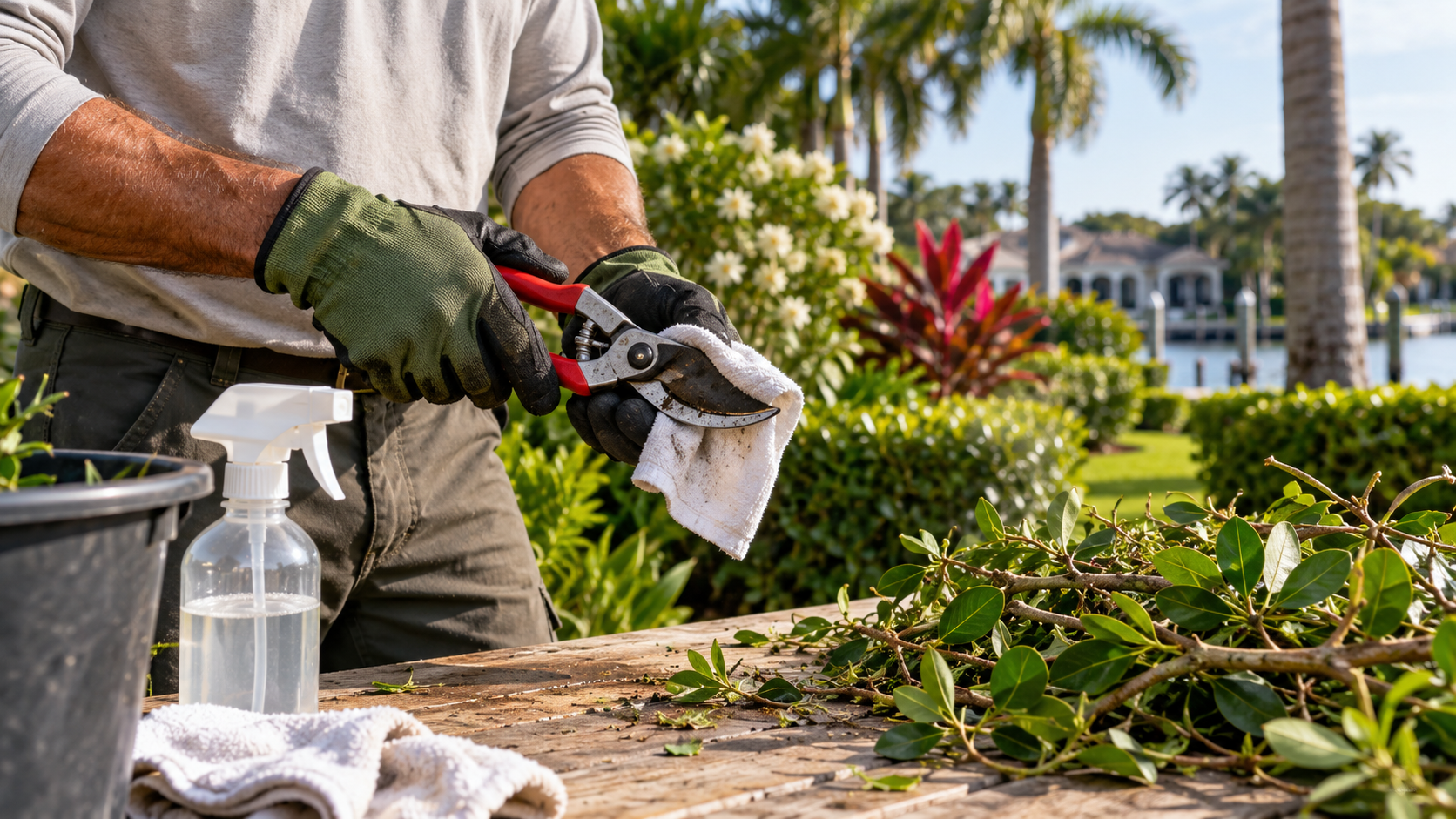
Cleaning and Disinfection Serve Different Purposes
Sap, soil, and plant residue accumulate on pruning blades. Removing this material improves tool condition and prepares the surface for disinfection. Disinfection reduces the risk of transferring certain pathogens between plants. A quick wipe over dirty blades does not provide the same result as a properly cleaned and treated tool. Diseased branches deserve particular care during a pruning visit.
Work From Healthy Plants to Suspect Plants
Inspect the plants before starting. Note unusual dieback, stem lesions, distorted growth, or other signs requiring diagnosis. Prune healthy plants first where practical and keep questionable material separate. Avoid assuming every brown branch has an infectious disease. Irrigation problems and physical damage also cause decline. When a serious disease is suspected, confirm the correct management approach before cutting more plants.
Remove Debris First
Use a suitable brush or cloth to remove loose residue. Clean stubborn sap with a method compatible with the tool. Wear appropriate protection and handle sharp blades carefully. Switch off and disconnect powered equipment before cleaning accessible cutting surfaces. Do not immerse electrical equipment. Clean handles and other contact surfaces when contaminated. Keep wash water and removed debris away from healthy planting material.
Choose an Appropriate Disinfectant
Use a product or procedure recommended for horticultural tools and the suspected pathogen. Follow required concentration, contact time, and handling directions. Different disinfectants have different limitations. Avoid mixing chemicals or treating a brief dip as a universal solution. Bleach is corrosive to metal and needs careful handling. Some disease situations require a specific protocol beyond routine maintenance. Keep the selected instructions available to the crew.
Make Contact Time Practical
Carry a second set of tools when the procedure requires soaking or prolonged wet contact. Let one set complete treatment while the other is used where appropriate. Replace dirty solution as directed. Remove excess disinfectant in accordance with the procedure before pruning the next plant. Dry and maintain tools after the work. Apply protective lubricant where the manufacturer recommends it, keeping unnecessary residue off cutting surfaces.
Give the Crew a Repeatable Procedure
Keep cleaning supplies together and label each container clearly. Assign someone to check tool condition before the truck leaves. Replace worn blades and damaged handles rather than forcing poor cuts. Review the sanitation procedure whenever a suspected disease changes the work plan. Include time for cleaning and required disinfectant contact in the schedule. Tools returned to storage should be dry and ready for the next visit. A routine followed consistently protects the quality of pruning across the route.
Build the Habit Into Every Visit
Store clean tools separately from diseased cuttings. Collect affected debris promptly and dispose of it appropriately for the diagnosed problem. Record recurring symptoms rather than repeatedly pruning without evaluation. Sharp blades and proper cuts complement sanitation but do not replace it. Ecoscape reviews plant condition and tool hygiene together to reduce avoidable injury during landscape maintenance. Call a specialist at Ecoscape.
Helpful Resource