Confirm Chinch Bugs Before Treating Brown St. Augustinegrass
Brown Grass Is a Symptom, Not a Diagnosis
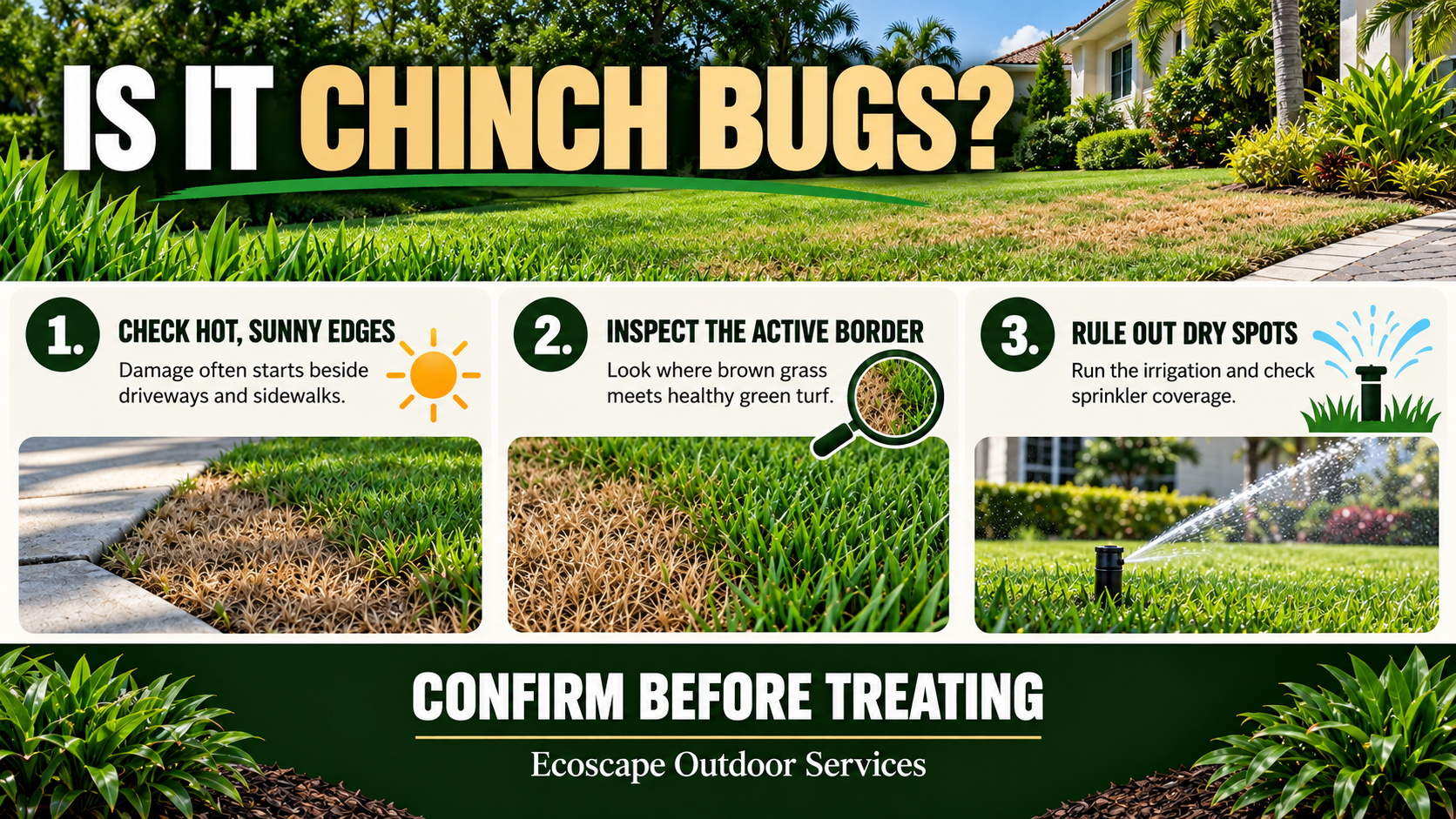
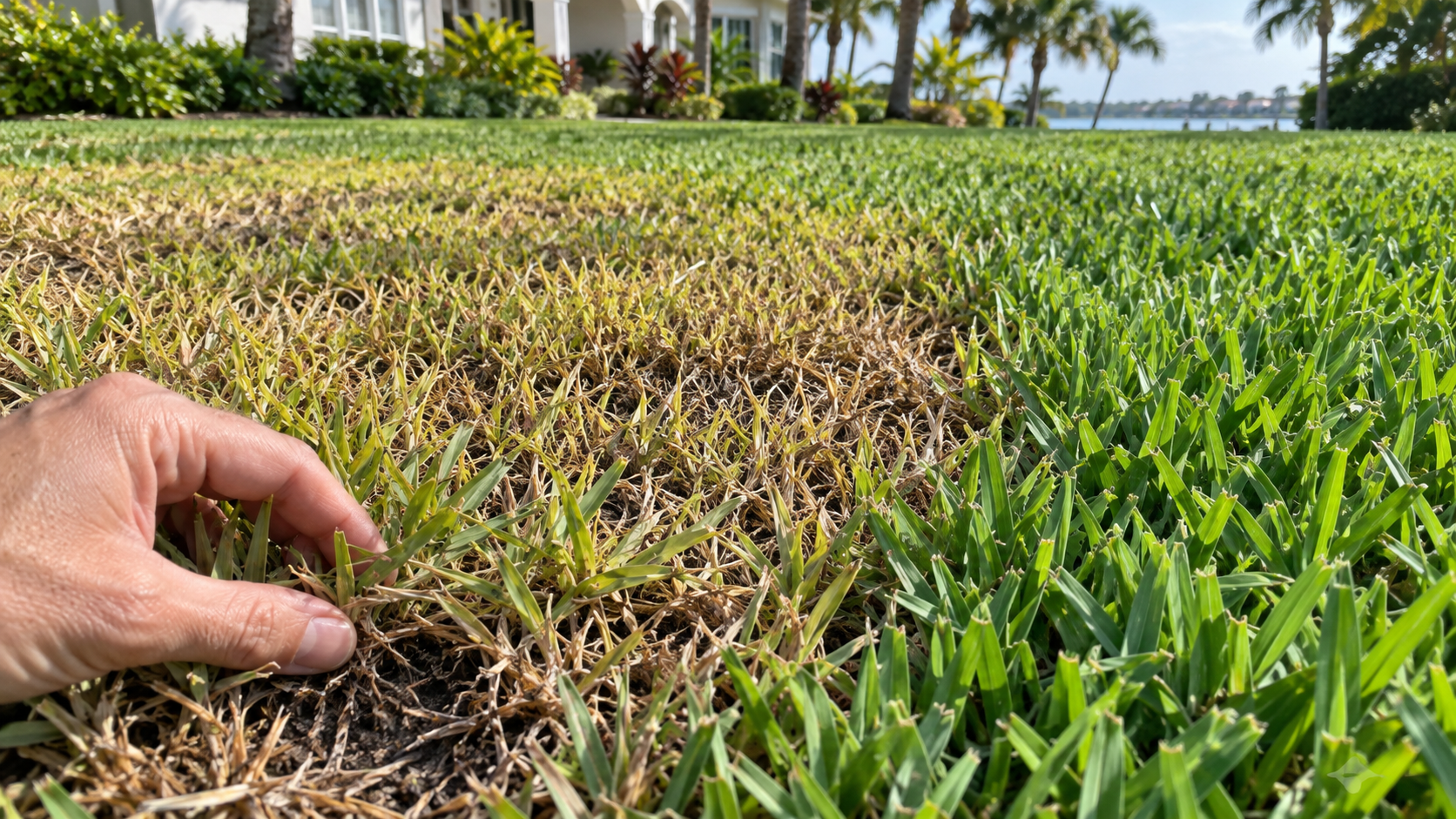
Southern chinch bugs are serious pests of St. Augustinegrass, but drought, irrigation failure, root disease, compaction, and chemical injury can create similar brown patches. Treating every damaged area as chinch bugs wastes money and delays the correct repair. In South Tampa, inspect the lawn before any control decision. Begin where damaged grass meets healthy grass because active insects usually remain along the expanding edge instead of the completely dead center.
Inspect the Transition Zone
Choose several points along the yellow-to-green boundary. Part the grass and look near the soil surface, thatch, and lower leaf sheaths. Adult southern chinch bugs are small, dark insects with light-colored wings. Young nymphs are smaller and often reddish or orange before darkening. Their size makes casual inspection difficult, so examine several locations instead of relying on one quick look.
Use a Flotation Check
Press an open-ended metal cylinder into the soil around the transition zone and fill it with water. Keep the water level steady for several minutes. Chinch bugs hiding in the turf may float to the surface. Repeat the test in more than one area because populations are uneven. A negative result at one point does not prove the entire lawn is clear.
Rule Out Water Problems
Run the irrigation zone and watch every head. Look for clogged nozzles, blocked spray, poor rotation, broken fittings, low pressure, and dry strips beside pavement. Place straight-sided catch cans across the damaged and healthy areas to compare delivery. Chinch bug injury often appears in hot, sunny locations, which are also the first places to show drought stress.
Record What You Find
Photograph the patch, mark its boundary, and note the date. Recheck it after several days. Rapid outward expansion during warm weather supports an active problem, while a fixed pattern may point toward irrigation coverage or an older injury. Record rainfall, irrigation repairs, mowing height, and any recent lawn products so a professional receives a complete history.
Use Targeted Professional Control
If inspection confirms chinch bugs, contact a licensed lawn and ornamental pest-control provider. Ask for a treatment plan based on the affected area, current product label, turf condition, and local resistance concerns. Avoid repeated blanket applications without verification. Unnecessary treatments affect beneficial organisms and still leave irrigation, mowing, or soil problems unresolved.
Protect the Lawn After Diagnosis
Ecoscape Outdoor Services monitors South Tampa lawns for visible stress during maintenance and documents changes for property owners. We do not guess at pest treatment. We help identify patterns, correct maintenance and irrigation issues within our scope, and coordinate with qualified spray professionals when pest control is needed. Fast, evidence-based action gives damaged St. Augustinegrass the best chance to recover.