
Control Dollarweed by Correcting Wet Soil First
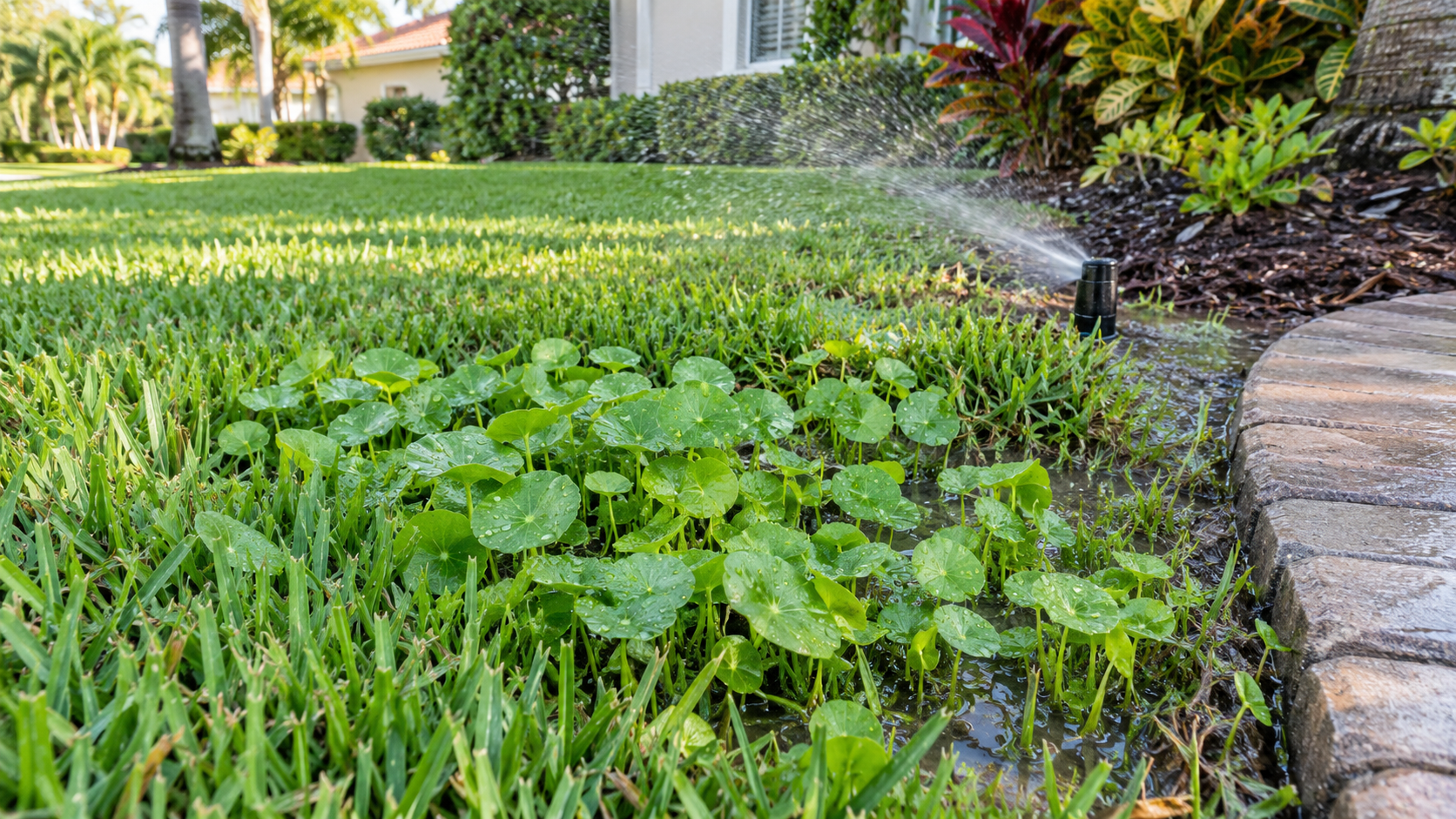
Dollarweed Points Toward Moisture
Dollarweed, often called pennywort, produces round bright-green leaves that rise above turf on slender stems. It thrives in wet soil and commonly appears near leaking irrigation, low areas, downspouts, compacted ground, and zones watered too often. Removing the leaves without correcting moisture leaves the underground growth and favorable conditions in place. Treat the weed as a signal. The location often reveals a water problem affecting both appearance and turf health.
Map Where It Grows
Mark every patch and compare it with sprinkler zones, drainage patterns, shade, and roof runoff. A strip beside one head suggests a leak or overspray. A broad low patch may reflect poor grade or compacted soil. Growth beneath a downspout points toward concentrated roof water. Check the area after irrigation and after natural rain. Photograph the same boundary weekly. New leaves spreading beyond the wet section indicate the problem needs broader investigation.
Test Irrigation Before Changing Products
Run each nearby zone and inspect heads, nozzles, valves, and controller settings. Look for a head that continues leaking after the zone stops, a broken riser, poor alignment, or repeated daily start times. Confirm the rain sensor works. Adjust watering based on soil moisture and local rules instead of turf color alone. Do not shorten every zone equally. The dollarweed area may receive excess water while another part of the same property remains dry.
Improve Drainage and Soil Conditions
Clear blocked drains, redirect approved downspout discharge, and keep bed edges from forming dams. Reduce repeated traffic that compacts wet soil. Aeration may help compacted turf when performed at the right time and depth, but it will not create an outlet for trapped water. Avoid adding soil until you know where displaced water will go. A grade correction should move water safely without sending it toward the foundation, walkway, or neighboring property.
Remove Small Patches Carefully
Hand-pull isolated plants when the soil is moist enough to release roots and underground runners. Follow the growth beyond the visible leaf and collect removed material. Refill small holes without burying surrounding turf. Wash tools before moving to another bed. Hand removal works best early. Large established areas usually return when pieces remain or the soil stays wet. Continue monitoring rather than assuming one cleanup eliminated the patch.
Avoid Random Weed Treatment
Do not apply a general herbicide without identifying the turf, weed, site conditions, and label directions. Products safe for one grass type may injure another. Florida licensing requirements and seasonal restrictions apply to professional treatments. Ecoscape Outdoor Services does not provide pesticide spraying. When regulated treatment is appropriate, use a qualified provider. Correcting moisture first improves the chance of lasting control and reduces repeated chemical applications.
Measure Real Improvement
Look for drier soil between watering events, stronger turf, fewer new dollarweed leaves, and a stable patch boundary. Recheck after heavy rain because drainage problems may differ from irrigation problems. Ecoscape Outdoor Services helps South Tampa clients inspect irrigation, identify leaks and overspray, improve drainage, adjust bed edges, and maintain turf around affected areas. Dollarweed control becomes more practical when the property stops supplying the constant moisture the weed prefers.
