Control Fire Ants in Florida Lawns Without Spreading the Colony

Confirm active fire ant mounds
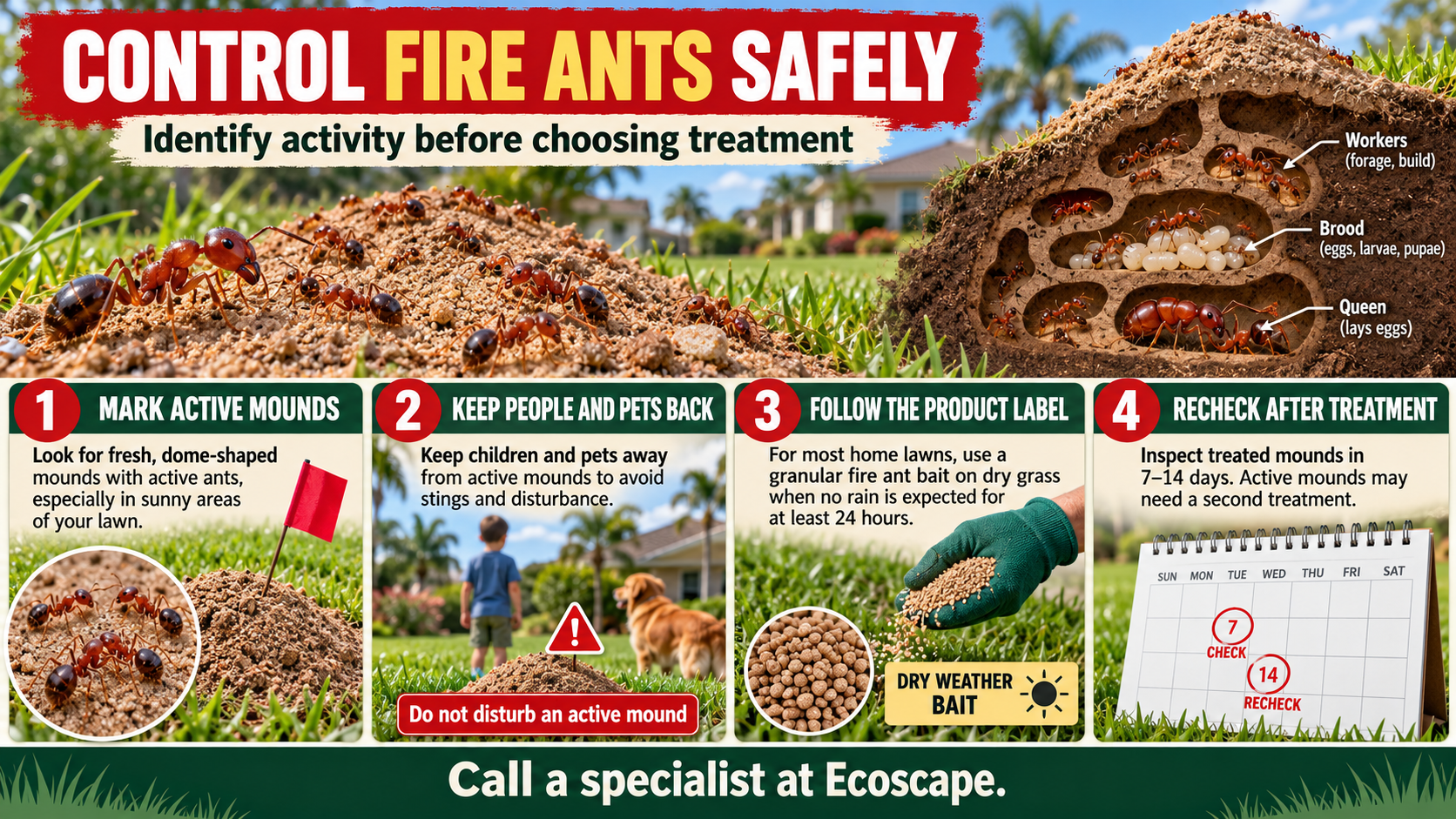
Control Fire Ants in Florida Lawns Without Spreading the Colony by identifying active sites before treatment. Imported fire ants build soil mounds in lawns, planting beds, pavement edges, utility boxes, and other warm protected areas. Workers vary in size within the same colony and react aggressively when the mound is disturbed. Mark suspected mounds from a safe distance and keep children, visitors, and pets away.
Inspect the surrounding property
One visible mound rarely represents the full activity area. Walk lawn edges, sunny turf, mulch beds, irrigation valve boxes, walkway joints, and ground around outdoor equipment. Heavy rain often pushes colonies toward higher ground. Avoid kicking, mowing over, or opening a mound during inspection. Record locations so treatment and follow-up cover the full property instead of one obvious pile of soil.
Select a labeled control method
Fire ant products use different strategies. Some treat individual mounds. Others use bait collected by foraging workers and carried into the colony. Choose only a product labeled for the site, such as residential turf or ornamental beds. Read every direction covering application rate, protective equipment, people, pets, weather, water, and reentry. More product does not improve control and raises exposure risk.
Apply bait during active foraging
Bait performs best when ants are searching for food and rain is not expected soon. Apply it to dry ground according to the label. Do not water immediately unless the product directions require it. Avoid placing general broadcast bait in vegetable gardens, near water, or on hard surfaces unless the label permits those sites. Keep granules out of gutters, storm drains, pools, and drainage paths.
Protect turf and nearby surfaces
Unapproved home mixtures, fuel, boiling water, and random chemicals injure turf, contaminate soil, damage pavement, and create safety hazards. Flooding one mound often fails to address connected colony activity. Keep irrigation off long enough for the selected product to work as directed. Flag treated areas when needed and store every pesticide in its original labeled container away from unauthorized access.
Recheck instead of assuming success
Inspect treated areas within the label’s follow-up window. Look for fresh soil, active foraging trails, and new mounds near the original location. Reinvasion from neighboring property remains common. Repeat treatment only when the label allows it. Review irrigation leaks, saturated soil, pavement gaps, and neglected edges supporting hidden nesting. Routine monitoring finds smaller colonies before mounds become a safety problem.
Arrange coordinated property treatment
Fire ants require accurate identification and lawful product use. Ecoscape Outdoor Services will inspect the landscape, document mound locations, protect irrigation and planting areas, and coordinate appropriate licensed treatment when needed. Request an assessment when mounds appear near play areas, entries, walkways, equipment, or recurring turf locations. Helpful reference: UF/IFAS managing imported fire ants in urban areas.