Control Weeds Between Pavers Without Losing Joint Sand
Understand where paver weeds start
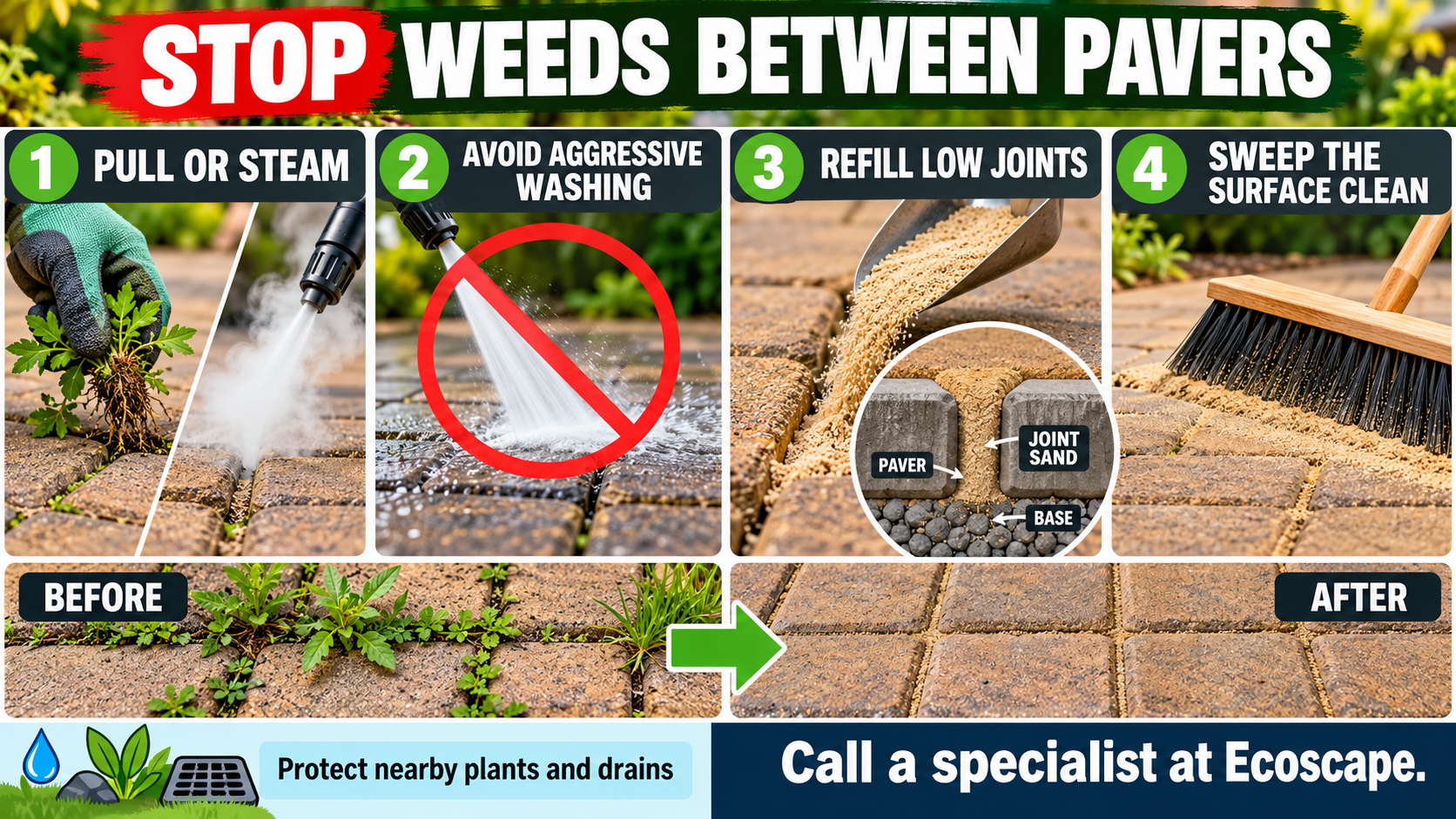
Control Weeds Between Pavers Without Losing Joint Sand by treating growth at the surface instead of attacking the pavement. Most weeds begin when windblown seeds settle into dust and organic debris collected inside the joints. They do not usually rise through the bedding sand and compacted base. Removing debris and young seedlings early keeps roots small and protects the interlocking system.
Remove young weeds with low impact
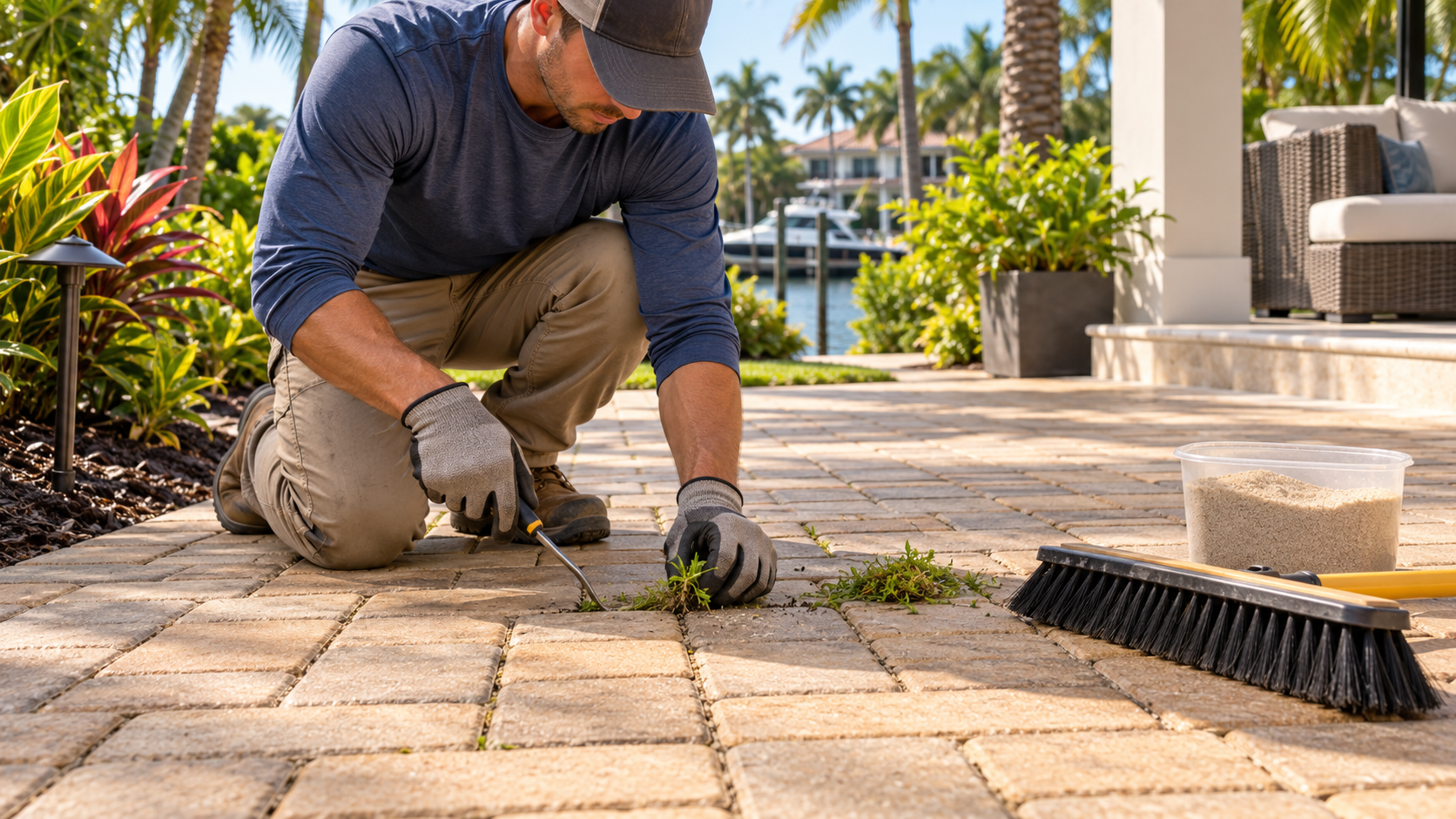
Work after a light rain or dampen only the weed roots so seedlings release without disturbing a wide joint. Grip low and pull slowly. A narrow weeding tool helps lift the root from tight spaces. Steam is another targeted option for small areas. Sweep loose soil, roots, and seeds from the surface afterward. Repeat before remaining weeds flower or produce seed.
Avoid washing sand from the joints
A pressure washer aimed directly into a joint removes sand supporting the paver edges. Missing sand allows movement, catches more debris, and creates better spaces for future germination. If washing is necessary, use equipment and technique suited to concrete pavers, keep the spray angle shallow, and stop when joint material begins moving. Protect nearby walls, doors, drains, and planting beds.
Use herbicides with restraint
Hand removal or steam keeps treatment focused. When a labeled herbicide is appropriate, follow its directions for the pavement, target weed, weather, personal protection, and distance from drains. Avoid overspray on turf, shrubs, tree roots, and open blooms. Do not apply before rain. A product selected for speed still creates landscape damage when runoff or drift reaches desirable plants.
Inspect and restore joint depth
After cleaning, check several joints across the driveway, walk, or patio. Joint sand belongs near the bottom of the paver chamfers, not far below the surface. Refill low joints only after the pavement dries. Sweep the specified dry joint sand back and forth until joints fill evenly, then remove excess material. Match the existing paving system and follow the paver or sand manufacturer’s instructions.
Correct conditions inviting regrowth
Concentrated downspout flow, aggressive cleaning, vehicle turns, and wind strip sand from vulnerable areas. Shade and trapped organic debris keep joints damp. Redirect damaging runoff, sweep leaves regularly, and monitor low joints. Stabilized joint products or a compatible sealer fit some installations, but surface preparation, moisture, product compatibility, and curing determine results. Do not spread new polymeric sand as a thin top layer over unsuitable existing material.
Restore the surface before movement begins
Ecoscape Outdoor Services will assess weeds, joint loss, drainage, edge restraint, and paver movement as one system. Schedule paver maintenance when weeds return quickly, joints sit low, or cleaning has exposed paver edges. Helpful reference: CMHA operation and maintenance guidance for interlocking concrete pavement.