
Correct Circling Roots Before Planting Container Trees
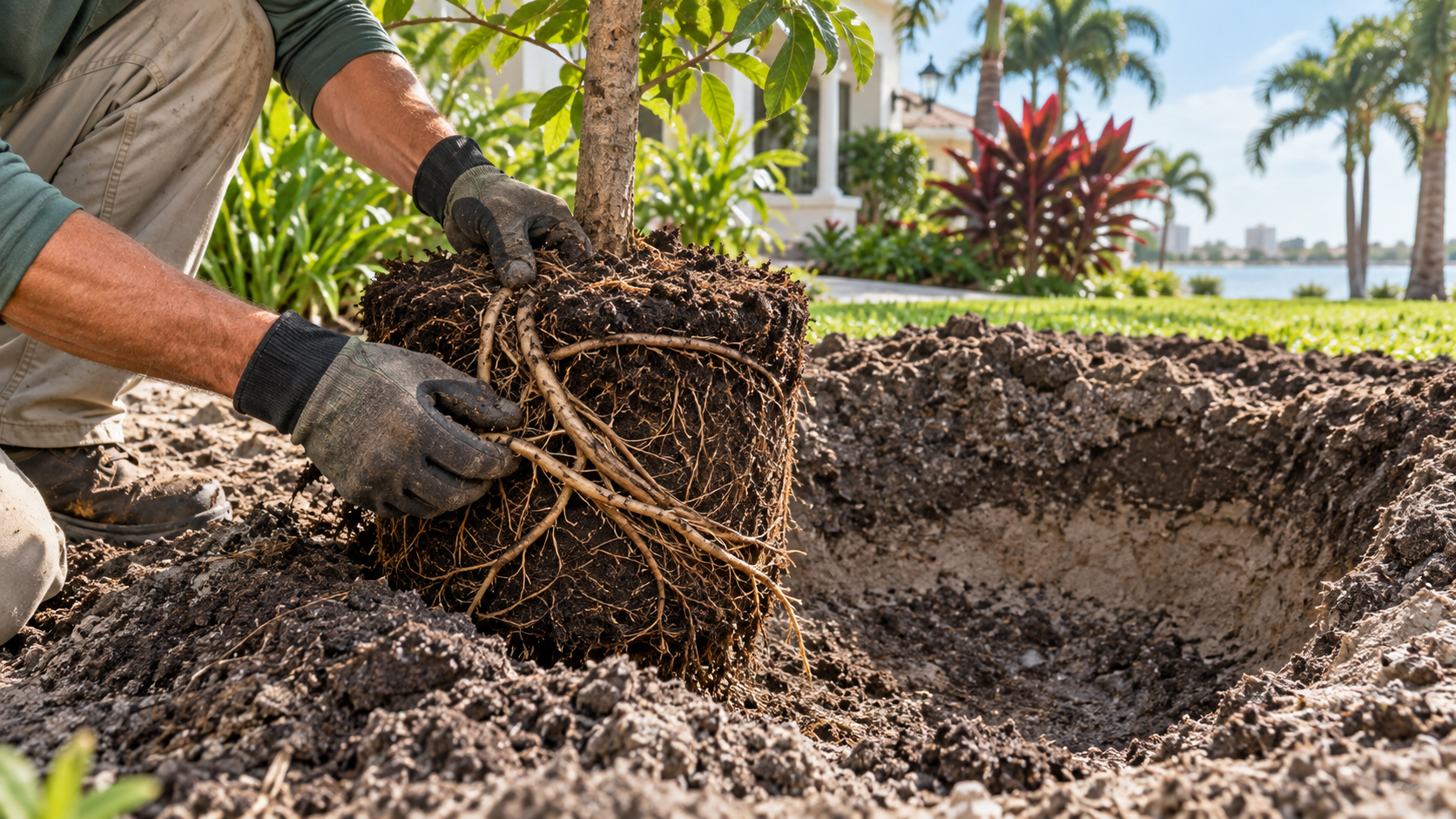
Inspect the Root Ball Before Planting
Container-grown trees often stay in the same pot long enough for roots to reach the wall and begin circling. The outside of the root ball might look dense and healthy while major roots turn around the trunk below the surface. Slide the tree from its container, remove loose potting mix near the top, and locate the first main roots before setting planting depth.
Find the Root Flare
The root flare belongs at or slightly above the surrounding finished grade. Nursery soil often covers it by several inches. Planting from the top of the pot without checking the flare places the trunk too deep. Remove excess soil until the upper structural roots become visible. Measure from this level, then adjust the hole depth before moving the tree into place.
Straighten or Cut Problem Roots
Gently tease small flexible roots outward with gloved fingers or a hand cultivator. For dense woody roots circling the outside, make clean corrective cuts and remove the worst girdling sections. Use sharp, sanitized tools. Do not tear the root ball apart or strip away all growing media. The goal is to direct new growth outward while preserving enough fine roots for establishment.
Prepare a Wide Planting Area
Dig the hole two to three times wider than the root ball and no deeper than the measured root flare height. Use native soil for backfill unless a site-specific soil problem requires another approach. A heavily amended pocket often traps water and encourages roots to remain inside the soft zone. Firm soil gently with water and hand pressure instead of heavy compaction.
Account for Florida Heat and Rain
Planting stress rises quickly during hot, windy weather. Keep the root ball shaded and moist while work proceeds. Water thoroughly after planting, then monitor the original root ball and surrounding soil separately because they dry at different rates. South Tampa sand drains quickly, while compacted fill and low areas hold water. Adjust irrigation after checking actual moisture instead of following one fixed schedule.
Avoid Common Follow-Up Errors
Do not pile mulch against the trunk, bury the flare during later bed work, or leave synthetic ties around the root ball. Staking should limit root-ball movement without making the trunk rigid, and ties need timely removal. Recheck soil settlement after the first few waterings. Watch for leaning, leaf wilt, branch dieback, or roots emerging in a tight circle at the surface.
Start Tree Health With Ecoscape
Ecoscape Outdoor Services inspects planting depth, root form, soil drainage, irrigation reach, and mature tree size before installation. Our team corrects container defects during planting and finishes each tree with proper grading and mulch placement. Strong establishment begins below the surface. Careful root preparation reduces avoidable decline and gives new South Tampa trees a better structure for long-term growth.
