
Cover Tropical Plants Without Trapping Cold Against Them
Prepare Before Temperatures Fall
Cold protection works best when installed before sunset and before frost settles on foliage. Identify tender tropical plants in advance and keep suitable covers ready. Water needs should be addressed earlier in the day when soil is dry. Avoid soaking leaves at night. Healthy, properly hydrated roots tolerate brief cold periods better than stressed or recently damaged plants.
Use the Right Cover
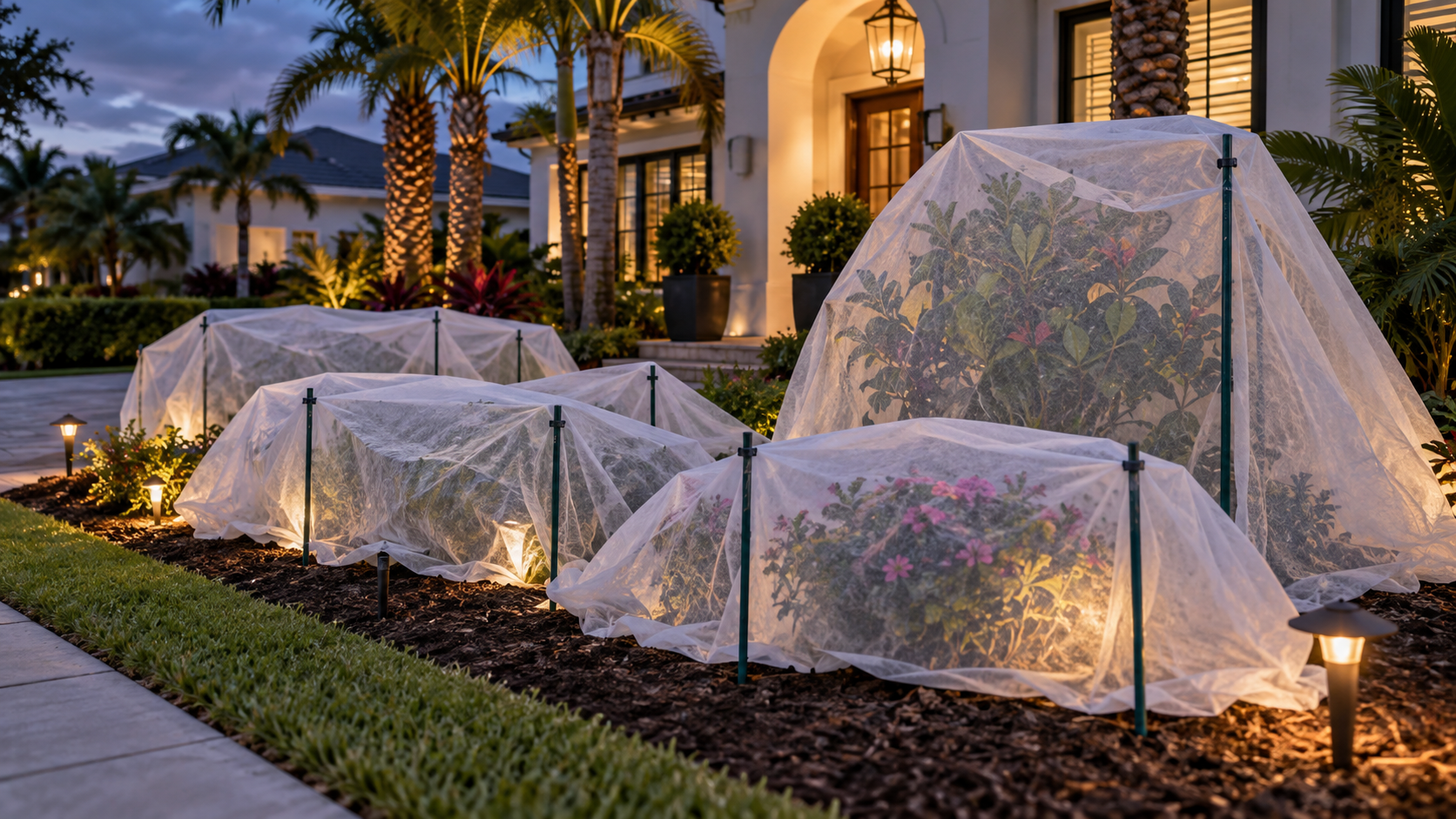
Choose breathable frost cloth, a sheet, or another lightweight fabric. Plastic touching foliage transfers cold and traps condensation, which increases injury. If plastic is used as an outer rain or wind layer, support it above the plant and keep fabric between it and the leaves. Never use a heavy material that crushes branches or blocks airflow for days.
Trap Ground Heat
Extend the cover to the soil and secure the edges with pins, boards, stones, or soil without damaging irrigation lines. Warmth radiating from the ground helps protect the plant overnight. A cover tied around the trunk like a bag leaves the root area exposed and captures less heat. Stakes keep material from pressing cold, wet fabric directly against tender foliage.
Protect Roots and Irrigation
Maintain proper mulch depth over the root zone while keeping mulch away from stems and trunks. Disconnect or protect vulnerable hoses and exposed irrigation components according to their manufacturer’s guidance. Do not run ordinary sprinklers as a last-minute freeze treatment. Incorrect timing or shutdown can leave plants coated in ice and create hazardous surfaces around walks and driveways.
Remove Covers at the Right Time
Open or remove covers after temperatures rise and frost melts. Plants need light and ventilation during warmer daylight hours. Leaving dark or plastic coverings in place under Florida sun can overheat foliage quickly. If another cold night is forecast, keep materials organized nearby and reinstall them before temperatures fall again.
Wait Before Heavy Pruning
Cold-damaged leaves might turn water-soaked, brown, black, or limp. Resist cutting everything immediately. Damaged outer growth sometimes protects lower tissue during another cold event, and the full extent of injury takes time to appear. Remove dangerous broken limbs promptly, then wait for renewed growth before making major cosmetic cuts or replacing plants.
Plan for Resilient Landscapes
Ecoscape Outdoor Services helps South Tampa property owners identify vulnerable plants, improve placement, prepare beds, and evaluate damage after cold weather. We balance tropical character with plants suited to each microclimate. Thoughtful selection and timely protection reduce loss while preserving the clean, mature landscape homeowners expect throughout Florida’s occasional cold snaps.
