
Create a Safe Watering Spot for Florida Pollinators
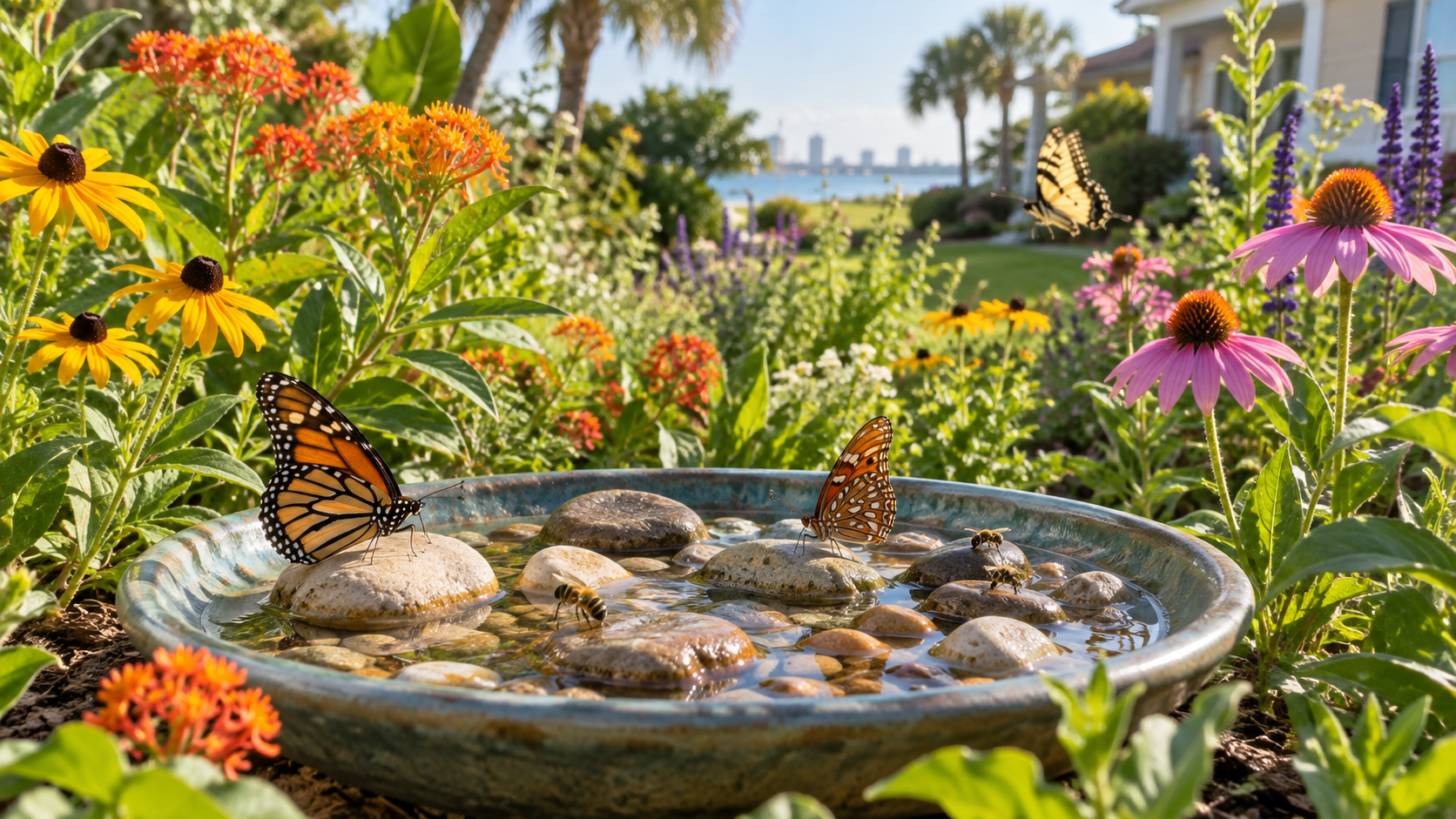
Why Pollinators Need a Safe Drink
Butterflies, native bees, and other beneficial insects lose moisture during Florida heat, wind, and dry periods. A shallow water source supports them when natural puddles disappear. The feature must provide secure landing surfaces because open, deep water becomes a trap for small insects. It should also receive frequent cleaning. A pollinator watering spot works best as one part of a garden containing nectar flowers, host plants, shelter, and limited chemical exposure.
Build a Shallow Landing Area
Use a broad, shallow ceramic saucer or similar weather-safe container. Fill most of the surface with smooth pebbles, flat stones, coarse sand, or clean gravel. Add fresh water until it reaches below the tops of several landing stones. Pollinators should stand on a dry or damp surface while reaching the water. Avoid steep-sided buckets, deep bowls, and containers where insects must land directly on open water.
Choose the Right Location
Place the dish near flowering plants where pollinators already travel, but keep it out of heavy foot traffic and strong irrigation spray. Morning sun with some afternoon protection helps visitors find the water without heating it all day. Set the container level and stable. Keep it away from pesticide mixing areas, pet chemicals, and roof runoff. A low position among flowers creates shelter, while an open edge provides a clear flight path.
Prevent Mosquito Problems
Empty, rinse, and refill the container every day or two during warm weather. Scrub away algae and organic film with a dedicated brush, then rinse thoroughly. Do not allow stagnant water to remain for a week. Use a volume small enough to maintain easily. Check nearby saucers, clogged gutters, toys, and hidden containers during the same routine. A clean shallow station supports pollinators without adding a neglected mosquito-breeding site.
Offer Minerals Without Making a Mess
Some butterflies gather moisture and minerals from damp soil, a behavior often called puddling. A separate shallow tray containing clean damp sand can support this activity. Keep it moist rather than flooded. Avoid adding sugary drinks, sports beverages, salt mixtures, or fruit that quickly ferments and attracts unwanted pests. The safest routine uses fresh water, clean mineral surfaces, and regular observation.
Protect the Whole Garden
Do not place the water dish beside freshly treated plants. Follow every product label and use qualified professionals for regulated pest control. Choose a range of Florida native and adapted flowering plants that bloom across seasons. Include host plants for caterpillars and leave small protected areas for nesting insects. Avoid constant overhead irrigation on flowers. Water roots accurately so blooms remain available and disease pressure stays lower.
Maintain and Improve the Habitat
Record which flowers and water locations receive the most visits, then adjust shade, plant grouping, and cleaning frequency. Ecoscape Outdoor Services helps South Tampa homeowners plan pollinator beds, improve irrigation, select Florida-suited plants, and maintain clean landscape edges around habitat areas. A small watering feature succeeds when it stays shallow, stable, fresh, and connected to a healthy planting design. Consistent care turns one attractive feature into dependable support for local pollinators.
