
Design Plant Beds Around Existing Drainage Patterns
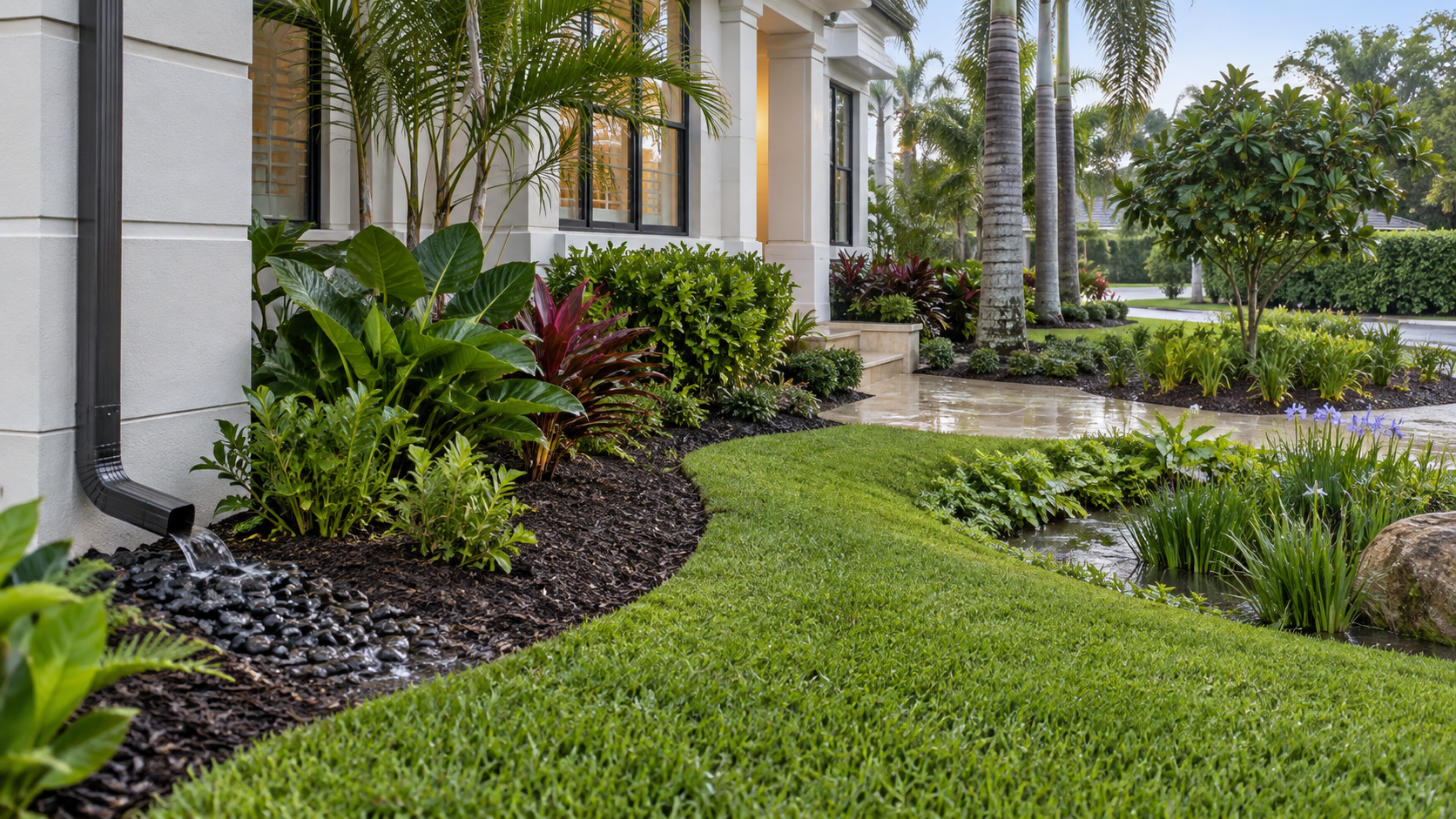
Watch Water Before Redesigning
Study the yard during or immediately after a strong Florida rain. Note where roof runoff lands, which direction surface water moves, how long low areas stay wet, and whether neighboring properties contribute flow. Photograph puddles and mark their edges. A dry-day design often hides the property’s real drainage pattern. New beds should work with safe water movement instead of blocking it with soil, edging, rock, or tightly spaced plants.
Protect the House First
Maintain positive drainage away from the foundation and keep soil, mulch, and rock below stucco weep screeds and other drainage details. Do not create a raised bed that holds water against the wall. Keep downspout outlets open and direct roof runoff toward an approved discharge area. Plant selection does not solve water trapped beside a structure. Correct the grade and outlet before adding decorative material or increasing irrigation.
Shape Beds With Purpose
Use gentle, continuous contours that move water without creating erosion. A bed can guide runoff around a patio or toward a planted low area when elevations are planned before installation. Avoid sudden dams at corners and narrow pinch points beside walkways. Confirm where water will leave the property section. French drains, catch basins, or underground piping need a safe outlet. Without one, they store water rather than solve the problem.
Match Plants to Moisture Zones
Place moisture-tolerant plants in areas that receive short-term runoff and drought-tolerant plants on higher, faster-draining sections. Keep sensitive roots out of spots that remain saturated for days. Even a rain garden needs the right soil, overflow route, depth, and plant selection. Do not call every wet depression a rain garden. The feature should manage a measured amount of water and drain within a reasonable period after rainfall.
Control Materials and Edges
Mulch slows soil splash and helps water soak in, but loose material can wash onto pavement when the grade is steep. Rock resists movement better in some channels, yet heat and sediment buildup affect nearby plants. Edging should define the bed without forming an unintended dam. Set pavers, composite edging, and natural edges at elevations that preserve flow. Check drains after installation for soil, mulch, fabric, or roots blocking the opening.
Avoid Filling Every Low Spot
Adding soil to a puddle often pushes the same water toward the house, sidewalk, or neighboring yard. Before filling, identify the source and destination. Avoid burying tree roots, trunk flares, irrigation heads, and utility covers during grading. Do not install weed barrier across active drainage paths where sediment can seal the surface. Test the revised area with controlled water and observe the next natural rain before considering the problem finished.
Coordinate Design and Drainage
Recheck new beds after the first heavy storm, then adjust small washouts or blocked edges promptly. Ecoscape Outdoor Services plans South Tampa landscape improvements with drainage, irrigation, planting, edging, and material depth considered together. We help clients identify water patterns before construction and create finished beds that support plant health without sending runoff toward the home. Good landscape design looks intentional in sunshine and continues working when Florida rain arrives.
