Diagnose a Crushed Yard Drain Pipe Before Digging Up the Lawn
Recognize a Pattern, Not Just a Puddle
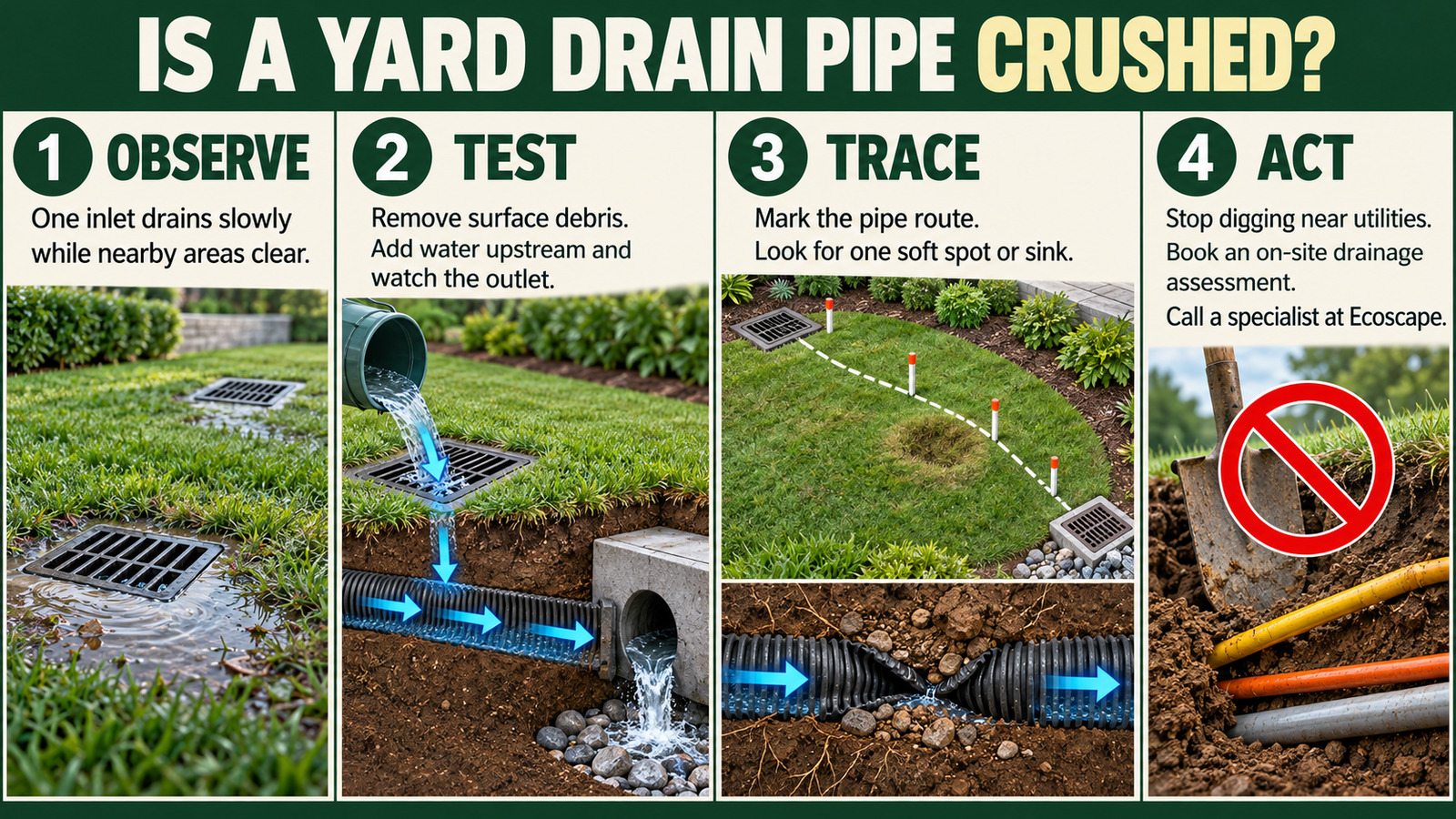
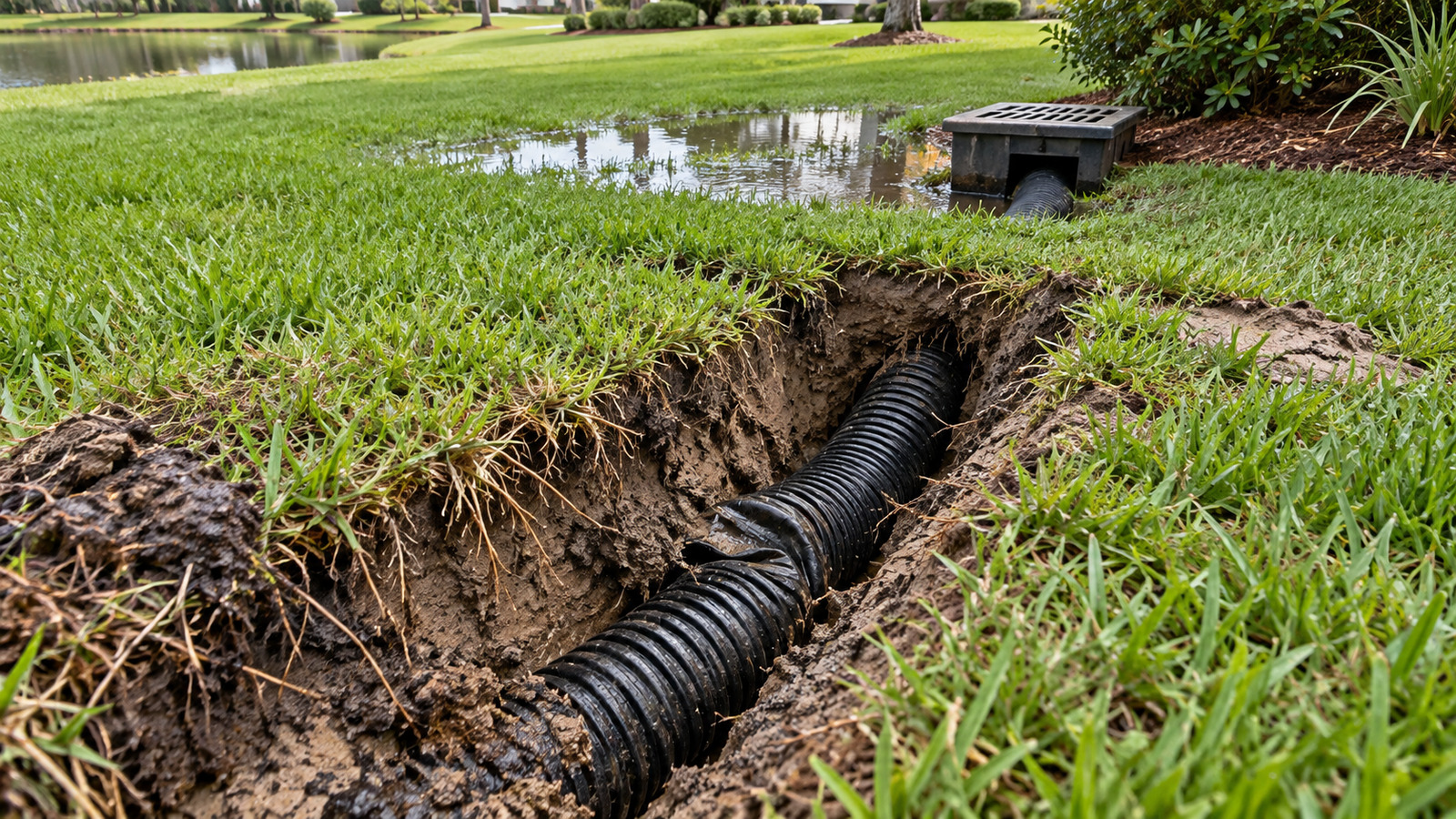
A crushed or collapsed yard-drain pipe restricts flow at one point, but standing water alone does not prove the pipe has failed. Look for a consistent pattern: one inlet remains full after nearby areas clear, outlet flow is unusually weak during a controlled test, or a narrow wet strip follows the buried route. A localized soft spot, shallow sink, or recurring depression can strengthen the suspicion, especially after traffic or construction.
Rule Out Simple Surface Blockages
With rain stopped and conditions safe, remove leaves, mulch, and sediment from inlet grates and the visible outlet. Check that a pop-up emitter can open and that no landscaping blocks discharge. Do not reach into a dark pipe or use a pressure washer as a probe. If clearing accessible debris restores normal flow, monitor the system during the next storm before assuming damage below ground. Several small blockages can imitate one crushed section.
Compare Inlet and Outlet Flow
Add a modest, controlled amount of clean water at the upstream inlet while another person watches the outlet. Stop if water backs toward the house, approaches an electrical area, or begins eroding soil. Note the delay and relative flow rather than forcing a large volume into the line. Water escaping through the lawn, gurgling at a single spot, or failing to reach the outlet suggests a defect or obstruction that deserves an on-site drainage assessment.
Trace the Route From the Surface
Use plans, inlet and outlet alignment, prior installation photos, and visible grade changes to sketch the likely pipe route. Mark the suspected area without digging. Recent fence posts, vehicle loads, tree-root growth, trenching, or heavy equipment can help narrow the search, but they are clues rather than proof. A professional may use inspection equipment or targeted excavation to distinguish crushing from root intrusion, sediment, a separated fitting, or an inadequate outlet.
Consider Florida Soil and Storm Conditions
Sandy fill can wash into voids, saturated soil can lose support, and repeated tropical downpours can expose a marginal installation. Corrugated pipe may deform when it lacks proper bedding or carries loads it was not designed to support. At the same time, a flat pipe, high seasonal water table, blocked outfall, or overwhelmed system can produce similar symptoms. Diagnose the whole drainage path instead of treating one low lawn area in isolation.
Avoid Unsafe Diagnostic Mistakes
Do not begin exploratory digging until buried utilities have been properly located, and never assume landscape drainage is the only line in the area. Avoid driving a metal rod through the turf, feeding aggressive cutting tools into an unknown pipe, or pouring chemicals into the system. Repeatedly flooding the inlet can enlarge soil voids and damage turf. Keep people away from a developing sink or unstable saturated area until it can be evaluated.
Plan the Repair and Lawn Recovery
If testing points to a localized restriction, book an Ecoscape Outdoor Services drainage assessment before opening the lawn. We can evaluate the inlet, route, suspected failure area, outlet, surrounding grade, and visible turf damage, then explain practical next steps. Once the drainage issue is corrected, restore compacted soil and turf only after the area has stabilized; repairing the lawn first can hide warning signs and waste new sod.