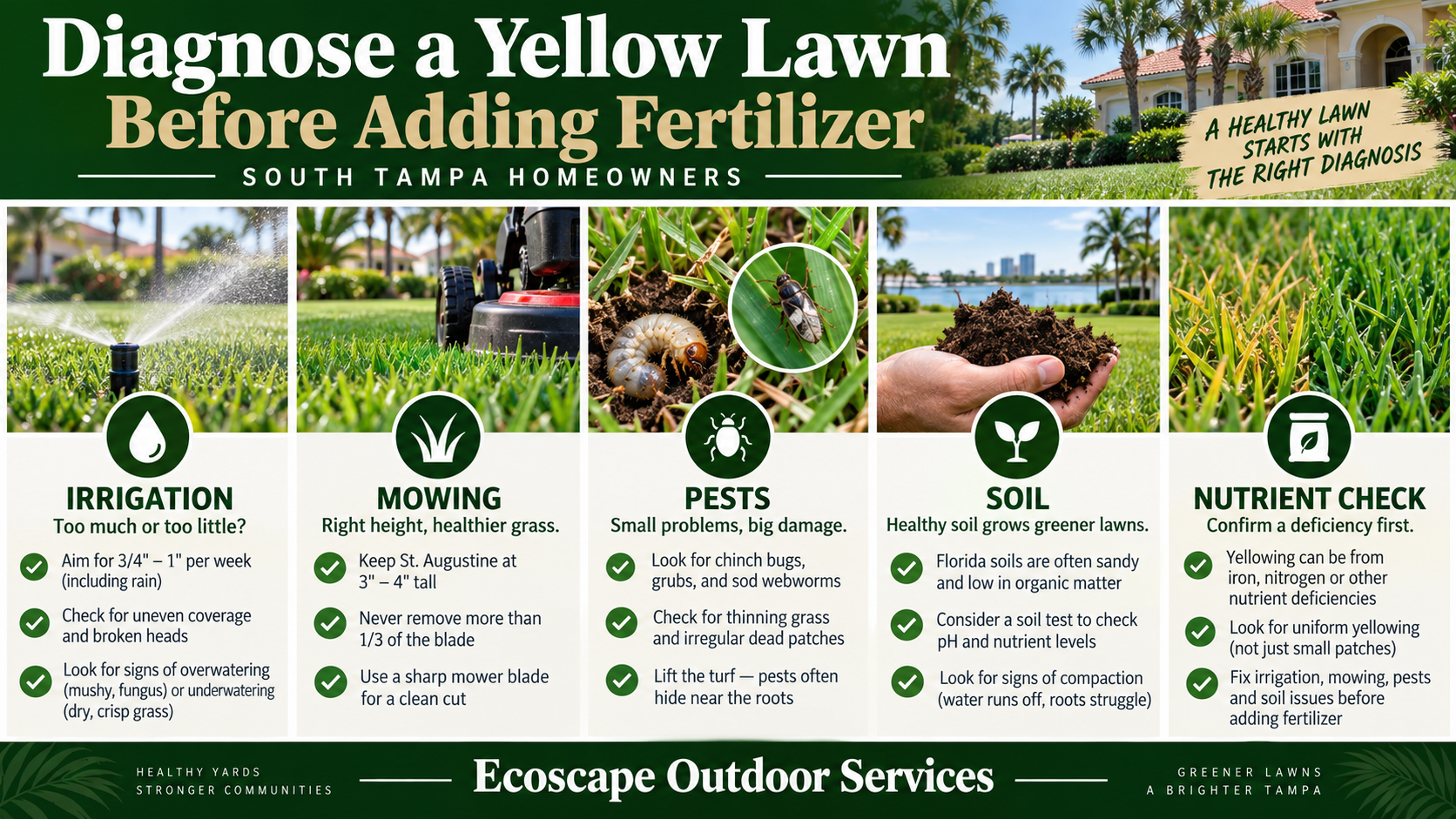
Diagnose a Yellow Lawn Before Adding Fertilizer
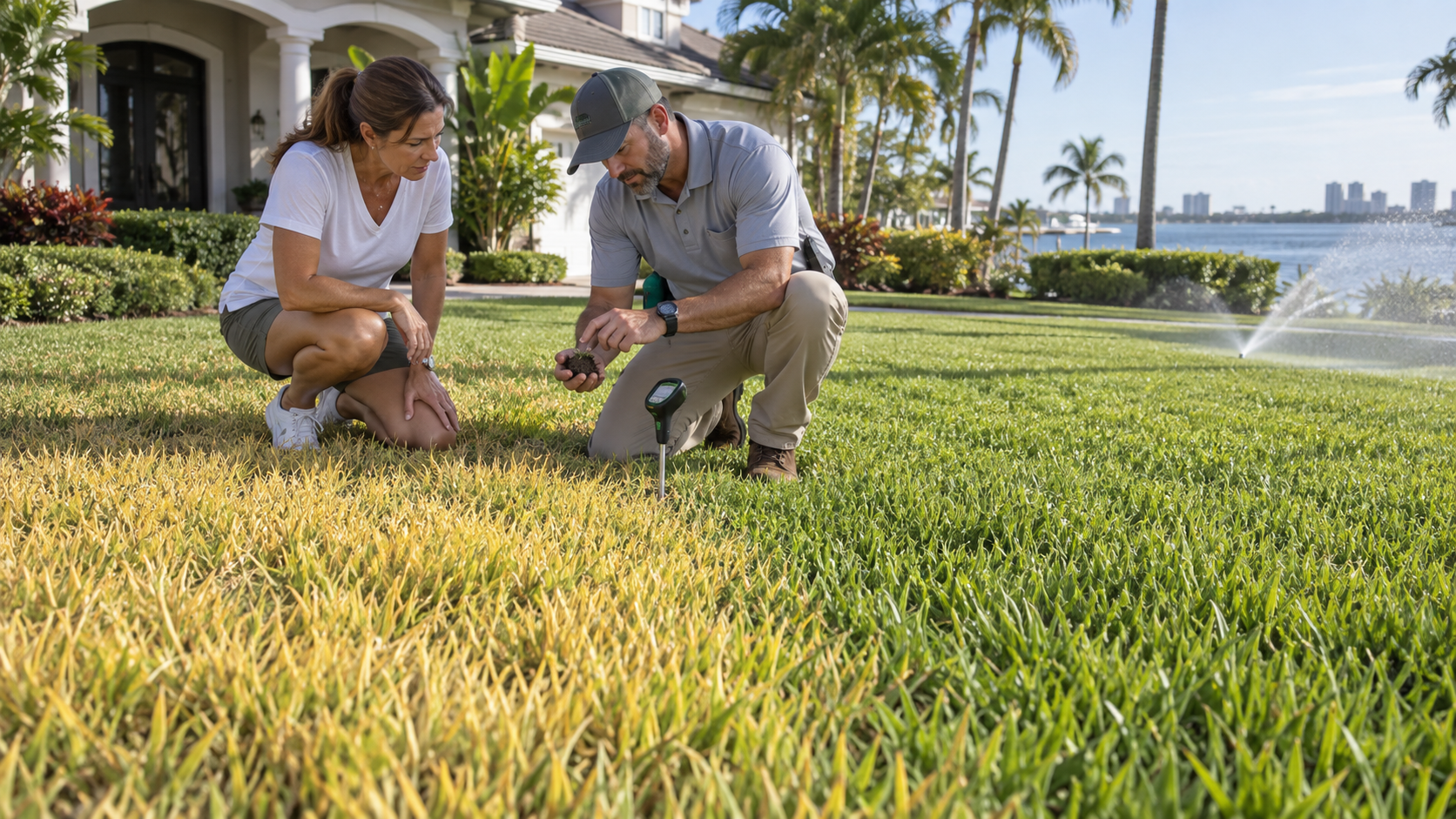
Yellow Turf Does Not Automatically Need Nitrogen
A yellow lawn may result from drought, excess water, irrigation failure, insects, disease, nutrient imbalance, compacted soil, shade, root damage, or seasonal change. Adding fertilizer before identifying the cause can worsen disease, increase mowing stress, or violate local restrictions. South Tampa turf needs a diagnosis based on pattern, moisture, roots, and recent history.
Map the Yellow Pattern
Walk the entire lawn and photograph the affected areas. Uniform pale color suggests a different problem from one irregular patch. Straight lines often connect to irrigation coverage, spills, shade, or construction. Yellowing beside pavement may involve heat and drought. Circular or expanding patches may require closer inspection for insects or disease. Mark the boundary and watch whether it moves.
Test Water Delivery
Run each irrigation zone and inspect every head. Use catch cans to compare distribution, then probe soil moisture beneath yellow and green turf. Dry roots need corrected coverage, while saturated soil needs drainage or schedule changes. Do not extend every zone’s runtime because one area is dry. Fix the distribution problem so healthy sections are not overwatered.
Inspect Blades, Thatch, and Roots
Look for chewing, lesions, wilt, discoloration, and insect activity. Check whether the turf is firmly rooted. Weak roots in wet soil point toward a different issue from insects moving through dry thatch. Confirm mower height and blade sharpness. Shredded tips create a pale cast across the lawn and increase moisture loss without indicating a fertility shortage.
Review Timing and Restrictions
Record recent fertilizer, pest control, herbicide, heavy rain, drought, and equipment traffic. Check current Hillsborough County and local fertilizer rules before any application. A soil or tissue test may be appropriate when a nutrient problem is suspected. Follow product labels and base fertilizer decisions on grass type, season, and measured need rather than color alone.
Correct the Primary Stress First
Repair broken irrigation, improve drainage, stop scalping, reduce traffic, or address confirmed insects and disease before pushing new growth. Fertilizer cannot revive dead turf or compensate for damaged roots. Allow time for the lawn to respond after the main problem is corrected. Recheck the same photographed boundary so improvement is measured instead of guessed.
Use a Lawn Health Checklist
Ecoscape Outdoor Services evaluates yellow South Tampa lawns through irrigation performance, mowing quality, soil condition, visible pest symptoms, drainage, and recent weather. We correct maintenance and irrigation issues within our work and coordinate with licensed specialists for chemical treatment. The right sequence prevents wasted fertilizer and gives the lawn a recovery plan tied to the real cause.