Diagnose an Irrigation Zone That Will Not Shut Off
Confirm That the Zone Is Truly Stuck On
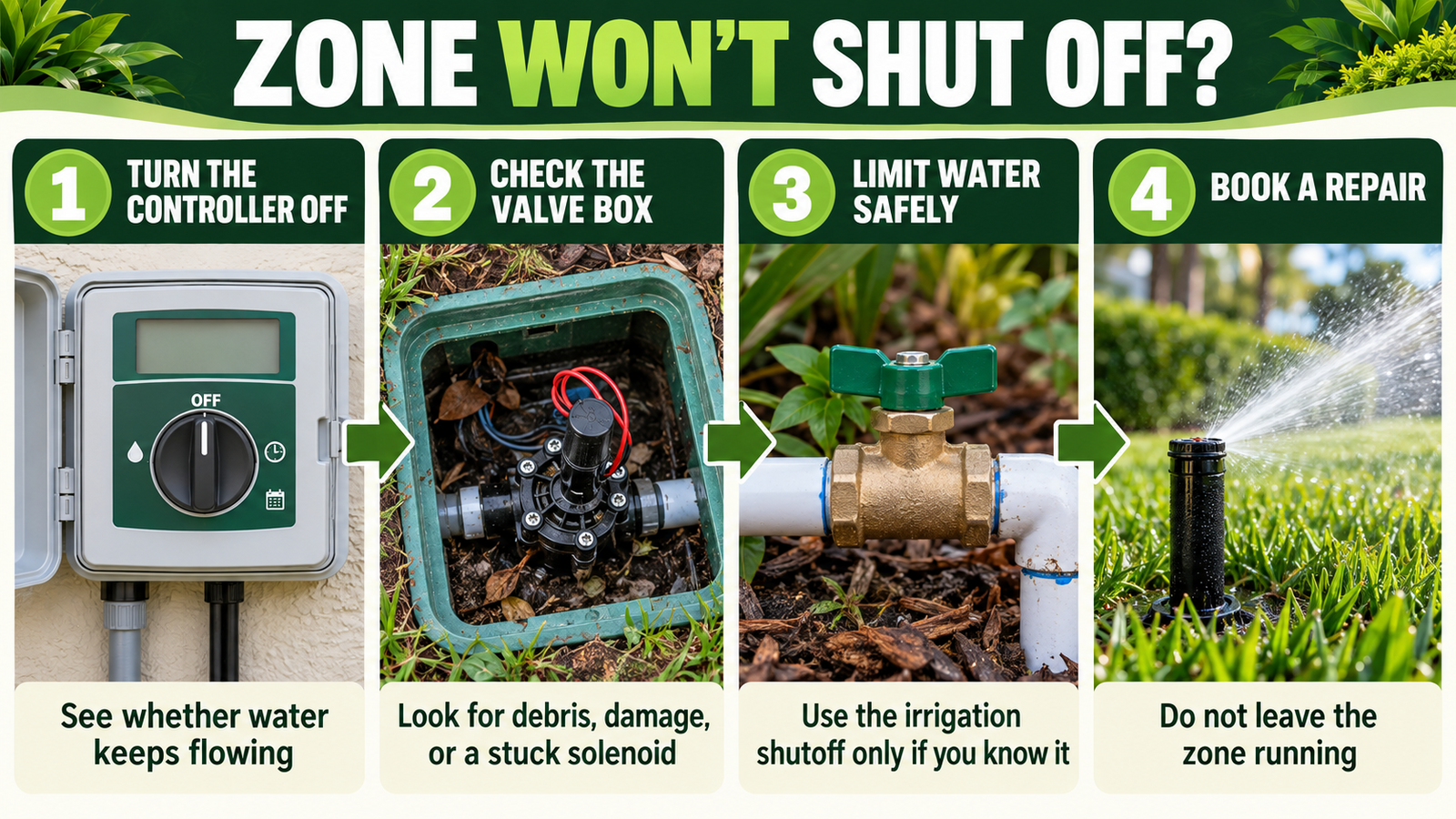
Turn the irrigation controller to its system-off position and wait two or three minutes. A small amount of drainage from low sprinkler heads can be normal, but steady spray or continued rotor movement means water is still passing through the zone valve. Note which heads remain active and whether every head on that zone behaves the same way. If multiple zones continue running, the problem may involve the controller, wiring, or main irrigation supply rather than one valve.
Protect the Yard and Nearby Structures
Continuous watering can flood planting beds, wash mulch into drains, soften soil near walkways, and send water toward foundations or streets. Keep people away from slick pavement and do not step into a valve box filled with water. In Florida's sandy soils, a stuck zone can create erosion surprisingly quickly, while compacted or poorly drained areas may pond. Move lightweight items out of the spray and document where water is collecting before changing anything.
Check the Controller Before Opening Anything
Verify that no manual cycle, test program, seasonal program, or delayed start is active. If the display is on, take a photo of the current screen and station number. Then switch the controller off again. A zone that stops after the controller is turned off may be responding to programming or an electrical command. A zone that keeps running with the controller off more often points to a valve that cannot close completely.
Inspect the Valve Box From Above
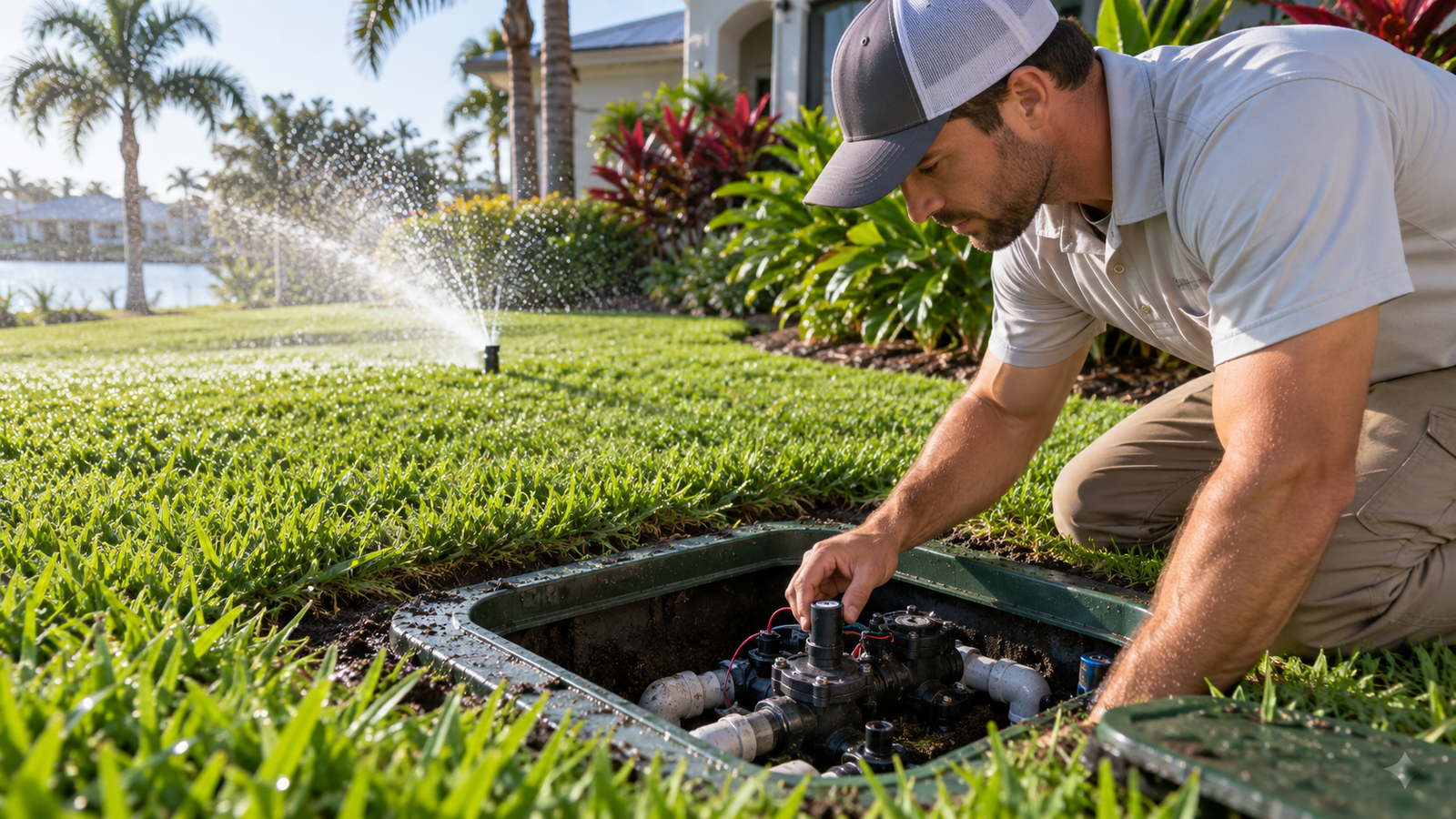
Locate the box only if it is already known and safely accessible. Remove the lid carefully and look without placing your hands into standing water. Leaves, soil, ants, damaged wiring, or a visibly cracked valve can provide useful clues. Debris inside the valve, a worn diaphragm, or a solenoid that is loose, damaged, or manually opened can hold the valve open. Do not disassemble the valve while the irrigation line is pressurized.
Limit Water Only When the Shutoff Is Known
If you can positively identify the dedicated irrigation shutoff and can reach it without entering water or touching electrical equipment, close it slowly until service is available. Do not guess among unlabeled valves, and do not shut off the home's potable water unless that is the only safe way to stop active property damage. Some reclaimed-water systems have special valves or local rules. Photograph the shutoff position so it can be restored correctly after repair.
Avoid Common Repair Mistakes
Repeatedly switching the controller on and off will not clear a torn diaphragm or trapped grit. Do not overtighten a solenoid, force a valve handle, cut wires, or pry apart glued fittings. These actions can turn a serviceable component into a larger repair. Also avoid leaving the irrigation supply off for days without checking vulnerable plants during hot weather. The goal is to stop waste safely while preserving clear evidence of the original failure.
Schedule a Focused Irrigation Assessment
After water is controlled, record the zone number, affected heads, controller setting, valve-box condition, and the time the problem began. Check the repaired zone during its next scheduled cycle and watch adjacent zones for weak pressure or unexpected seepage. If the zone still runs with the controller off, the box is flooded, or the shutoff is uncertain, book an Ecoscape Outdoor Services irrigation appointment. An on-site assessment can isolate the valve, solenoid, wiring, and coverage issue before wasted water damages the lawn or landscape.