Diagnose Low Sprinkler Pressure Before Replacing Heads
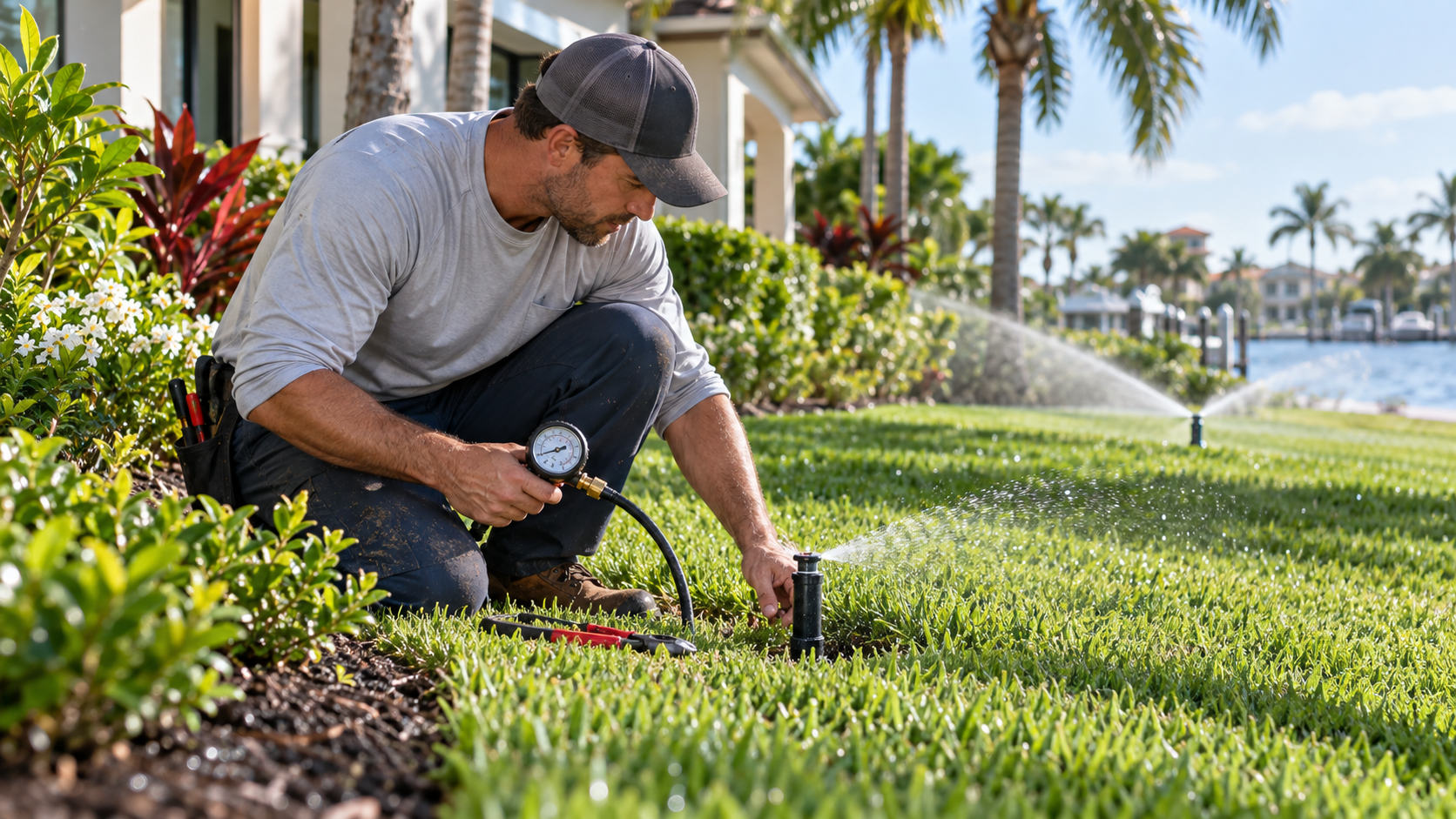
Confirm a true pressure problem
Low sprinkler pressure shows up as heads failing to rise, short spray distance, uneven rotation, weak misting, or poor coverage across part of a zone. One weak head points toward a local clog or damaged connection. Every head running weak on one zone points toward a valve, leak, flow, or design issue. Weak output across all zones points farther upstream.
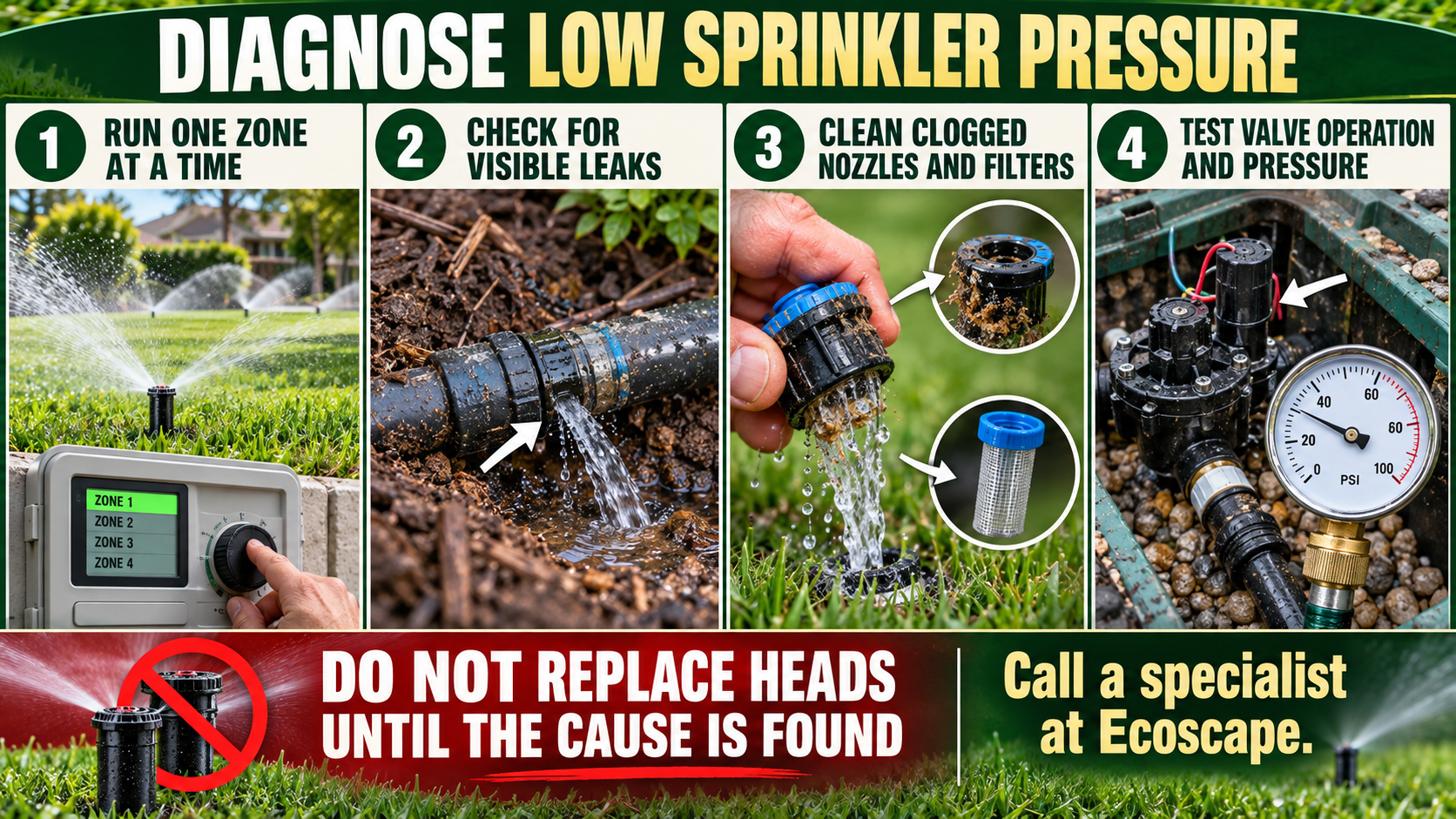
Run one zone at a time
Start the affected zone from the controller and watch the full startup. Count heads and note which units rise late or stay down. Compare the pattern with another zone using similar components. Listen for water running where no head appears. Record wet spots, bubbling soil, and sudden pressure changes. Shut the zone off when flowing water erodes soil or threatens a walkway.
Check visible leaks and damage
Inspect each head, riser, exposed fitting, valve box, and accessible pipe connection. Water surfacing around one head often signals a broken riser or fitting. A hidden lateral-line break often creates a soft area between heads. Do not increase controller runtime to compensate. Longer watering wastes more water through the leak while healthy sections receive excessive irrigation.
Clean nozzles and filters correctly
Turn the zone off before removing a nozzle or filter. Keep dirt out of the open sprinkler body. Rinse removable parts with clean water and follow the manufacturer's directions. Replace damaged components with matching flow and pattern specifications. Mixing oversized nozzles into a zone increases demand and lowers performance across every head. Reinstall each part and run the zone again.
Review zone demand and valve operation
A zone with too many heads or mismatched nozzles might demand more flow than the supply delivers. A valve opening only partway produces similar symptoms. Compare the affected zone with the original design and previous performance. Keep shutoff valves fully open unless a qualified inspection identifies another setting. Never dismantle a pressurized valve, backflow assembly, pump, or electrical controller component during a basic homeowner check.
Test pressure before changing the layout
Static pressure alone does not describe performance while water flows. A proper diagnosis compares operating pressure, available flow, zone demand, and loss through valves and piping. Randomly replacing heads rarely fixes a system-wide issue. Pressure-regulated components help manage excessive pressure. They do not repair leaks, restrictions, undersized pipe, or a failing valve.
Book a complete irrigation assessment
Ecoscape Outdoor Services will test the affected zone, inspect visible components, compare nozzle demand, and isolate likely pressure loss. Book an appointment when several heads stay down, a leak appears, or one zone performs differently from the rest. Early diagnosis protects turf, planting beds, pavement, and the water bill while avoiding unnecessary parts.