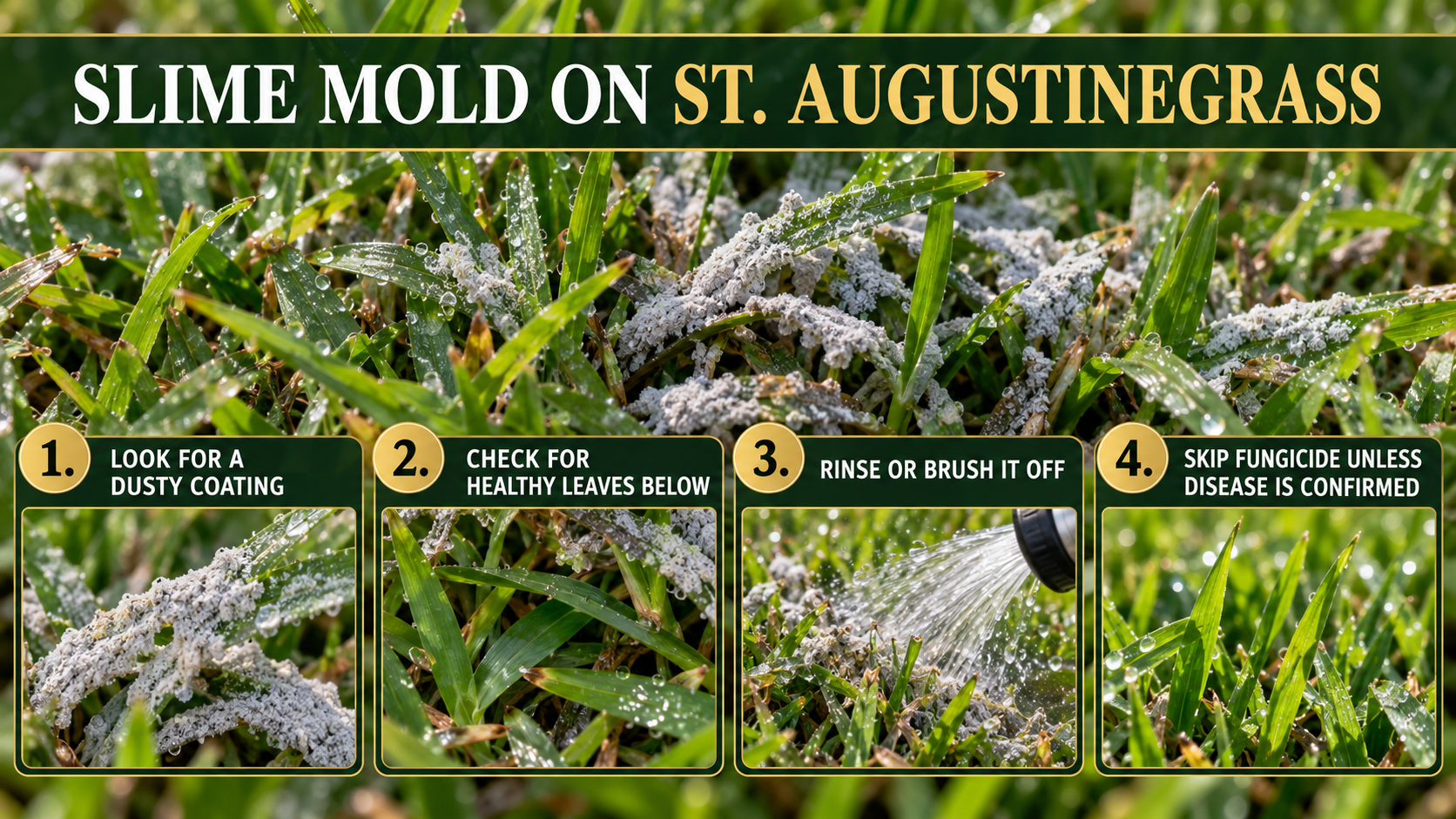
Diagnose Slime Mold on St. Augustinegrass Before Treating
Why This Tip Matters
A strange gray, white, or charcoal coating across St. Augustinegrass often looks far worse than it is. Homeowners sometimes assume the lawn has developed a destructive fungus and reach for a fungicide immediately. Slime mold usually lives on the surface of the grass blades and feeds on decaying organic material, not the living turf. Correct identification prevents an unnecessary chemical treatment and keeps attention on the conditions that allowed the growth to appear.
What Slime Mold Looks Like
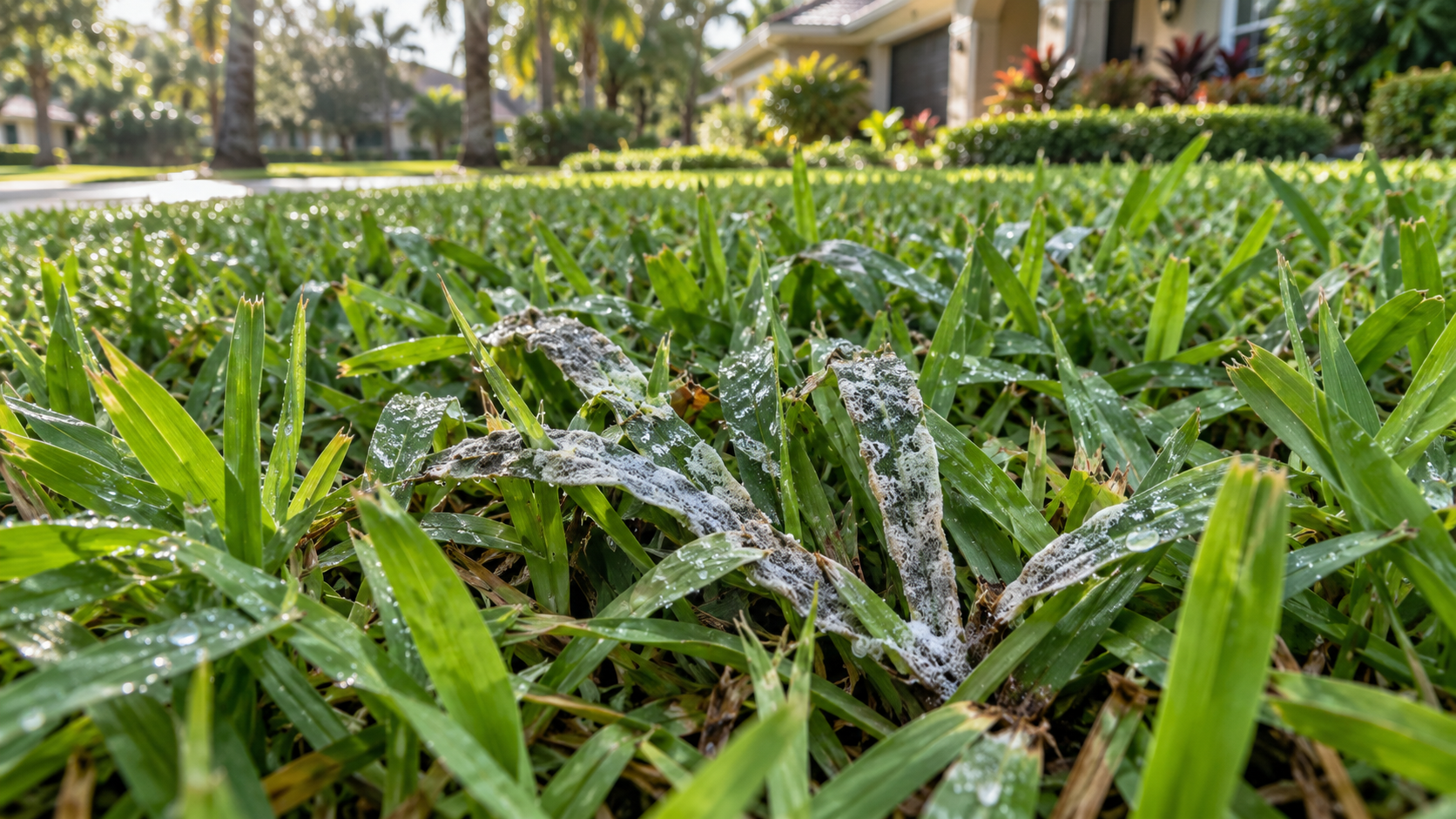
Slime mold commonly appears after warm, wet weather. It may cover individual blades with tiny bead-like spores or create dusty patches that look gray, white, black, purple, or tan. From a distance, the grass may seem coated with ash or soot. Rub a blade between your fingers while wearing gloves. Slime mold often brushes away and reveals green tissue underneath. The grass blades usually remain firm rather than water-soaked, collapsed, or rotted. This surface coating separates slime mold from many turf diseases that damage leaf tissue.
Why It Appears in South Tampa
Frequent summer rain, overnight humidity, heavy dew, shaded areas, and long periods of leaf wetness create ideal conditions. Thick thatch, compacted turf, poor airflow, and irrigation running during rainy weather can keep the lawn wet longer. Slime mold is also more visible where organic debris remains close to the soil surface. Its appearance does not automatically mean the lawn is unhealthy, but it gives you a reason to review drainage, watering, mowing, and airflow.
What to Do
Start by confirming the coating sits on the grass rather than inside damaged leaf tissue. Photograph the patch, inspect several blades, and compare the affected area with nearby turf. If the blades remain green below the spores, rinse the patch with a gentle stream of water or brush it away with a soft broom after the lawn dries. Normal mowing often removes the coating. Mow only when the soil is firm enough to support the equipment without rutting. Reduce unnecessary irrigation and correct any sprinkler zone that runs after rainfall. Thin dense vegetation along the lawn edge if it prevents air movement.
What Not to Do
Do not apply a fungicide solely because the lawn looks dusty. Fungicides target specific plant diseases and do not solve excess moisture, drainage failure, or poor airflow. Avoid scalping the turf in an attempt to remove the spores. Short mowing weakens St. Augustinegrass and exposes the soil to heat and weeds. Do not aggressively rake wet turf because the runners can pull loose. If the grass underneath is yellow, soft, thinning, or spreading in irregular damaged patches, stop and investigate another cause.
When the Problem Needs a Closer Look
Slime mold usually disappears as conditions dry. Recheck the area within several days. If the coating returns repeatedly, review irrigation timing, rainfall shutoff, shade, thatch, and drainage. If the turf continues to decline after the surface material is gone, the lawn may also have gray leaf spot, large patch, take-all root rot, insect injury, or saturated roots. A turf professional should diagnose the active cause before treatment begins.
How Ecoscape Outdoor Services Helps
Ecoscape Outdoor Services evaluates the whole lawn instead of treating one symptom in isolation. We inspect moisture patterns, irrigation coverage, mowing conditions, drainage, shade, and turf response. Our team explains what we see, identifies practical corrections, and recommends licensed treatment support when a regulated application is needed. This approach protects your South Tampa lawn from unnecessary products and helps address the condition that created the problem.