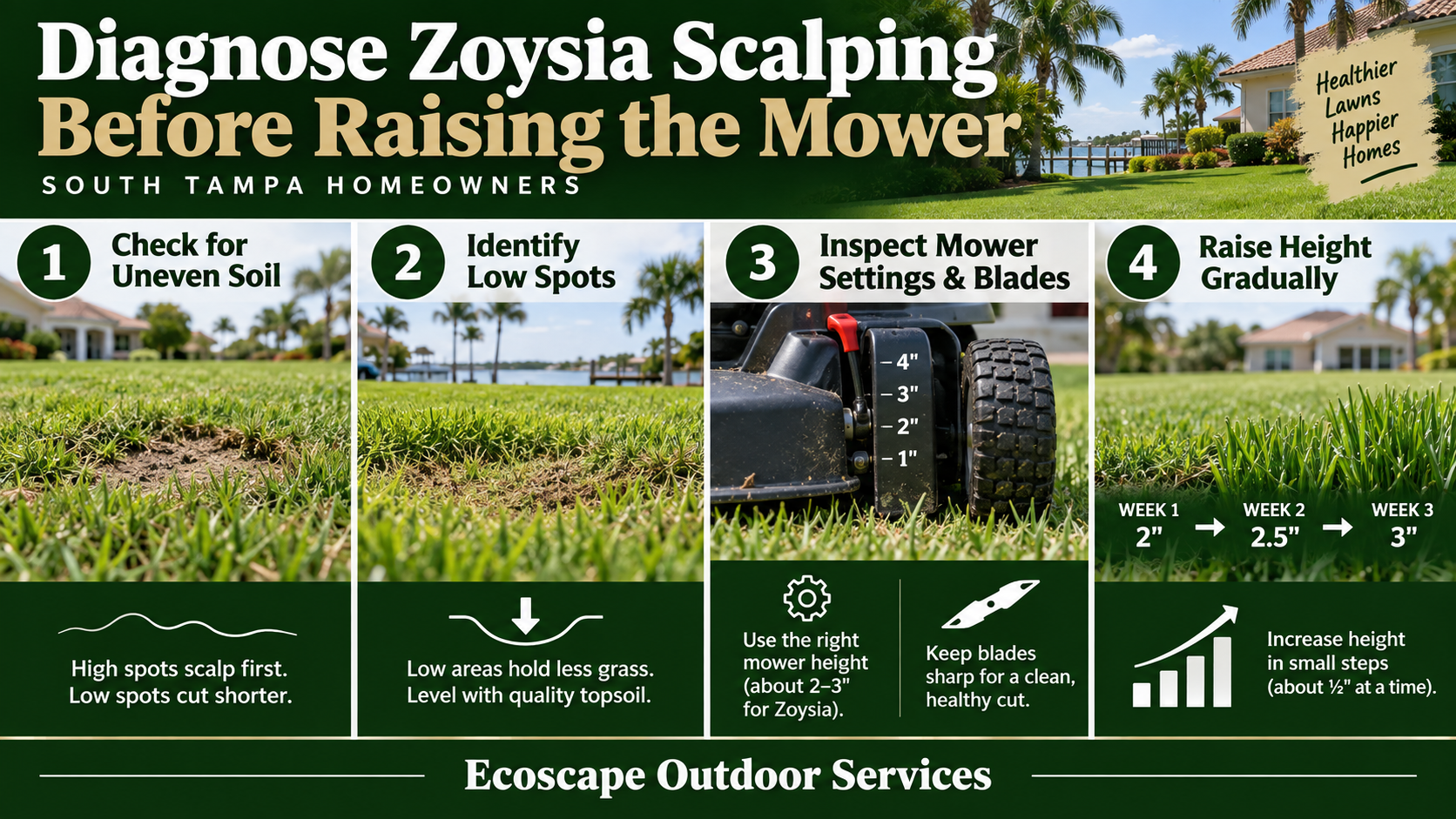
Diagnose Zoysia Scalping Before Raising the Mower
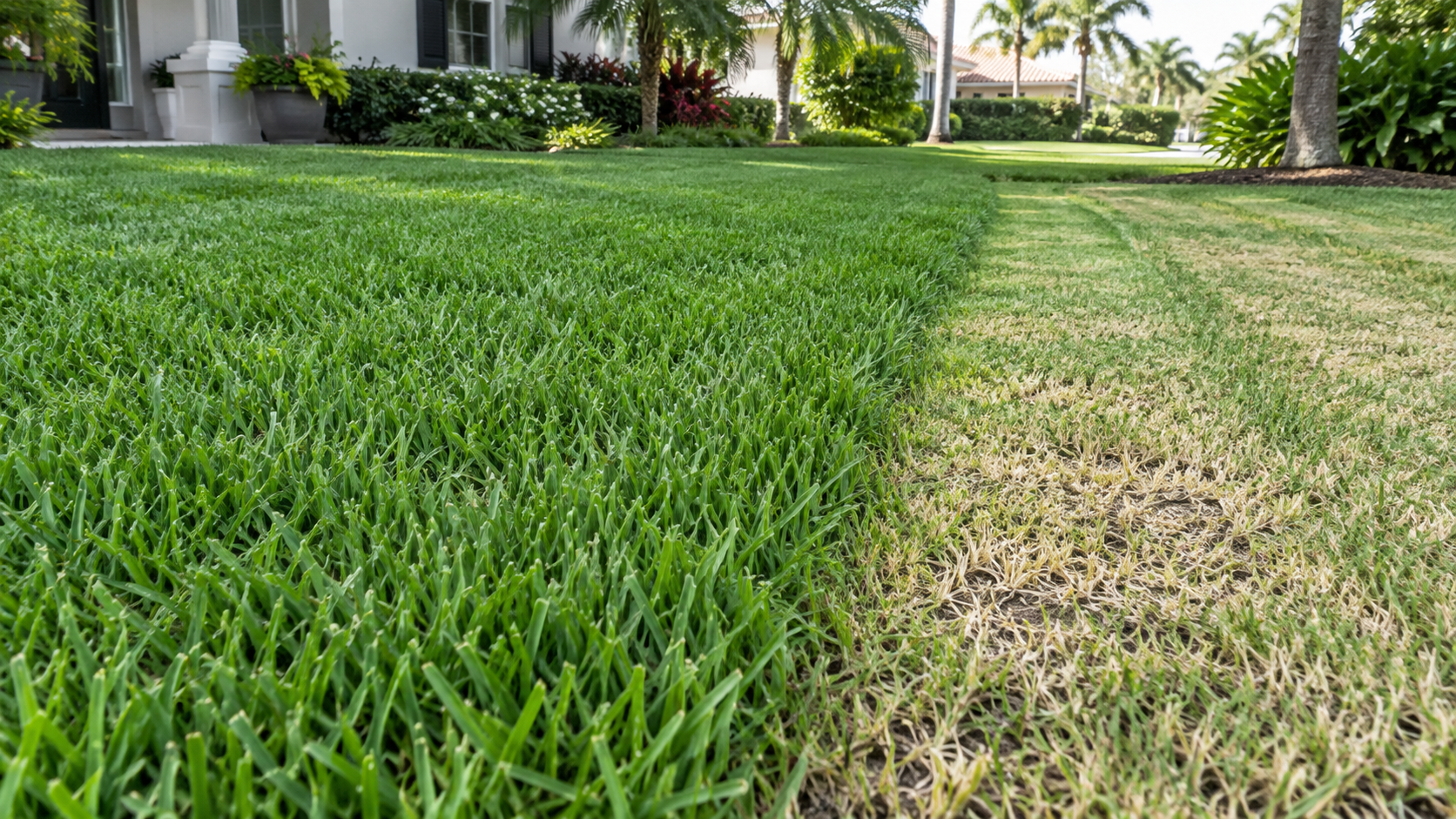
Scalping Has a Distinct Look
A Zoysia lawn may turn pale, tan, or uneven immediately after mowing when the blade removes too much green tissue. The exposed stems and lower growth make the lawn look dry even when soil moisture is adequate. Repeated scalping weakens density and gives weeds more opportunity to establish. South Tampa heat intensifies stress on newly exposed turf, especially across sunny slopes and high spots.
Find the Real Cause First
Do not assume every tan patch comes from a mower set too low. Look for straight mower paths, light-colored crowns, clipped ridges, and damage that appeared directly after service. Compare high and low areas across the lawn. Disease, drought, insects, pet traffic, and irrigation gaps create different patterns. Check the underside of leaves and the condition of roots before treating a mowing injury as a pest or fungus problem.
Confirm the Mowing Setup
Measure the actual cut height on the turf rather than relying only on the mower’s lever number. Zoysia cultivars differ in texture and preferred management, and reel and rotary mowers produce different results. Inspect blade sharpness, deck level, tire pressure, and accumulated clippings. A dull or tilted mower tears leaves and creates uneven color. Follow the one-third rule so one service never removes too much living leaf tissue.
Check Grade and Thatch
A mower can scalp raised soil, tree roots, utility trenches, and the edges of shallow depressions even when its general setting is reasonable. Mark recurring high spots and avoid lowering the entire lawn to match them. Thick thatch also lifts the mower and makes the surface feel spongy. Measure the organic layer before dethatching. Correct grade problems carefully and use cultivation only when the turf is actively growing and able to recover.
Help the Lawn Recover
Raise the mowing height slightly and allow green leaf tissue to return. Keep the schedule consistent instead of waiting for extreme growth and then cutting hard again. Check soil moisture before adding water. Scalped turf does not need constant irrigation, and saturated roots create another stress. Delay aggressive fertilizer or herbicide applications until the lawn shows active recovery. Keep traffic off the weakest areas and collect heavy clumps that block light.
Prevent the Next Scalping Event
Use the same measured height from visit to visit, sharpen blades routinely, and change mowing direction to reduce repeated wheel tracks. Slow down over slopes and uneven transitions. Never make a sudden seasonal height reduction during hot, dry, or stressed conditions. If a lower maintained height is desired, reduce it gradually during active growth with equipment suited to the cultivar. Photograph recurring areas so grade-related damage becomes easy to compare.
Build a Cultivar-Specific Plan
Ecoscape Outdoor Services evaluates Zoysia color, mowing patterns, grade, thatch, irrigation, and recent weather before recommending a correction. We help South Tampa property owners separate scalping from disease, drought, and insect damage. Review the lawn after two or three proper mowing cycles. If green recovery does not appear, inspect roots and irrigation coverage again. Accurate diagnosis prevents unnecessary treatments and protects the dense finish Zoysia is valued for.