Do Not Mix Sand Into Compacted Landscape Soil
Sand Is Not a Simple Compaction Fix
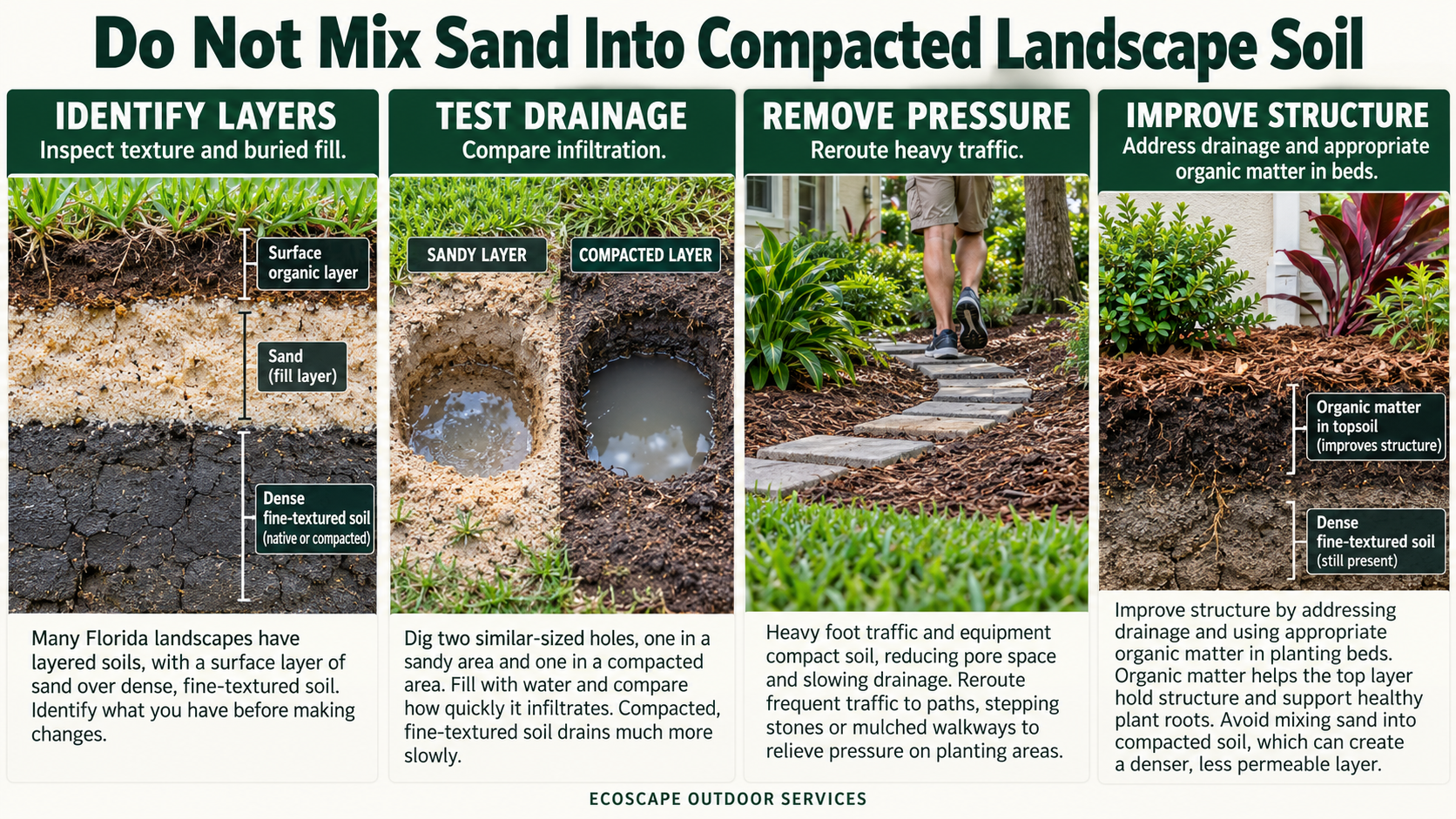
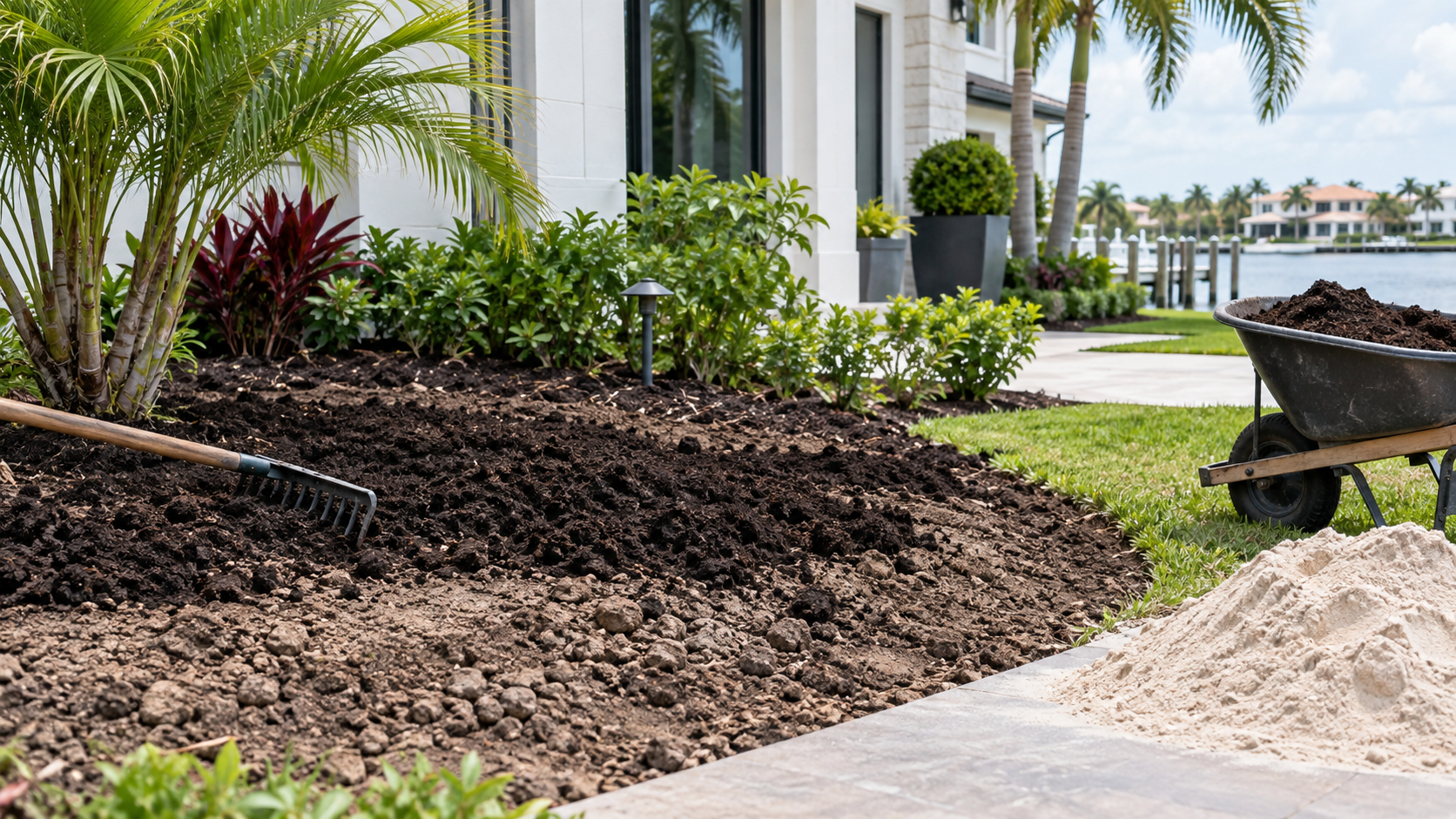
South Tampa properties often contain native sandy soil, imported fill, or compacted construction layers within the same yard. When a dense fine-textured pocket drains poorly, adding a small amount of sand rarely creates loose soil. The particles can fill existing pore spaces and leave a denser mixture. Soil improvement should address structure, organic matter, drainage, and traffic. Identify the actual material before importing another ingredient.
Test the Problem Area
Compare the compacted section with nearby healthy beds. Check how quickly water enters, how long moisture remains, and how hard the soil feels at several depths. Dig small inspection holes away from utilities and major roots. Look for layered fill, buried debris, standing water, and abrupt texture changes. A professional soil test can measure pH, nutrients, and organic matter, but field drainage and compaction observations remain essential for planning physical corrections.
Find the Source of Compaction
Repeated foot traffic, parked equipment, pallet storage, mower turns, and construction access compress soil by removing air spaces. Saturated soil compacts faster under weight. Redirect the traffic before repairing the bed or the problem will return. Mark a stable service route, keep heavy materials outside root zones, and correct leaks that keep the area soft. Do not loosen soil only to drive across it during the next project phase.
Use Organic Matter Correctly
For new or empty beds, incorporate an appropriate amount of finished compost into the workable soil layer based on site needs. Avoid creating a small amended pocket surrounded by dense soil because water and roots respond differently at the boundary. In established beds, protect roots and improve the surface gradually with proper mulch and natural decomposition. Do not bury trunks, root flares, or groundcover crowns under added material.
Relieve Compaction Without Root Damage
Use hand tools, core aeration, or specialized equipment suited to the space and plant roots. Work when soil moisture allows loosening without smearing or forming hard clods. Never aggressively till beneath mature trees. Their absorbing roots occupy the upper soil. Create openings around roots rather than cutting through them. If grade, drainage, or hardscape work affects a major tree, coordinate with a qualified arborist before disturbing the root zone.
Avoid Ingredient Guessing
Do not add sand, topsoil, lime, fertilizer, or gypsum based on appearance alone. Each material changes different soil properties and needs a clear purpose. A thick layer of imported soil can trap water or change grade against the house. Fine sand and coarse sand behave differently. Correcting a drainage outlet is more important than changing texture when water has nowhere to go. Base purchases on testing, measured volume, and the intended planting.
Review Performance Through Rain
After improvement, observe the bed during irrigation and several natural rain events. Track infiltration, pooling, plant response, and surface crusting. Ecoscape Outdoor Services helps South Tampa clients evaluate compacted beds, drainage, plant selection, mulch, irrigation, and construction traffic before recommending soil work. We focus on the cause and the full root zone rather than a quick additive. Healthy soil develops from correct structure, protection, and ongoing management.