Do Not Mix Spray Heads and Rotors on One Irrigation Zone
Why This Matters
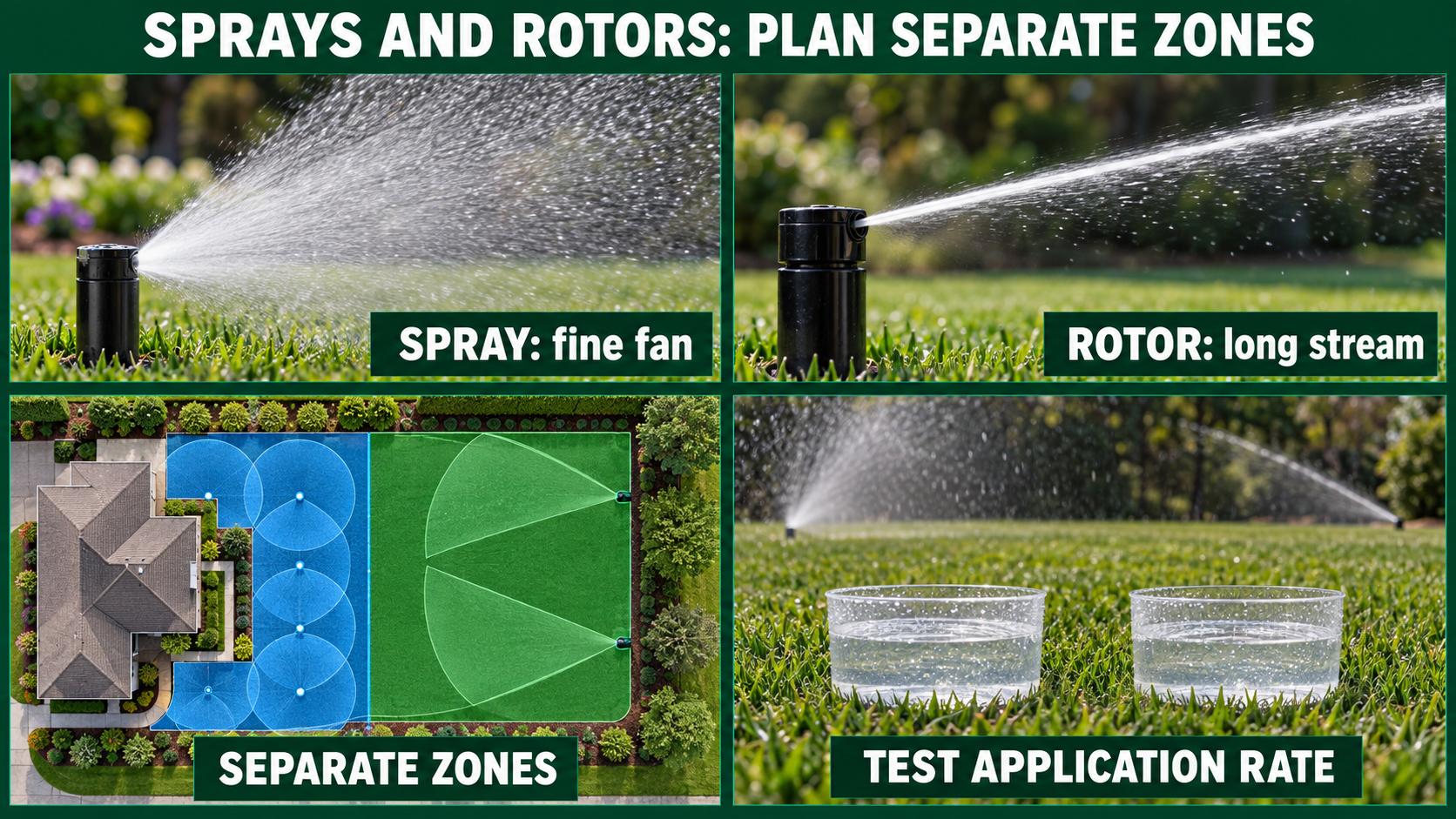
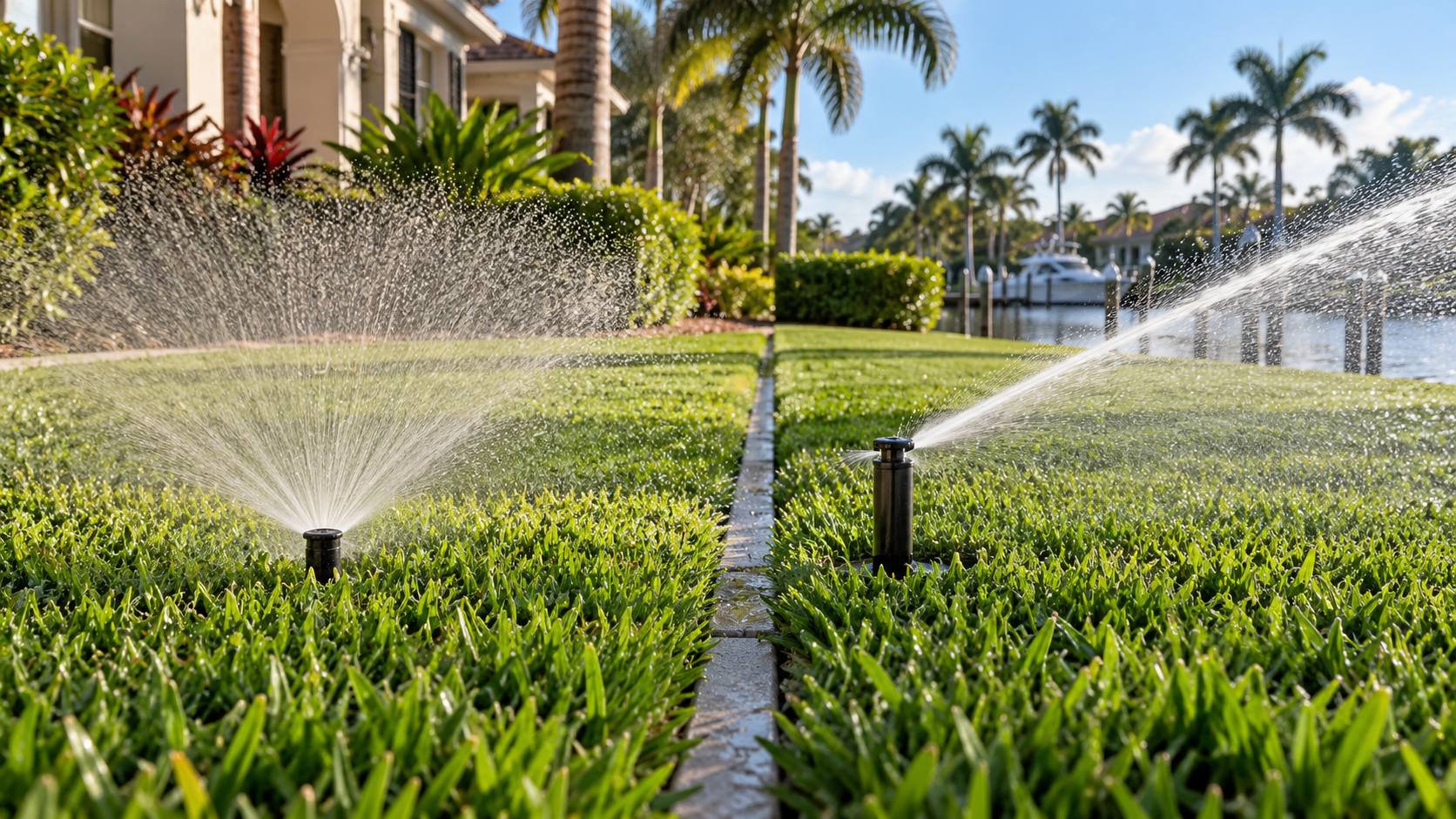
Fixed spray heads and gear-driven rotors may look like interchangeable sprinkler parts, but they deliver water in very different ways. Spray heads cover a smaller area with a relatively fast application rate. Rotors throw water farther and usually apply it more slowly. When both operate on the same valve, one run time cannot serve both correctly. In Florida’s heat and sandy soils, the result is often dry turf beside soggy beds, wasted water, and recurring plant stress.
How Mixed Zones Create Uneven Watering
An irrigation controller opens a zone for one set number of minutes. During that period, spray nozzles may apply far more water per square foot than nearby rotors. Extending the cycle to satisfy the rotor area can cause runoff or puddling around sprays. Shortening it to protect the spray area can leave the rotor area thirsty. Wind, pressure changes, and different nozzle patterns make the mismatch worse, especially on open corner lots and exposed South Tampa properties.
What to Look For
Run the zone during daylight and watch every head from start to finish. Look for stationary fan-shaped sprays and slowly turning streams operating together. Check for dry arcs, misting, water crossing pavement, low-pressure heads, and soil that remains saturated near one type of sprinkler. Turf may show folded blades or a dull blue-gray color in the dry section. Beds may develop algae, fungus, or washed-out mulch where the faster heads repeatedly overwater.
The Correct Approach
The best correction is to place sprays and rotors on separate valves so each group receives an appropriate schedule. A technician should also match precipitation rates within each zone, select nozzles for the measured pressure, and adjust arcs so water stays on plants and soil. After repairs, place straight-sided catch cans across each zone and compare the collected depth. Run multiple shorter cycles if the soil cannot absorb the full amount without runoff.
Common Mistakes
Do not solve mixed coverage by simply increasing every zone’s run time. That can hide one dry patch while creating new wet areas and a higher water bill. Avoid replacing a rotor with a spray body because it happens to fit the opening. Also avoid changing nozzles without checking pressure and available flow. Each change affects the entire zone, and an overloaded valve may leave the farthest heads unable to rise or rotate properly.
When Professional Help Makes Sense
Call for help when zones contain several head types, pressure is inconsistent, valve locations are unknown, or redesign requires new pipe and wiring. Ecoscape Outdoor Services can inspect the system, identify mixed precipitation rates, separate incompatible heads where practical, and tune coverage for lawn and planting areas. A documented zone map and seasonal schedule make future service faster and help keep watering aligned with local restrictions.
Helpful Resources
Review current local watering rules before changing controller schedules, since allowed days and hours can vary by address and water source. UF/IFAS also offers practical Florida irrigation guidance at Gardening Solutions: Irrigation. Recheck coverage after major pruning, new landscaping, or head replacement because plant growth and site changes can alter where water lands. Book Ecoscape Outdoor Services to inspect mixed irrigation heads, zone design, and uneven lawn watering.