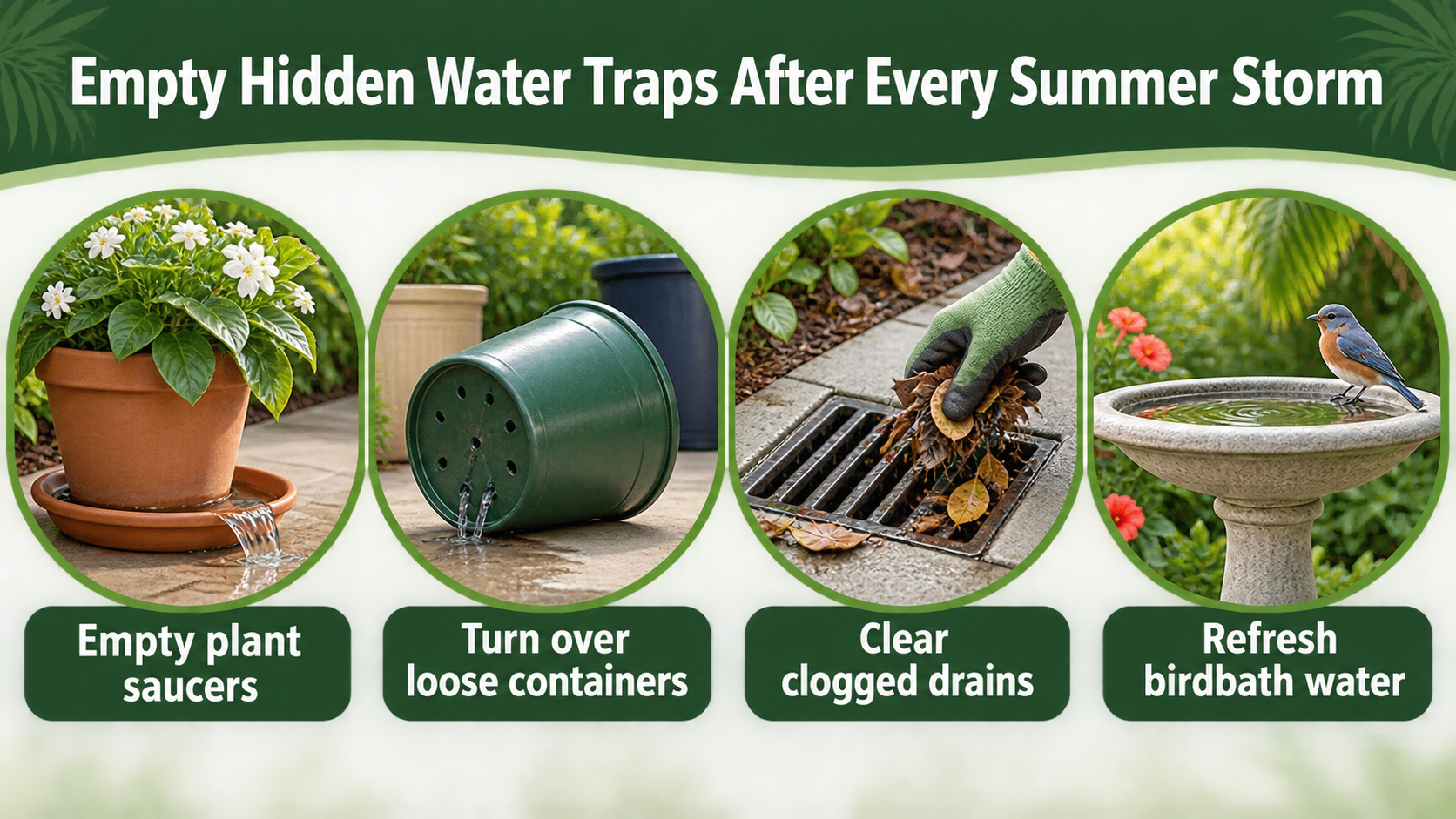
Empty Hidden Water Traps After Every Summer Storm
Small Containers Hold Enough Water
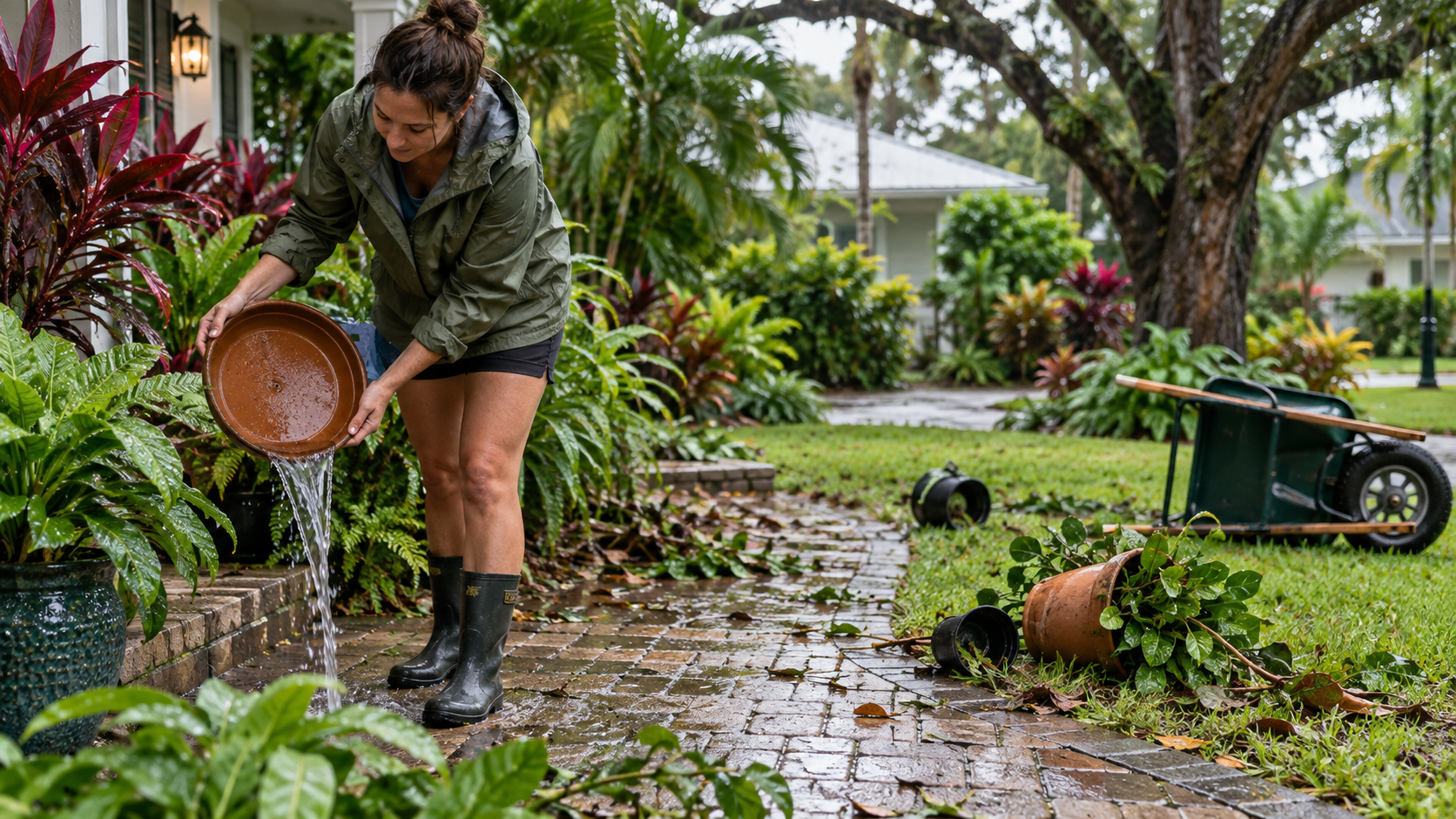
Mosquito breeding does not require a large pond. Plant saucers, bucket rims, toys, tarps, wheelbarrows, clogged gutters, drain boxes, and folded furniture covers all collect water. Florida heat speeds development. A five-minute walk after each storm removes many sites before they become a recurring problem for the household and nearby neighbors.
Begin With Container Plants
Empty saucers and decorative outer pots. Confirm drainage holes remain open and raise containers slightly above flat surfaces. Bromeliads and other plants naturally hold water, so place them thoughtfully and follow local mosquito-management guidance. Avoid pouring saucer water into another low area. Spread it across dry soil where it soaks in quickly.
Turn Over Loose Items
Store buckets, nursery pots, watering cans, lids, toys, and wheelbarrows upside down or under cover. Pull tarps tight so folds do not form pockets. Check behind sheds, air-conditioning units, and pool equipment where small items remain unnoticed. Landscape crews should return empty plant containers to storage instead of leaving them upright after installation.
Clear Drains and Gutters
Remove leaves from catch basins, channel drains, pop-up emitters, and roof gutters. A blocked drain creates both mosquito habitat and a drainage problem. Flush gently and confirm water reaches the outlet. Do not leave open barrels or cisterns unscreened. Rainwater-storage systems need tight screens, secure lids, and maintenance designed for mosquito exclusion.
Refresh Managed Water Features
Birdbaths, pet bowls, and small fountains need regular attention. Replace birdbath water and scrub the surface to remove eggs and organic film. Keep fountains circulating and remove leaves from pumps. Ornamental ponds need balanced maintenance and appropriate biological controls. Never add a pesticide or household chemical unless the product is labeled for the exact site and use.
Repeat the Walk Every Week
Summer storms arrive too often for a once-a-season cleanup. Choose a regular day and inspect after major rainfall. Include side yards, alleys, patios, roof-drain areas, and spaces beneath vegetation. Ask family members and crews to report water-holding items. A written checklist makes the inspection consistent when different people handle the property.
Combine Mosquito Prevention With Landscape Care
Ecoscape Outdoor Services watches for standing water, blocked drains, displaced containers, and irrigation issues during South Tampa maintenance visits. Eliminating small water traps supports a cleaner landscape and reduces mosquito breeding opportunities. Consistent storm cleanup also protects plant roots, hardscape, and drainage equipment, making one short inspection valuable across the property.
Source: UF/IFAS Gardening Solutions