Finish Metal Landscape Edging Without Sharp Exposed Corners
The End of the Edge Matters
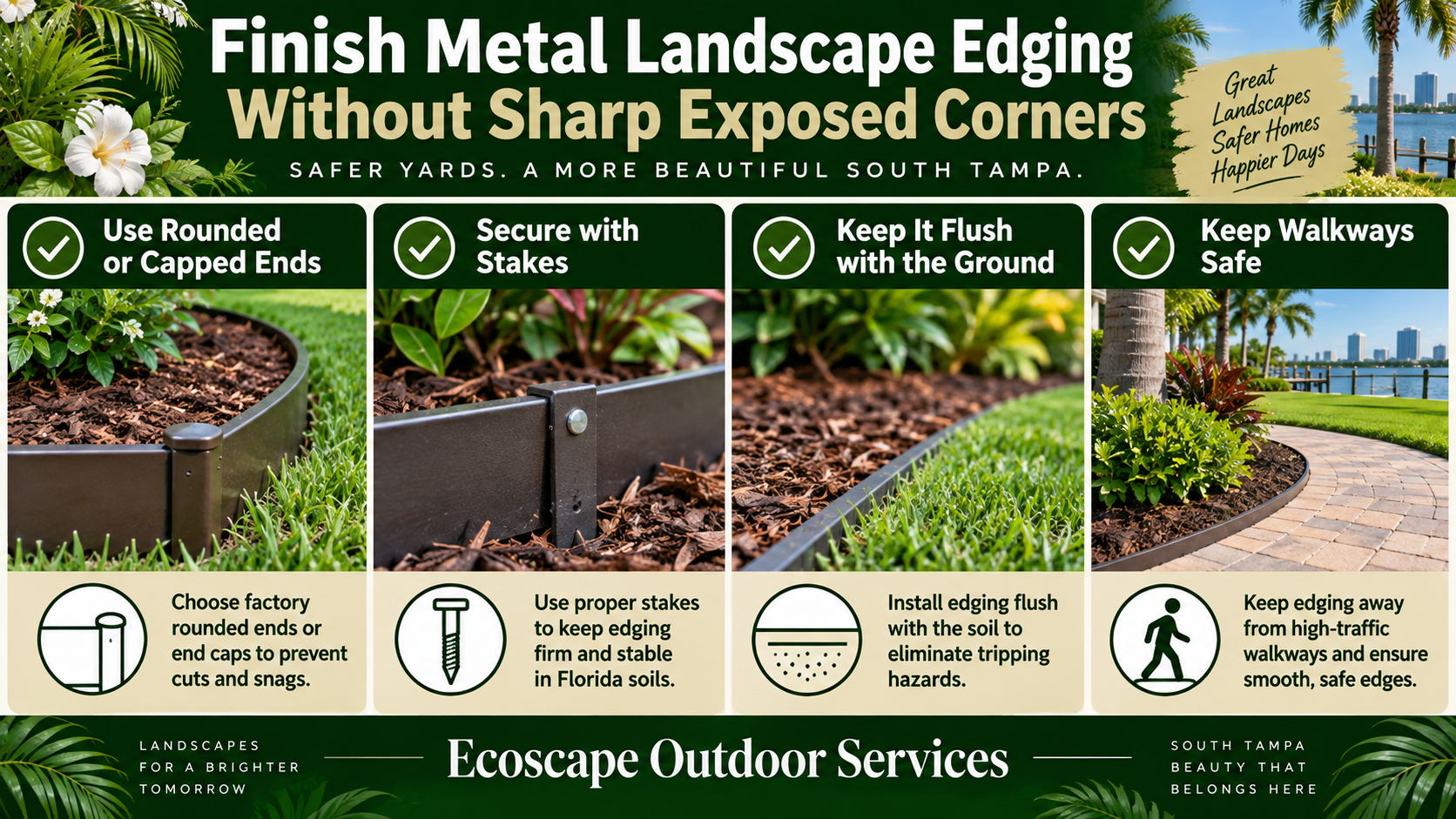
Metal landscape edging creates a crisp separation between lawn, mulch, rock, and walkways, but an unfinished end can become a cut, trip, or equipment hazard. The risk increases where edging stops beside a sidewalk, driveway, gate, or service route. South Tampa properties receive frequent foot traffic and weekly maintenance, so every termination point needs the same planning as the visible curve. A clean line is incomplete if the final corner remains exposed.
Plan the Termination Before Digging
Mark the entire border and decide where each section will begin and end. Whenever possible, terminate edging inside a bed, behind a plant mass, or against a solid feature instead of beside open pavement. Avoid narrow gaps where shoes, mower tires, hoses, or pet leashes can catch. Check irrigation heads, lighting cable, roots, drainage lines, and utility locations before driving stakes or cutting the trench.
Use the Manufacturer’s End Treatment
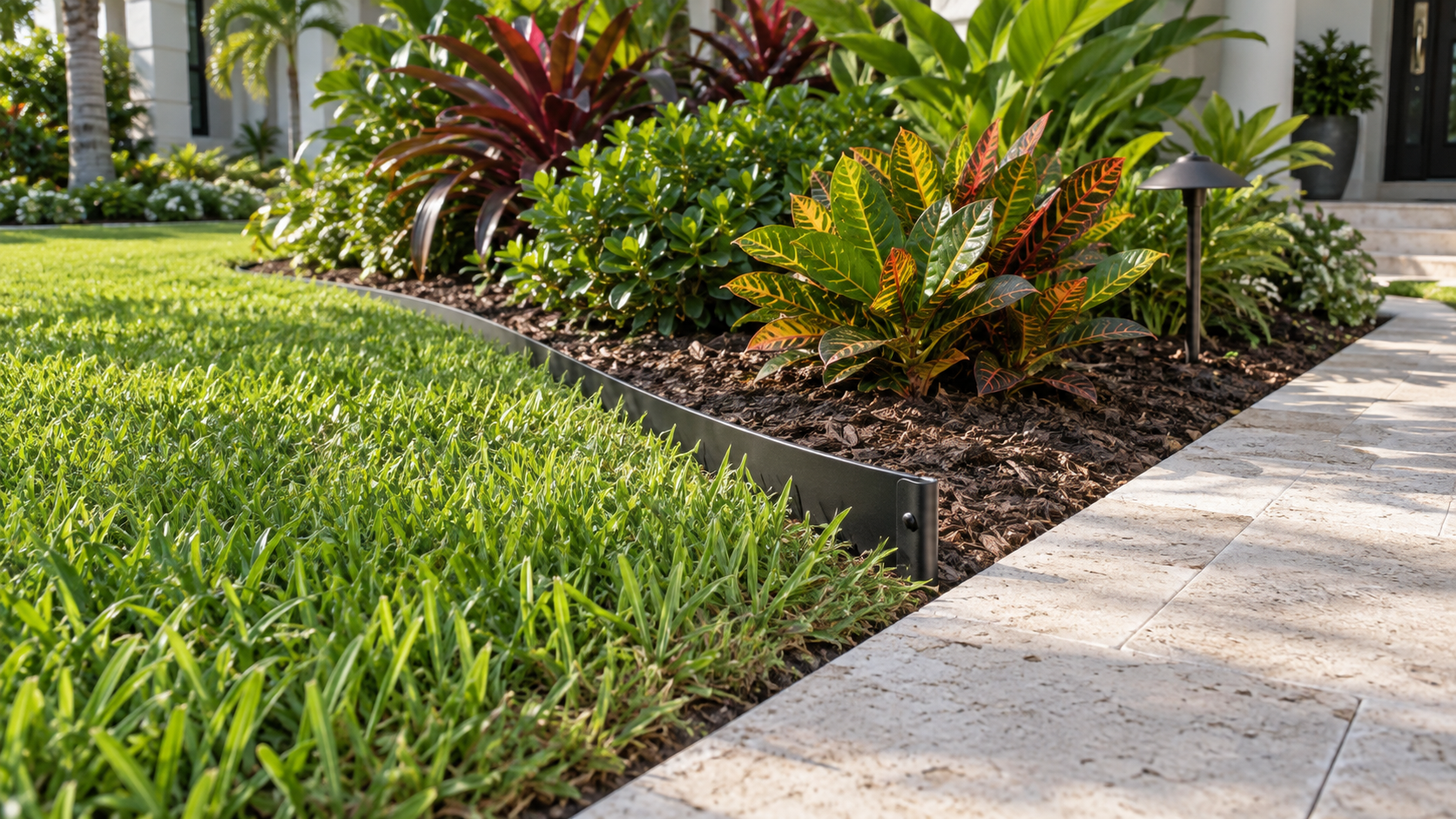
Different metal systems use folded returns, connector sleeves, end stakes, rounded caps, or overlapping sections. Follow the product’s installation instructions instead of improvising a sharp field cut. Deburr cut metal and use components rated for the edging profile. Do not leave a thin corner projecting into the lawn. Fasteners should hold the end firmly without creating a raised screw, loose plate, or snag point.
Set the Height for the Location
Edging must contain bed material without standing high enough to catch feet or equipment. Along turf, set the top consistently so mower wheels travel safely and string trimmers do not strike a tall exposed lip. Near walkways, keep transitions smooth and visible. Account for soil settlement before final compaction. Mulch or rock should sit below the top of the border rather than burying the edging or spilling across it.
Anchor Curves and Ends Securely
Ends receive extra pressure from mowing, expansion, foot traffic, and shifting bed material. Install enough compatible stakes to hold the line, adding support near curves, joints, and termination points. Drive stakes into firm soil without distorting the metal. Loose soil or buried organic debris will not provide lasting support. After anchoring, press soil firmly on both sides while preserving the intended grade and drainage path.
Inspect From Every Direction
Walk toward the finished end from the sidewalk, lawn, driveway, and bed. Run a gloved hand near the corner to locate burrs or projections without pressing against the metal. Check the area at night if the transition sits near a path. Reinspect after the first mowing and heavy rain. Tighten movement early. A section that lifts or separates will become more dangerous as soil washes away.
Build Safety Into the Finished Design
Ecoscape Outdoor Services installs landscape edging around South Tampa properties with attention to line, depth, anchoring, drainage, equipment clearance, and safe endpoints. We coordinate the border with mulch, rock, irrigation, lighting, and walkways so the finished bed functions as well as it looks. Property owners should include edging ends in monthly inspections. Safe details protect people, equipment, and the premium appearance of the entire landscape.