
Flush Salt From Landscape Soil After Coastal Flooding
Why Salt Needs Quick Attention
Coastal flooding leaves dissolved salts behind after the visible water drains away. Florida sun then dries the soil and concentrates those salts around plant roots. The result often appears as brown leaf edges, wilting, yellowing, stalled growth, or sudden decline. Salt-sensitive ornamentals suffer first, while established palms and coastal species sometimes show symptoms later. Treat every flooded planting bed as a soil and drainage issue, even when the plants still look healthy.
Confirm the Area Is Safe
Wait until floodwater recedes and local officials consider the area safe to enter. Wear gloves and waterproof footwear because stormwater often carries fuel, sewage, pesticides, and other contaminants. Keep children and pets away from affected soil. Remove visible trash without digging deeply around roots. If oily residue, sewage odor, or heavy contamination remains, pause landscape work and seek proper environmental cleanup before flushing or replanting.
Flush the Root Zone Slowly
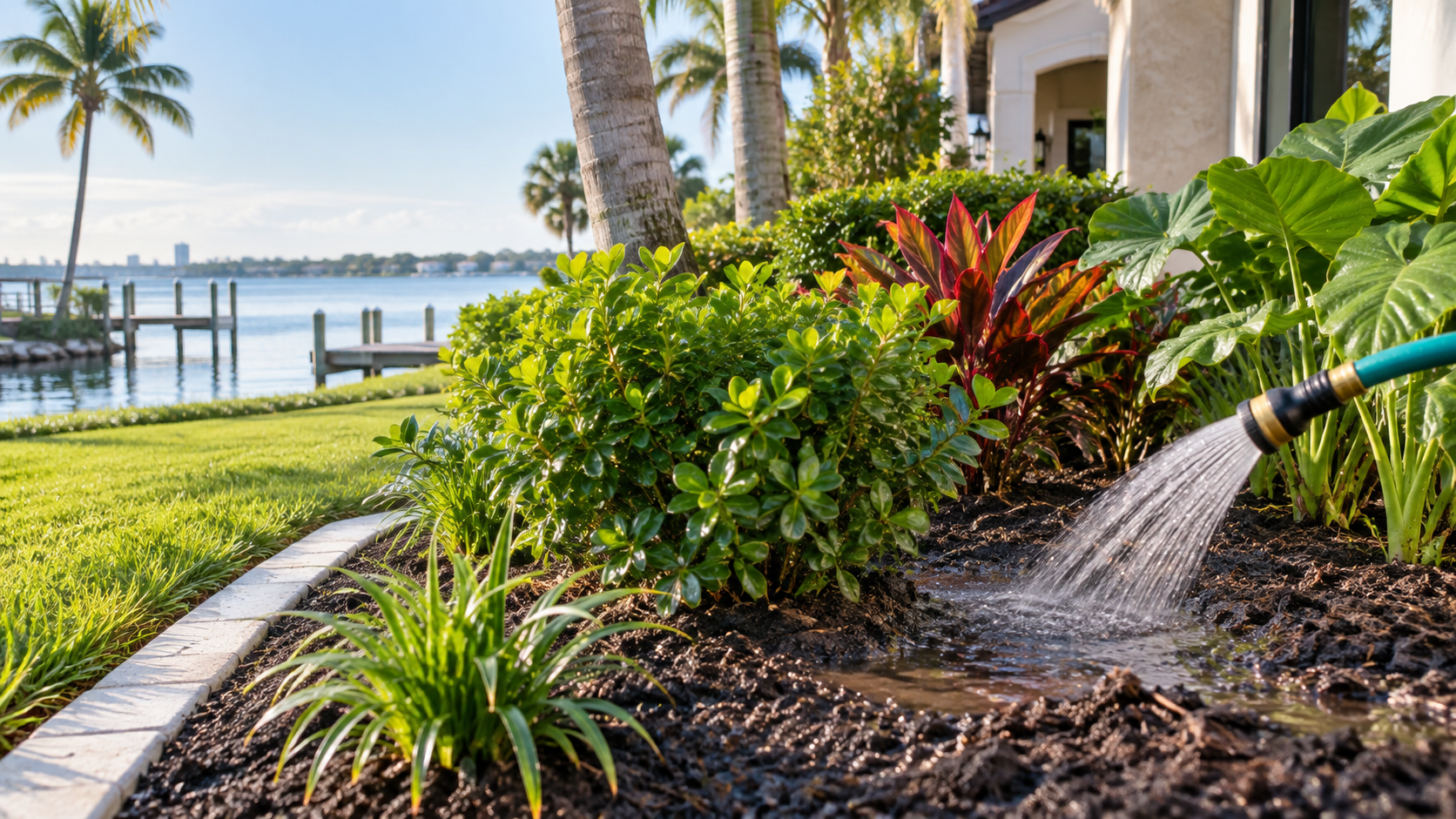
Use clean fresh water to leach salt below the active root zone. Apply water slowly enough to soak into the soil without running into streets or neighboring properties. Several moderate applications over multiple days usually work better than one forceful soaking. Water beyond the plant’s canopy where feeder roots spread. Container plants need separate attention because salt builds quickly in pots. Flush each container thoroughly and confirm the drain holes remain open.
Make Sure Water Has an Outlet
Leaching works only when salty water moves away from the roots. Check low spots, clogged drains, compacted soil, blocked downspouts, and beds trapped behind edging. Do not keep adding water to a saturated area. You will deprive roots of oxygen and increase disease risk. Correct the drainage path first. Raised beds or selective grading sometimes provide a better long-term solution for properties exposed to repeated coastal flooding.
Watch Plants Before Pruning
Give stressed plants time to reveal which tissue survived. Scratch-test small twigs and look for green tissue beneath the bark. Keep irrigation consistent, but avoid fertilizer until roots resume active growth. Fertilizer salts add more stress to an already damaged root system. Remove only clearly dead material at first. Photograph the same plants weekly so you can compare leaf color, new growth, and canopy loss instead of relying on memory.
Avoid Common Recovery Mistakes
Do not replace plants immediately because the same untreated soil can injure the new installation. Do not pile fresh topsoil over salty, poorly drained soil and assume the problem is solved. Avoid aggressive pruning, heavy fertilizer, and daily shallow watering. Each action adds stress or hides the drainage problem. If symptoms continue, test the soil or irrigation water before spending money on broad plant replacement.
Build a Follow-Up Plan
Recheck the property after one week, then again after three to four weeks. Record which areas drained slowly and which species recovered. Ecoscape Outdoor Services helps South Tampa property owners assess storm-affected beds, improve drainage, adjust irrigation, replace failed plants, and select material suited to coastal exposure. A measured recovery plan protects healthy plants and directs your budget toward the sections that truly need correction.
