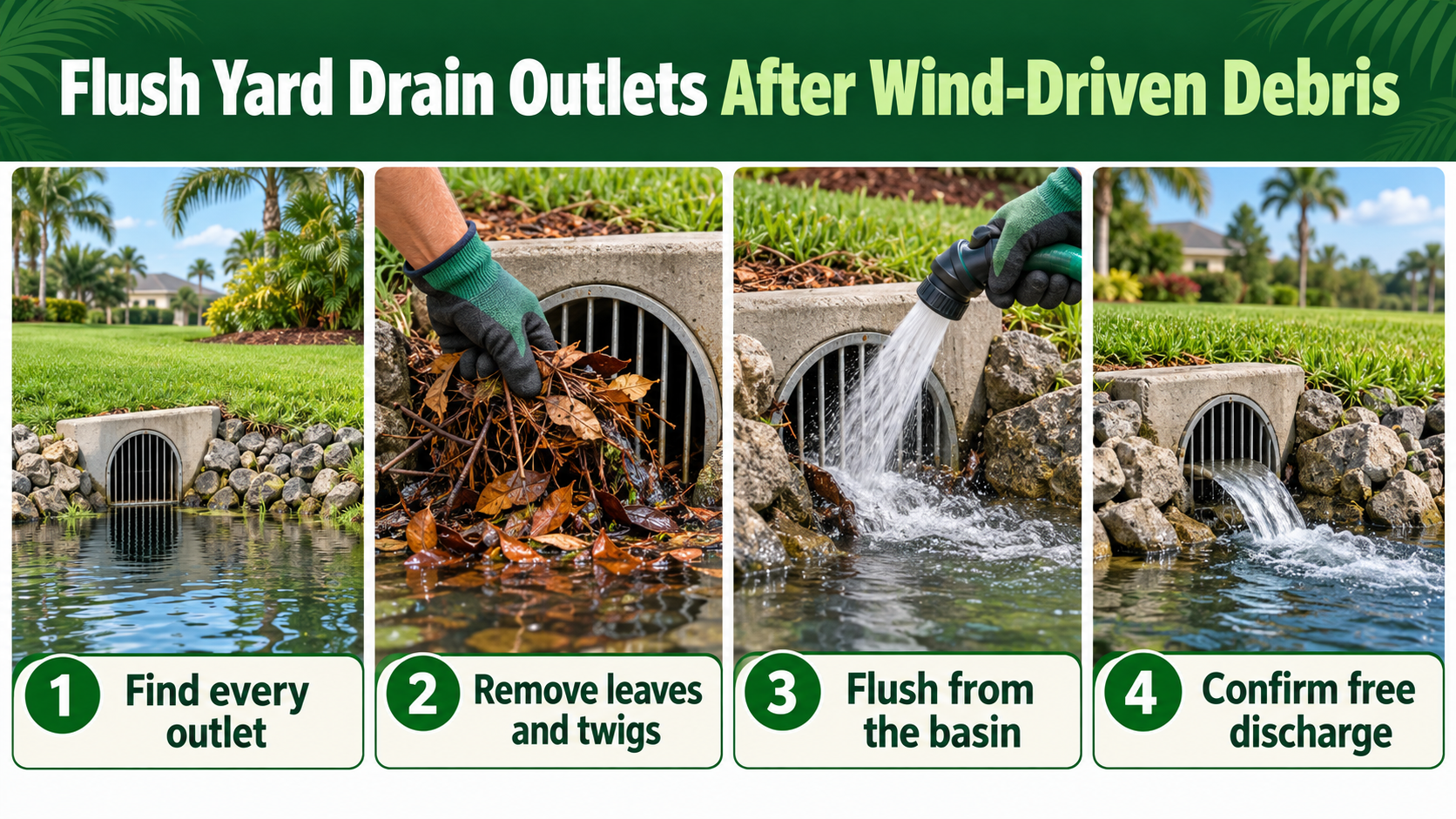
Flush Yard Drain Outlets After Wind-Driven Debris
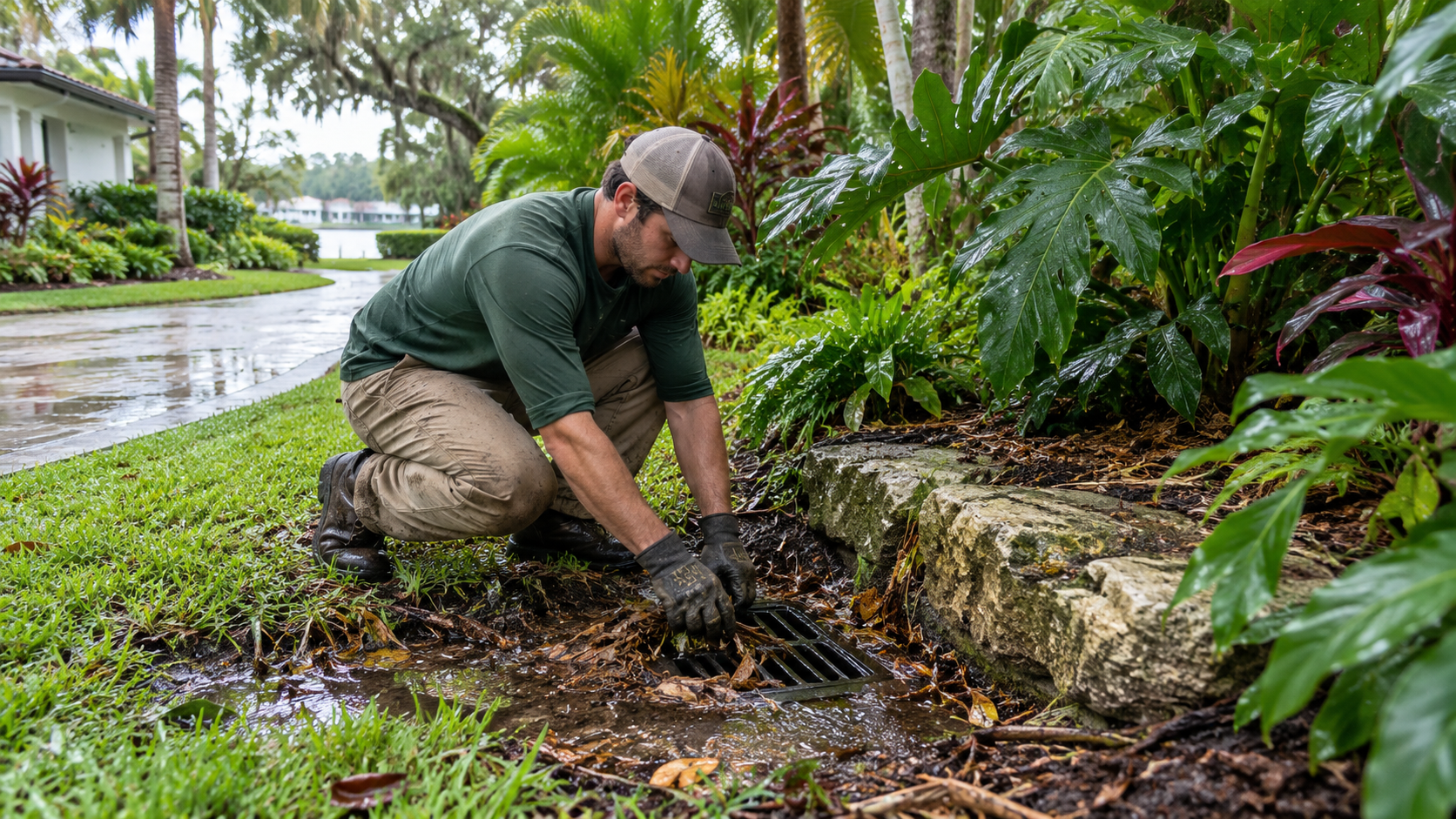
Storm Debris Travels Through the System
Wind-driven leaves, palm fibers, mulch, twigs, and roof debris enter catch basins during heavy rain. Some material remains under the grate, while smaller pieces move through the pipe and collect at bends or the outlet. A clean-looking basin does not prove the system is open. Inspect the entire drainage path after severe weather or unexpected ponding.
Locate Every Basin and Outlet
Map each catch basin, channel drain, cleanout, pop-up emitter, and open outlet. Overgrown plants and mulch often hide components. Follow the slope and pipe direction where the route is unclear. Photograph the locations for future maintenance. Never assume two nearby drains connect to the same outlet. Separate systems may serve different sections of the property.
Clean the Inlet First
Wear gloves and remove the grate safely. Scoop out leaves, soil, and sediment without pushing debris farther into the line. Check the basin sump below the pipe opening. Sediment stored there eventually reaches the pipe if ignored. Replace cracked grates and secure loose frames. Keep mulch below the opening so routine rainfall does not carry bed material directly into the system.
Flush With Controlled Water
After removing solid debris, introduce water from the basin and watch the outlet. Begin with moderate flow. A sudden high-pressure stream may compact a blockage or flood an unknown connection. Water should appear promptly and remain relatively clear. Slow discharge, backing water, or bubbling at another basin suggests an obstruction requiring more focused cleaning or professional service.
Inspect the Discharge Point
Clear vegetation, leaves, and soil from the outlet. Confirm a pop-up emitter opens freely and settles closed afterward. Open pipes need protection from animal nesting without restricting flow. Check for erosion around the outlet and stabilize the area. Never block or redirect water into public infrastructure, neighboring property, or a location without lawful and safe drainage.
Know When to Stop
Do not force rods, chemicals, or high pressure into a system with an unknown layout. Damaged corrugated pipe may collapse or separate underground. Persistent backups, soil emerging from the outlet, and repeated sinkholes indicate a structural problem. A drainage contractor may use locating equipment or a camera to determine whether cleaning, repair, or replacement is appropriate.
Maintain Drains Before the Next Storm
Ecoscape Outdoor Services checks visible drainage components during rainy-season landscape work and alerts South Tampa owners to developing issues. Regular inlet and outlet cleaning protects plants, turf, hardscape, and foundations. The best time to correct restricted flow is before the next thunderstorm tests the system at full volume.
Source: UF/IFAS Gardening Solutions