
Group Plants Into Irrigation Hydrozones
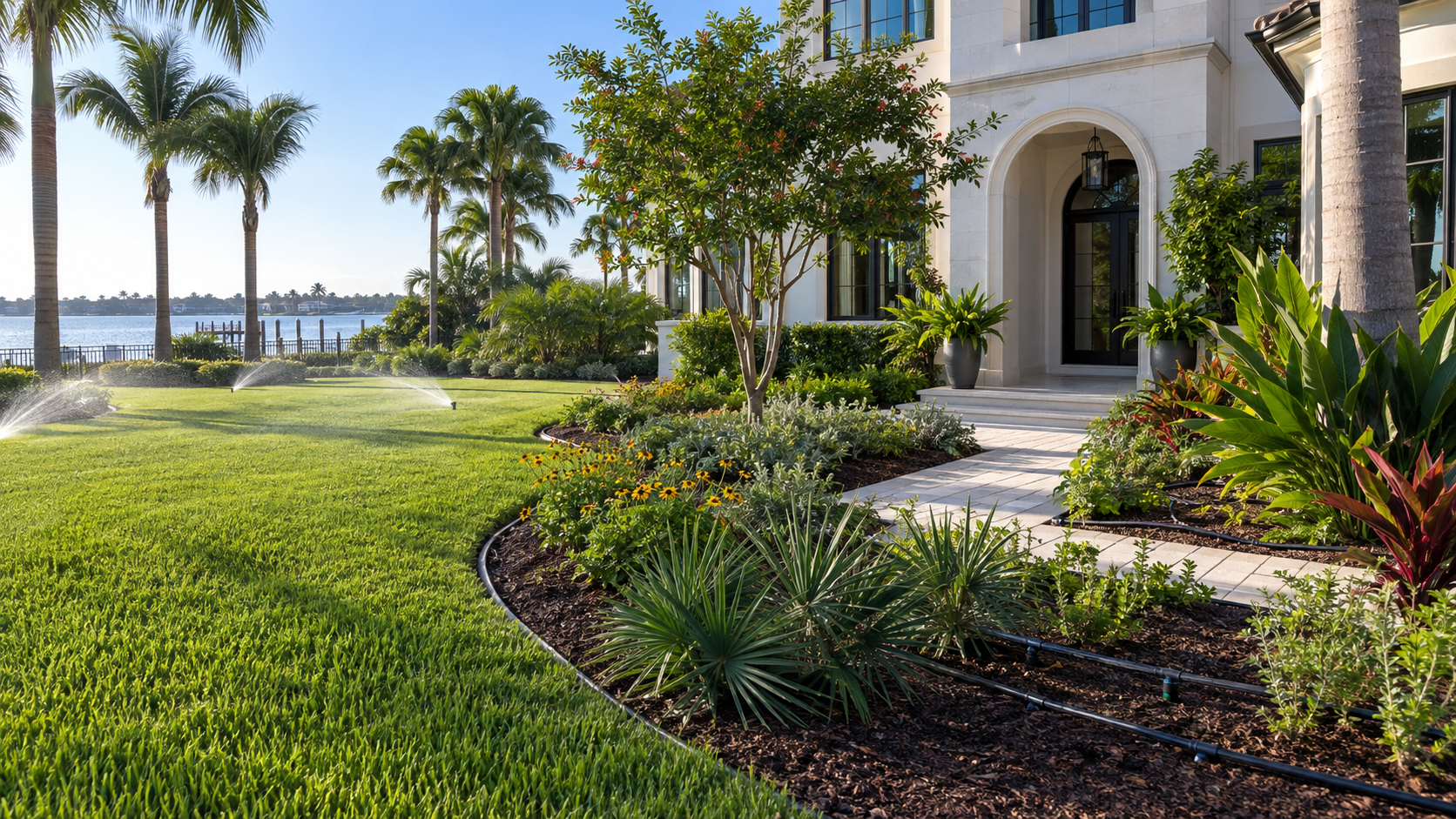
Hydrozones Reduce Water Waste
A hydrozone groups plants with similar water needs on the same irrigation schedule. Turf, drought-tolerant natives, tropical shrubs, and seasonal flowers rarely need identical frequency or delivery. When one zone waters all of them, some plants stay too wet while others remain dry. Separating their needs improves plant health, shortens unnecessary runtime, and makes seasonal adjustments easier to understand.
Map Existing Water Needs
List the turf type and major plants served by each valve. Mark sun, shade, slope, soil drainage, wind, salt exposure, and roof runoff. Run every zone and record which heads or emitters reach each area. Pay attention to shrubs watered by turf sprays and lawn sections hit by drip lines. A simple site sketch exposes mixed zones before renovation begins.
Design Practical Groups
Keep turf on dedicated spray or rotor zones whenever possible. Group established drought-tolerant plants together and place moisture-loving plants in a separate area. Use drip or low-volume delivery in suitable beds, with compatible emitters and filtration. Divide sunny and shaded areas when their needs differ sharply. Large trees need root-zone planning beyond one emitter placed at the trunk.
Correct Hardware and Coverage
Nozzle selection, pressure, spacing, and precipitation rate should match within a zone. Replace broken or mismatched components before reducing runtime. Move blocked heads, cap unnecessary sprays, and aim water away from pavement. Flush drip lines and verify every emitter. Label valves and controller stations so future service does not undo the grouping. Retest after plants grow or beds change.
Adjust Through Florida Seasons
Warm wet months, dry spring periods, tropical storms, and winter slowdowns require different schedules. Use rainfall information and actual soil moisture rather than running the same program all year. Reduce bed watering after establishment when plants support it. Split cycles on slopes or compacted soil. Follow local watering rules and preserve enough flexibility for new plant establishment without overwatering mature areas.
Avoid Common Hydrozoning Mistakes
Do not mix cactus-like plants with thirsty annuals because they share a bed. Avoid placing all drip irrigation on one station across unrelated areas. Never reduce water before correcting dry gaps caused by equipment failure. A rain sensor does not identify uneven coverage or a broken line. Keep emitters visible enough for maintenance and update the zone map after every landscape renovation.
How Ecoscape Outdoor Services Helps
Ecoscape Outdoor Services evaluates planting design and irrigation together. We identify mixed water needs, blocked sprays, overspray, leaks, poor pressure, and outdated zone layouts across South Tampa properties. Our team coordinates planting, irrigation adjustments, drip placement, controller scheduling, and follow-up inspection so turf and landscape beds receive water suited to their real conditions with less avoidable waste.
